ADVERTISEMENT
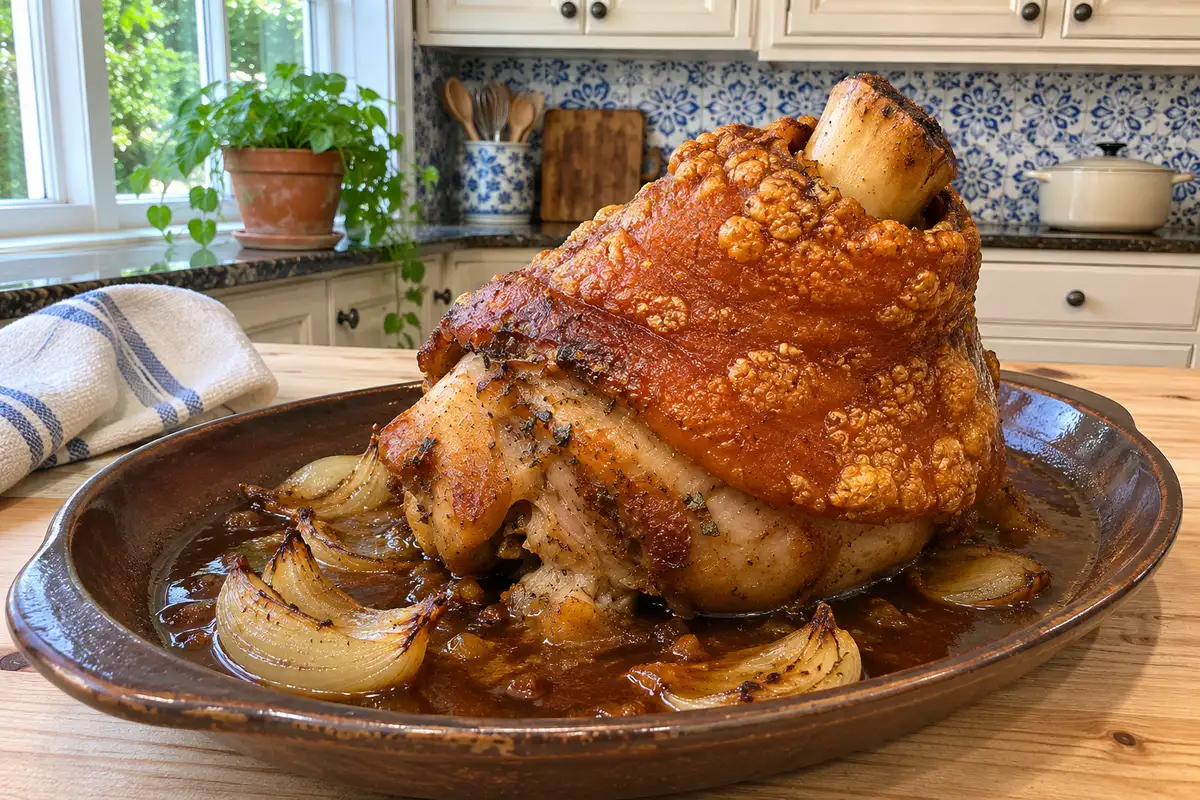
Schweinshaxe is a German roasted pork knuckle with crisp, blistered crackling, soft meat and a dark beer-onion gravy. This recipe is for the knuckle, also called a hock, not a pork shoulder. The meat is simmered until tender, then roasted on a bed of onions so the skin turns into crackling, and the pan juices become the gravy.
The method has two stages. Score the skin, then simmer the knuckles in water and dark beer with onions, garlic, caraway and bay leaves until a fork slides in easily. Lift them out, pat the skin very dry, and set them skin-side up on sliced onions in a roasting pan with more dark beer. Roast at 425°F until the crackling is blistered and crisp, then rest the meat and turn the onions and reserved cooking liquid into a dark gravy.
Why You’ll Love This Schweinshaxe
The boil-then-roast method gives you soft meat and crisp skin in two clear stages. The simmer does the slow work of tenderizing the hock, and the hot oven is used only to blister the crackling. You do not need a special pan, and the gravy is made from the same onions, beer and pot liquid you already have on the stove.
This is a weekend roast that feels like a beer-hall plate, with a deep, savory gravy to spoon over the meat. Once the knuckles are simmered, the oven time is fairly short, so you can watch the skin closely as it crisps.
What Is Schweinshaxe?
Schweinshaxe is a skin-on pork knuckle, a different cut from a Bavarian shoulder roast. The hock has more connective tissue, so it benefits from a gentle simmer before it goes in the oven. In some regions a boiled knuckle is served soft; this version is finished in a hot oven so the skin blisters and turns into crackling.
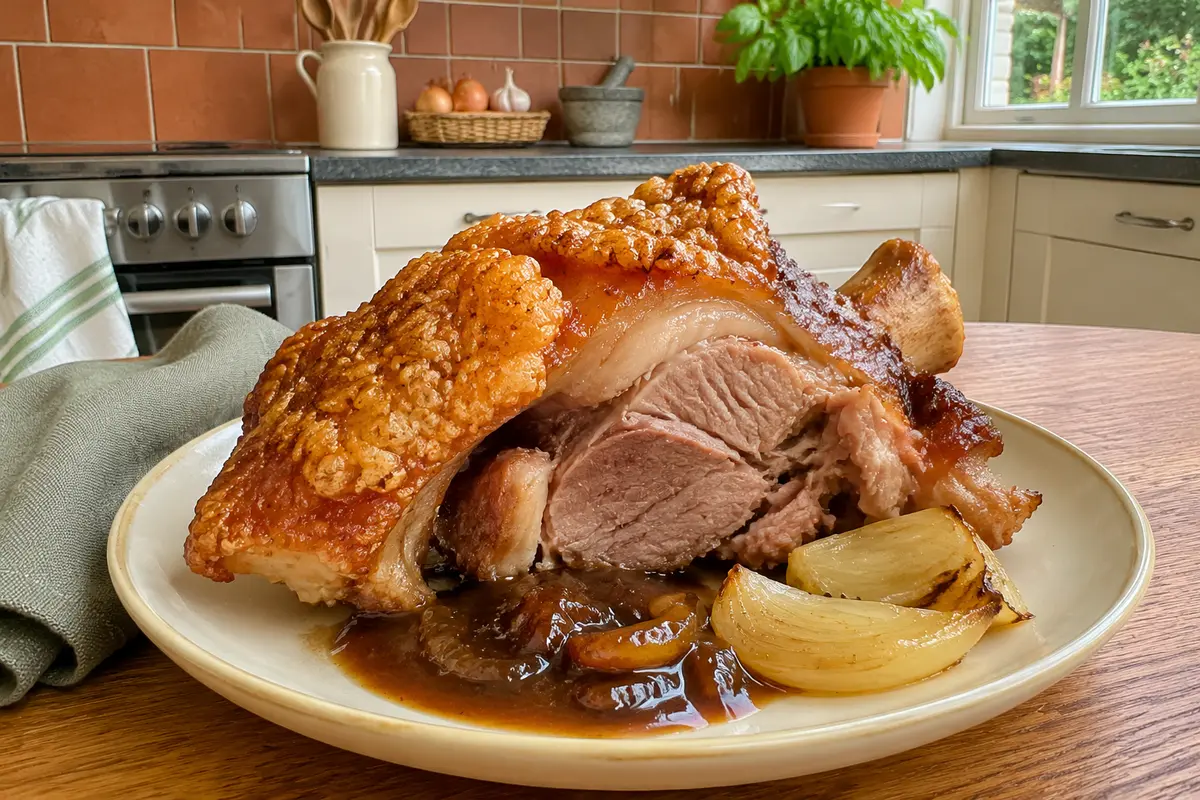
A finished plate should show a golden, blistered crust, meat that pulls easily from the bone, and a dark onion gravy. The simmer is what makes the knuckle tender, and the roast is what makes the skin crisp.
ADVERTISEMENT
Ingredients for Schweinshaxe
- 2 pork knuckles, skin on
- 1 tablespoon oil
- 2 teaspoons salt
- 1 teaspoon black pepper
- 1 teaspoon caraway seeds
- 4 cloves garlic, minced
- 3 large onions, thickly sliced
- 2 cups dark beer
- Water, to cover
- 2 bay leaves
- 1 teaspoon juniper berries, optional
- 1 tablespoon mustard, optional, for the gravy
- 1 tablespoon cornstarch, optional, to thicken the gravy
Ingredient Notes
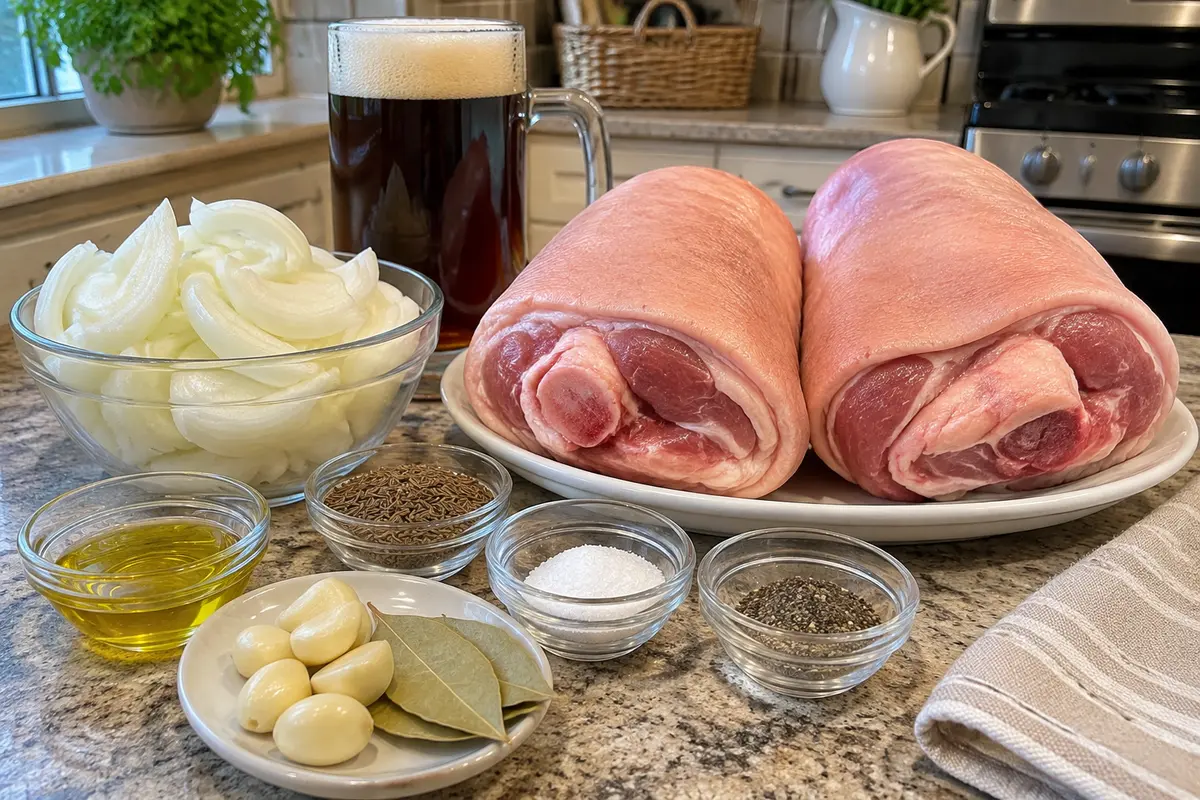
Ask for skin-on pork knuckles, sometimes sold as hocks. The skin is what becomes the crackling, so do not trim it off. Salt seasons both the simmering pot and the skin before the roast. Caraway is the classic spice for this plate, and a few juniper berries add a light woodsy note if you have them. Garlic goes into the pot, not onto the skin, so it does not burn in the oven.
Dark beer gives the gravy its color and a deep, malty flavor; use a plain dark beer. One or two onions flavor the simmer, and the rest roast under the knuckles and are mashed into the gravy. Keep the cooking liquid after you lift out the meat, because it becomes the base of the gravy. Mustard and cornstarch are optional finishes.
How to Make Schweinshaxe
Pat the knuckles dry and score the skin in a crosshatch, cutting through the skin but not into the meat. Place the knuckles in a large pot and add water to cover, 1 cup of the dark beer, 1 or 2 of the sliced onions, the garlic, caraway, salt, pepper, bay leaves and the juniper berries, if using.
Bring the pot to a boil, then lower the heat to a gentle simmer. Cook for 1 1/2 to 2 1/2 hours, until a fork slides in easily and the meat is tender but still holds to the bone. Pork should reach at least 145°F; this cut is cooked longer, until it is fork-tender. Lift the knuckles out and let them drain, then pat the skin very dry. Strain and reserve the cooking liquid.
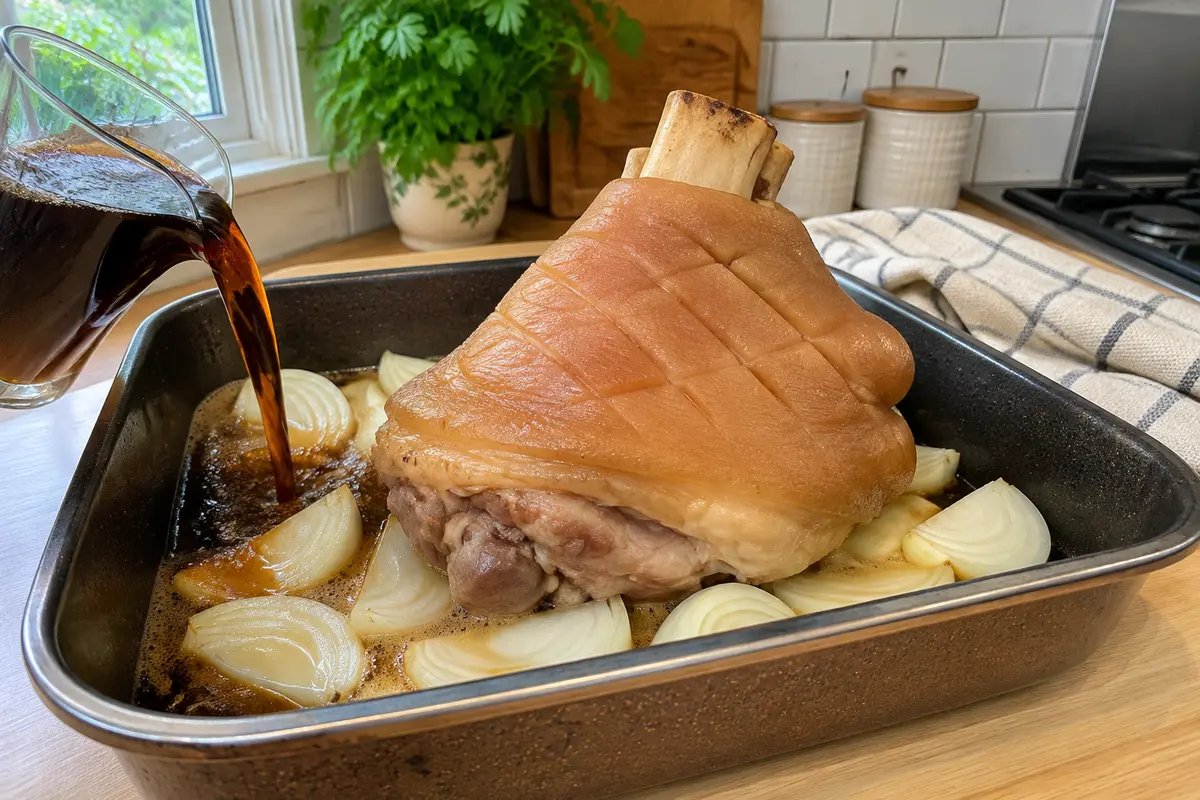
Heat the oven to 425°F. Scatter the remaining onions in a roasting pan and pour in a ladle of the reserved liquid plus the remaining 1 cup of dark beer, keeping the liquid below the skin. Set the knuckles skin-side up on the onions and rub the skin with the oil and a little salt. Roast for 30 to 45 minutes, until the crackling is blistered and crisp, watching closely so the skin does not burn. Rest the meat for 10 to 15 minutes. For the gravy, skim excess fat from the pan, then simmer the roasted onions with some of the reserved cooking liquid. Stir in mustard if you like, and thicken with cornstarch mixed with a little cold water if needed. Reduce until the gravy is dark and savory, then season to taste.
ADVERTISEMENT
Tips for the Best Schweinshaxe
Dry skin is the difference between crisp crackling and a tough, leathery crust. After the simmer, pat the skin until it feels dry to the touch, and keep the beer and pot liquid off it in the roasting pan.
Keep the pot at a gentle simmer, not a hard rolling boil, so the meat stays moist and the skin does not split too early. Start checking for tenderness at 1 1/2 hours, because the size of the knuckles can change the time. Stay nearby for the last stretch in the oven; the skin can go from golden to too dark in a few minutes.
What to Serve With Schweinshaxe
This roast belongs with potatoes, a sharp mustard, and something from the cabbage family. The soft meat is even better with a spoonful of the dark onion gravy.
For the shoulder-roast sibling of this plate, try this German schweinebraten. For more German plates from the same kitchen, try this jagerschnitzel plus this German sauerkraut soup too. These garlic butter baby potatoes and this German potato soup are easy to set beside the knuckle as well.
Variations
If you prefer not to cook with beer, use extra reserved cooking liquid in the roasting pan and in the gravy; the onions will still give you a deep, savory sauce. A little extra caraway in the pot makes the flavor more pronounced, and a spoonful of mustard in the gravy is a simple way to add a little sharpness.
ADVERTISEMENT
You can simmer one knuckle instead of two; use a smaller pot, and start checking earlier. If you want even crisper skin, dry the simmered knuckles in the refrigerator, uncovered, for a few hours or overnight, then oil, salt and roast as written.
Storage
Let the schweinshaxe cool, then store the meat, crackling and gravy in a covered container in the refrigerator. Leftovers hold well for a few days. To reheat, set the meat in a pan with a little gravy and warm it in a hot oven so the crackling can crisp again. Keep the lid off for that last stretch so the skin does not steam.
The meat and gravy also freeze well in a tight container. Thaw in the refrigerator, then reheat in the oven and recrisp the skin as above. For safe handling and storage, follow the USDA safe temperature chart plus the USDA guide to leftovers and food safety too. Refrigerate leftovers promptly, and do not leave the roast sitting out for long on a warm counter.
FAQ
Why simmer the knuckle before roasting?
The knuckle, or hock, has more connective tissue than a shoulder roast, so a gentle simmer makes the meat tender before the skin is crisped. The oven step is then short and hot, which is better for blistered crackling than a long roast alone.
How do I get crisp crackling?
Score the skin, simmer until the meat is tender, then dry the skin thoroughly before it goes in the oven. Keep the pan liquid below the skin, rub it with a little oil and salt, and roast at 425°F until the surface is blistered and crisp. Watch it closely near the end.
ADVERTISEMENT
What cut of pork do I need?
You need skin-on pork knuckles, also sold as hocks. This is not the same cut as a pork shoulder roast. The bone-in knuckle and its skin are what give you the soft meat and the crackling on this plate.
Can I make the gravy without beer?
Yes. Use the reserved cooking liquid and the roasted onions as the base, and reduce the mixture until it is dark and savory. Mustard is still a good optional addition, and a little cornstarch mixed with cold water can thicken the gravy if you want more body.
How should I store leftover schweinshaxe?
Cool it, then refrigerate the meat and gravy in a covered container for a few days. Reheat in a hot oven with a little gravy, and leave the pan uncovered at the end so the crackling can crisp again. Frozen leftovers should be thawed in the refrigerator before reheating.