ADVERTISEMENT
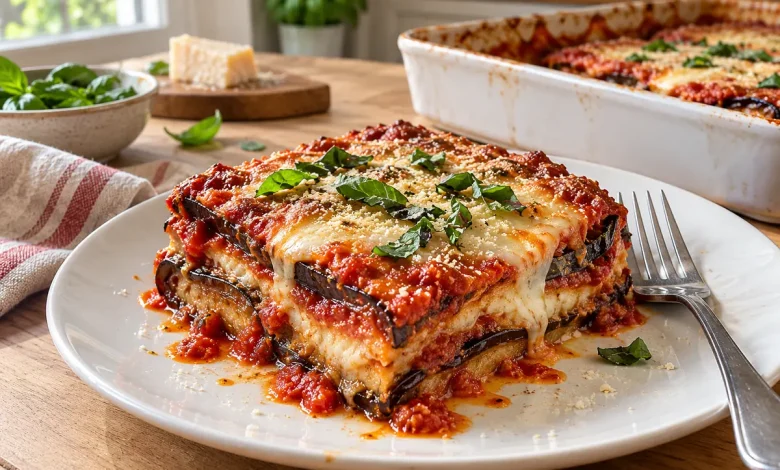
Eggplant parmigiana is the dish I make when I want a pan of something that feels like a proper Sunday lunch: tender eggplant, a bright tomato sauce, stretchy mozzarella and a nutty Parmigiano crust. It takes a little time, but none of the steps are difficult, and the whole thing can be built a day ahead.
This version is the classic southern Italian style. The eggplant slices are lightly floured, dipped in egg, fried in olive oil until golden, then layered with a simple basil tomato sauce and baked until bubbling. If you’d rather not fry, there’s a baked method below that works well too.
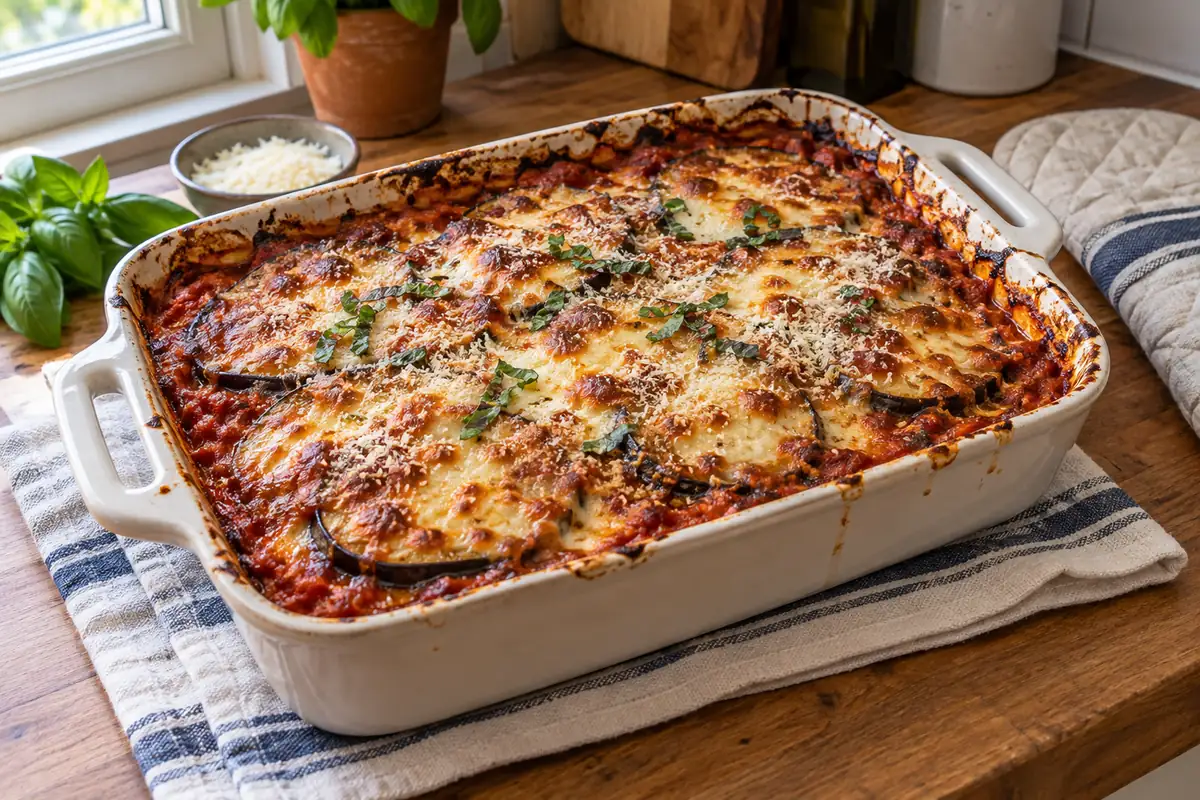
Fried or Baked Eggplant: Which Should You Choose?
This is the great debate in most kitchens, so here is the honest comparison.
- Fried gives you eggplant with a golden, silky, almost creamy texture and a richer flavor. It holds its shape between the layers and tastes the way many people remember the dish. The trade-offs are more oil, more stovetop time and a bit of splatter.
- Baked is lighter, easier and much less messy. The slices come out tender and slightly chewier, and they soak up more sauce. You give up some richness, but on a busy day it’s a very good dinner.
I fry when I have time and bake when I don’t. Both are covered in the steps.
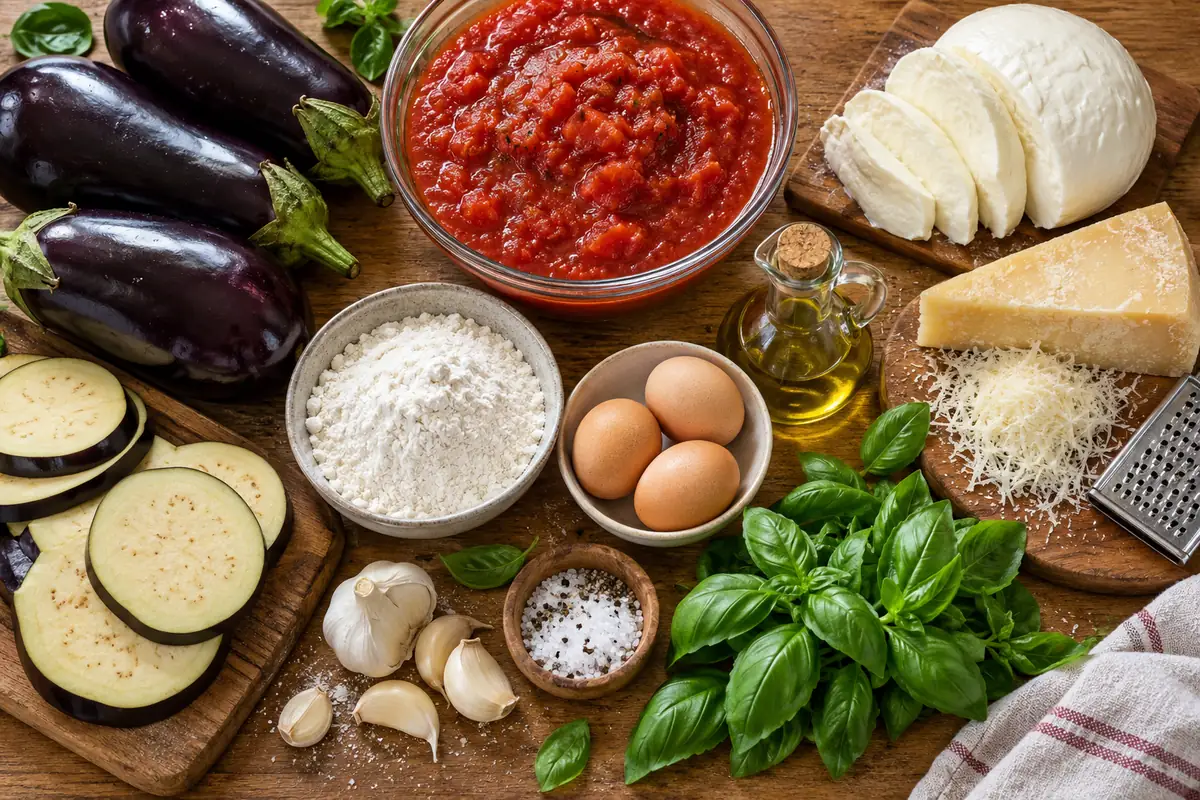
Ingredients for Eggplant Parmigiana
ADVERTISEMENT
This makes one 9×13-inch dish and serves 6 to 8.
For the Eggplant
- 3 large eggplants (about 3 pounds / 1.4 kg total)
- 2 tablespoons kosher salt, for salting
- 1 cup all-purpose flour
- 4 large eggs, beaten with 1 tablespoon water
- 1 1/2 cups plain dry breadcrumbs (optional, see note below)
- About 1 1/2 cups olive oil, for shallow frying (or 1/3 cup for the baked version)
For the Tomato Basil Sauce
- 3 tablespoons olive oil
- 4 garlic cloves, thinly sliced
- 2 cans (28 ounces each) whole peeled tomatoes, crushed by hand
- 1 teaspoon kosher salt, plus more to taste
- 1/4 teaspoon black pepper
- 1 small handful fresh basil leaves (about 12)
- Pinch of sugar, only if the tomatoes taste sharp
For Layering
- 16 ounces (450 g) fresh mozzarella, sliced or torn and patted dry
- 1 1/2 cups freshly grated Parmigiano-Reggiano (about 4 ounces / 115 g)
- Extra basil leaves, for the top
Flour only or breaded? A plain flour-and-egg coating is the traditional approach and gives a soft, silky result. Adding breadcrumbs makes the eggplant crisper and a little sturdier, though it softens once it sits in the sauce. Use whichever you like.
How to Make Eggplant Parmigiana
1. Slice and Salt the Eggplant
- Trim the eggplants and slice them crosswise into rounds about 1/2 inch (1 cm) thick. Thicker slices turn mushy and thinner ones fall apart.
- Lay the slices on paper towels or clean kitchen towels in a single layer. Sprinkle both sides with the salt and let them sit for 30 to 45 minutes. You’ll see beads of liquid on the surface.
- Press each slice firmly with a towel to blot off the moisture and most of the salt. Don’t skip this, because it keeps the finished dish from turning watery.
2. Make the Sauce
- Warm the olive oil in a large saucepan over medium-low heat. Add the garlic and cook for about a minute, just until fragrant and barely pale gold. Garlic that browns will taste bitter.
- Add the crushed tomatoes with their juices, the salt and the pepper. Simmer gently, partly covered, for 20 to 25 minutes, stirring now and then, until thickened but still spoonable.
- Tear in the basil, taste, and adjust the salt. Add a pinch of sugar only if the sauce tastes sharp. Set it aside.
3. Fry the Eggplant
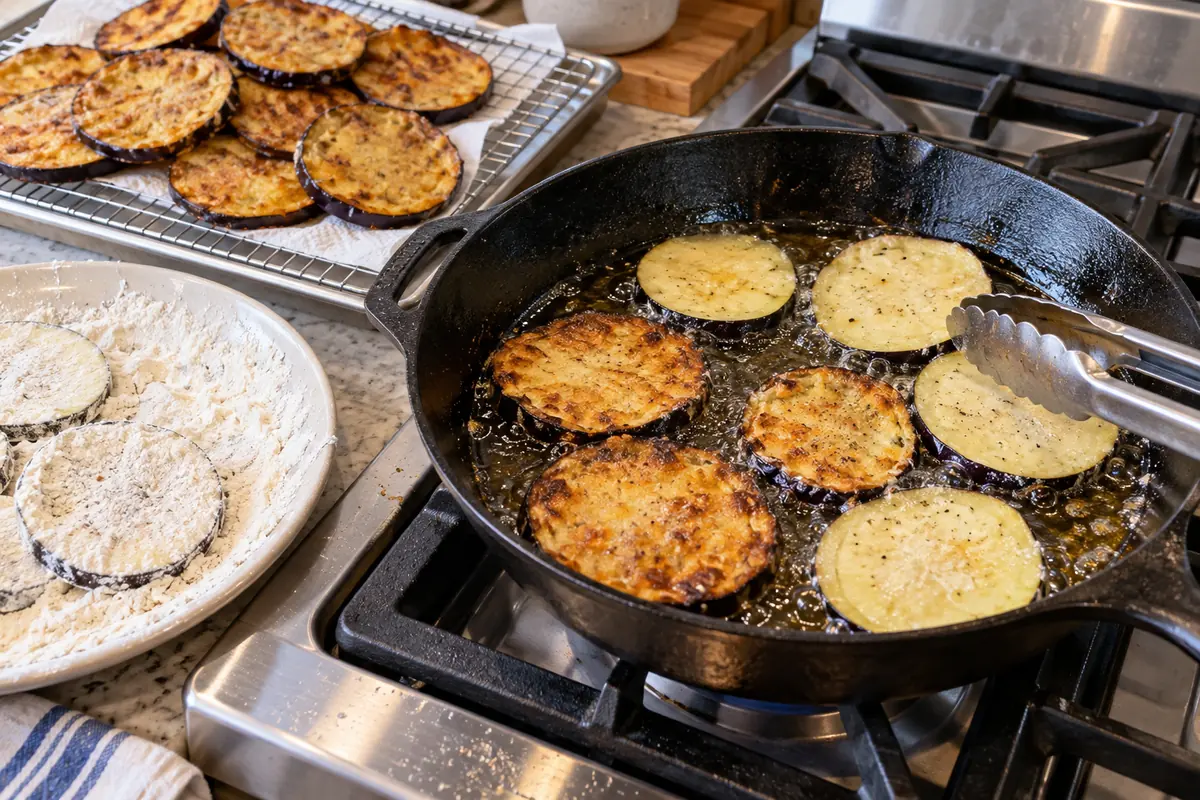
- Set up three shallow dishes: flour in one, beaten eggs in the second, breadcrumbs (if using) in the third.
- Heat about 1/2 inch of olive oil in a large heavy skillet over medium heat until a pinch of flour sizzles right away, roughly 350°F.
- Dredge each slice in flour and shake off the excess, dip it in the egg, let the extra drip off, then coat it in breadcrumbs if you’re using them.
- Fry in batches without crowding the pan, 2 to 3 minutes per side, until deep golden. Drain on a wire rack or paper towels. Add more oil between batches as needed and adjust the heat if it gets too hot.
Baked Eggplant Option
Heat the oven to 425°F (220°C). Brush both sides of the dried slices generously with olive oil (or dip them in egg and breadcrumbs for a crisper coating) and arrange them on two parchment-lined baking sheets. Bake for 20 to 25 minutes, flipping halfway, until golden and tender. Then continue with the assembly below.
4. Assemble and Bake
- Lower the oven to 375°F (190°C). Spread about 1 cup of sauce across the bottom of a 9×13-inch baking dish.
- Add a layer of eggplant, overlapping the slices slightly. Spoon over a generous layer of sauce, then add a third of the mozzarella and a third of the Parmigiano.
- Repeat twice more, finishing with sauce, mozzarella and Parmigiano on top. You’ll have about three layers.
- Bake uncovered for 25 to 30 minutes, until the sauce bubbles at the edges and the cheese is melted and lightly browned in spots. If the top needs more color, broil it for 1 to 2 minutes, watching closely.
- Rest the dish for 10 to 15 minutes before cutting. This is what lets the layers set so you get neat squares instead of a puddle. Scatter fresh basil on top and serve.
Tips for the Best Eggplant Parmigiana
- Dry the eggplant well. Wet slices soak up more oil and release water in the oven.
- Keep the sauce on the thicker side. A thin sauce will leave the dish soupy.
- Pat the mozzarella dry. Fresh mozzarella holds a lot of water. Slice it and rest it on paper towels for 15 minutes, or use low-moisture mozzarella for a firmer set.
- Don’t overcrowd the skillet. Crowding drops the oil temperature and gives you greasy, pale slices.
- Don’t skip the rest. Cutting straight out of the oven makes the layers slide apart.
- Use real Parmigiano. Freshly grated has more flavor and melts better than the pre-grated kind.
Make-Ahead, Storing and Freezing
- Make ahead: Assemble the dish, cover it tightly and refrigerate for up to 24 hours. Bake it straight from the fridge, adding 10 to 15 minutes to the time. You can also make the sauce up to 3 days ahead.
- Leftovers: Cover and refrigerate for up to 4 days. It’s often even better the next day. Reheat portions at 350°F until hot in the middle, about 15 to 20 minutes, or microwave a single square.
- Freezing: Freeze the assembled unbaked dish in a freezer-safe pan, or freeze baked, cooled portions wrapped individually. Wrap well and freeze for up to 3 months. Thaw overnight in the refrigerator, then bake covered at 350°F until hot throughout, uncovering for the last 10 minutes. The texture is a little softer after freezing, but the flavor holds up.
Variations
- Extra cheese: Add a layer of ricotta mixed with a pinch of nutmeg and some basil between the eggplant layers.
- Meaty: Spread a thin layer of cooked Italian sausage or a simple meat sauce between layers.
- Gluten-free: Use gluten-free flour and breadcrumbs, or skip the breading and use the flour-and-egg or oil-only baked method.
Frequently Asked Questions
Do I have to salt the eggplant?
I recommend it. Salting draws out moisture and some bitterness, so the slices fry up silkier and the dish stays less watery. If your eggplants are small and fresh, you can shorten the time to 20 minutes, but I wouldn’t skip it entirely.
ADVERTISEMENT
Why is my eggplant parmigiana watery?
The usual causes are slices that weren’t blotted dry, a thin sauce, wet fresh mozzarella, or cutting it too soon. Fix those four things and the layers will hold together.
Can I use jarred sauce?
Yes. Choose a plain, thick marinara, and add a few torn basil leaves and a splash of olive oil to freshen it up. You’ll need about 5 cups.
Can I make eggplant parmigiana without frying?
Yes. Bake the slices on lined sheets at 425°F, brushed with olive oil, until golden, then assemble as usual. They’ll be a bit chewier and lighter, but it’s still a great dish.