ADVERTISEMENT
Most of us walk past thistles without a second look, or curse them when we catch a sleeve on one. But thistle root is a genuine, long-standing wild food, and the plant that grows along your local field edge may be one of the easiest roots to find. Bull thistle (Cirsium vulgare) forms a thick taproot in its first year, and once it is dug, scrubbed and peeled, it can be boiled, roasted or dropped into a soup like any other root vegetable.
This guide covers how to recognize bull thistle, how to forage it responsibly, and how to cook it, including a simple roasted thistle root recipe you can make in about 45 minutes.
What Is Bull Thistle?
Bull thistle is a biennial plant, which means it takes two years to complete its life cycle. In the first year it stays low to the ground and builds up a taproot. In the second year it sends up a tall, branching flowering stem, sets seed and dies. The root is best eaten in that first year.
It is common across many regions and tends to turn up wherever the soil has been disturbed, which is why so many people think of it as a weed. That same habit is what makes it easy to find.
How to Recognize Bull Thistle
The First-Year Rosette
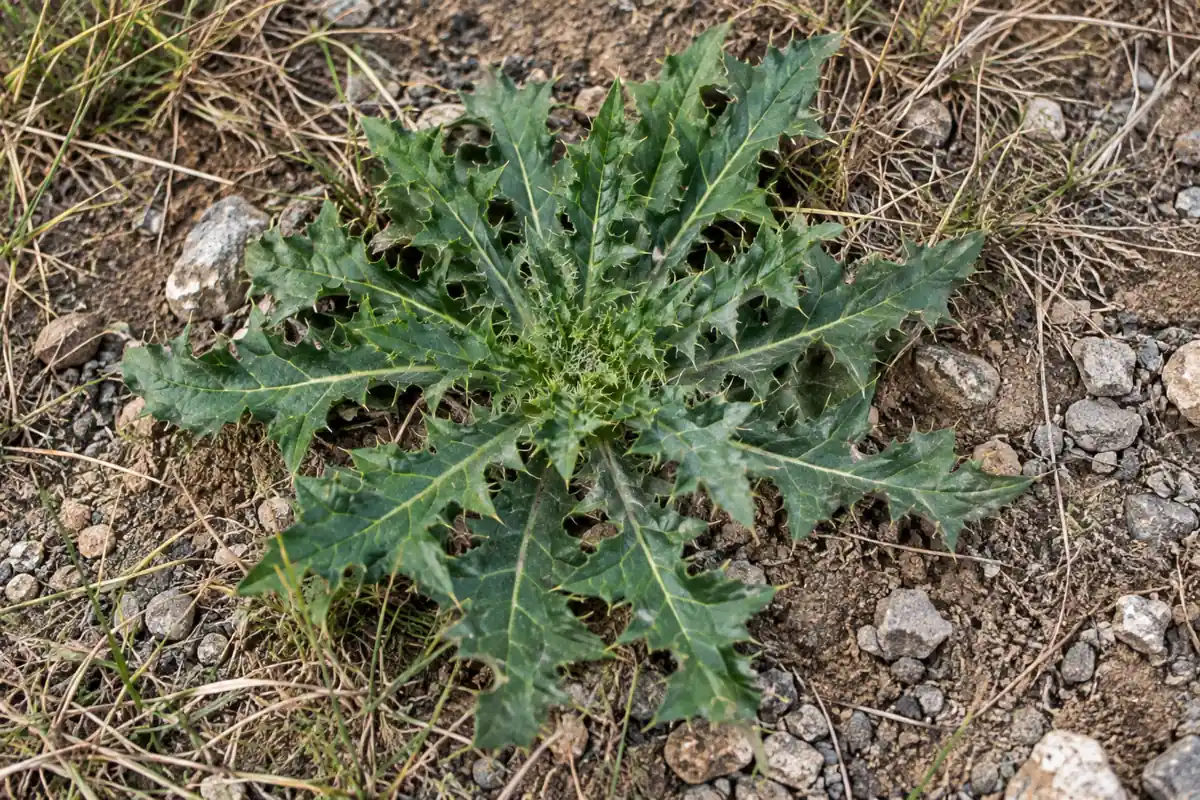
In its first year, bull thistle grows as a flat, low rosette of leaves lying close to the ground. Look for these features:
ADVERTISEMENT
- Dark green leaves that are deeply lobed, almost cut into segments.
- Spines along the leaf edges and tips, often quite sharp.
- A rosette shape, with the leaves radiating outward from a single center point.
- A single thick root going straight down from the middle of that center.
The Second Year: Stalk and Flowers
If a plant is left to grow, the following year it rises into a tall, spiny stalk. At the top it forms a round, spiny flower bud that opens into a tuft of purple-pink petals.
Be Completely Sure of Your Identification
Many plants have spiny leaves, and not all of them are edible. Before you eat any wild plant, compare it with a trustworthy field guide for your region, or ask a local foraging expert or botanist to confirm it. If you are not completely sure what a plant is, do not eat it. That rule has no exceptions.
Where Thistle Grows
Bull thistle likes sunny, open ground and disturbed soil. Typical places include:
- Fields and pastures
- Roadsides and ditches
- Edges of paths and trails
- Empty lots and garden margins
How to Forage Thistle Root Responsibly
- Choose clean ground. Plants can absorb what is in the soil. Avoid areas that may have been sprayed with pesticides or herbicides, and skip busy roadsides where exhaust and runoff are a concern.
- Get permission. Ask the landowner before you dig on private property, and check the rules for public land, since digging roots is not allowed in some parks and preserves.
- Know your local rules. In some places thistles are classed as a weed to be controlled, and herbicide use is common for that reason. If in doubt, ask the owner or your local agricultural office.
How to Dig and Prepare Thistle Root
Digging
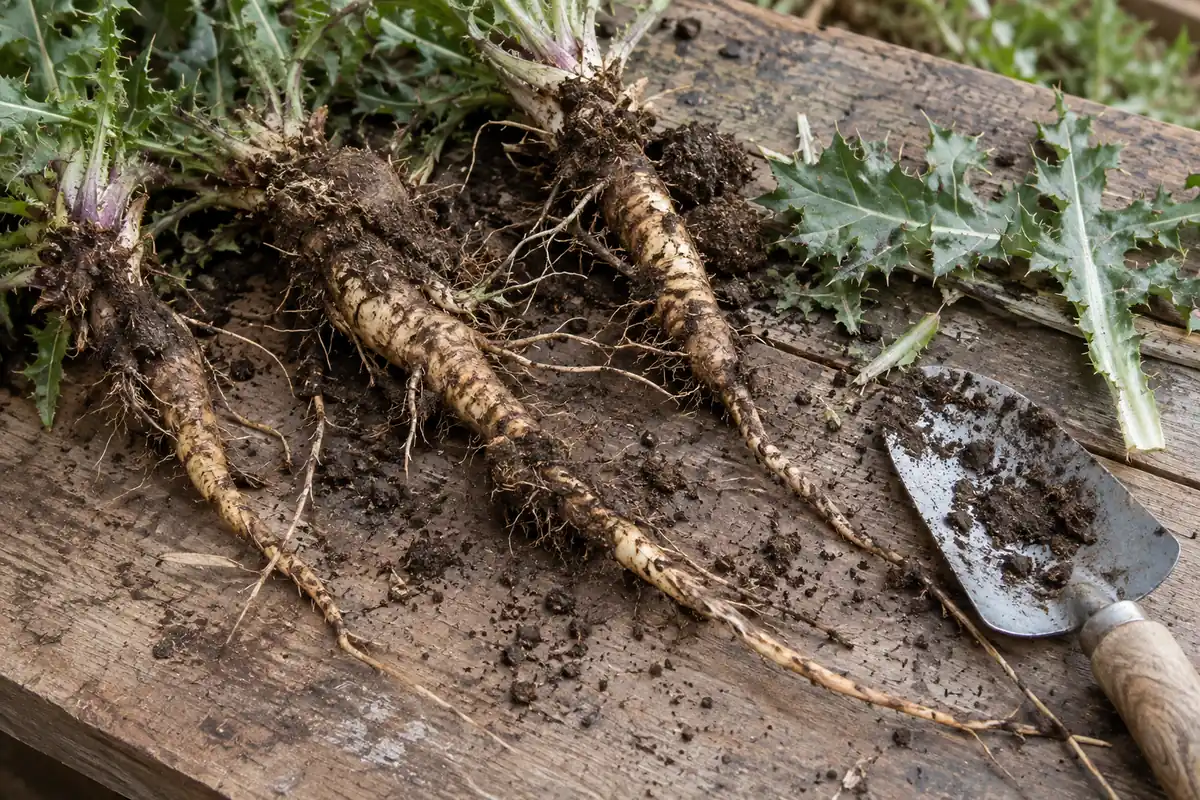
- Wear thick gloves and long sleeves. Even young rosettes can have spines that go straight through thin fabric.
- Choose a first-year rosette that has not started to form a central stalk.
- Push a sturdy trowel into the soil a few inches out from the plant and work around it, loosening the earth.
- Lift the root out gently, following the taproot down as far as it goes.
- Trim off the leaves and shake off loose soil.
Cleaning and Peeling
Scrub the roots well under running water with a stiff vegetable brush. Then peel them like a parsnip or carrot, taking off the darker outer skin. Cut away any woody or tough sections, then slice the roots into pieces of about the same size so they cook evenly.
ADVERTISEMENT
How to Cook Thistle Root
Treat thistle root like any other root vegetable. These are the simplest approaches.
Boiled with Butter and Salt
Simmer peeled slices in salted water until they are tender when pierced with a fork, usually around 10 to 15 minutes depending on thickness. Drain, then toss with butter and a pinch of salt.
Roasted with Olive Oil
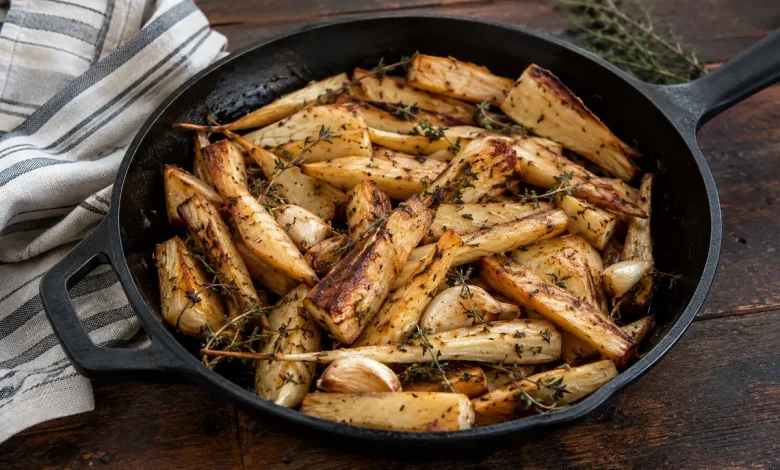
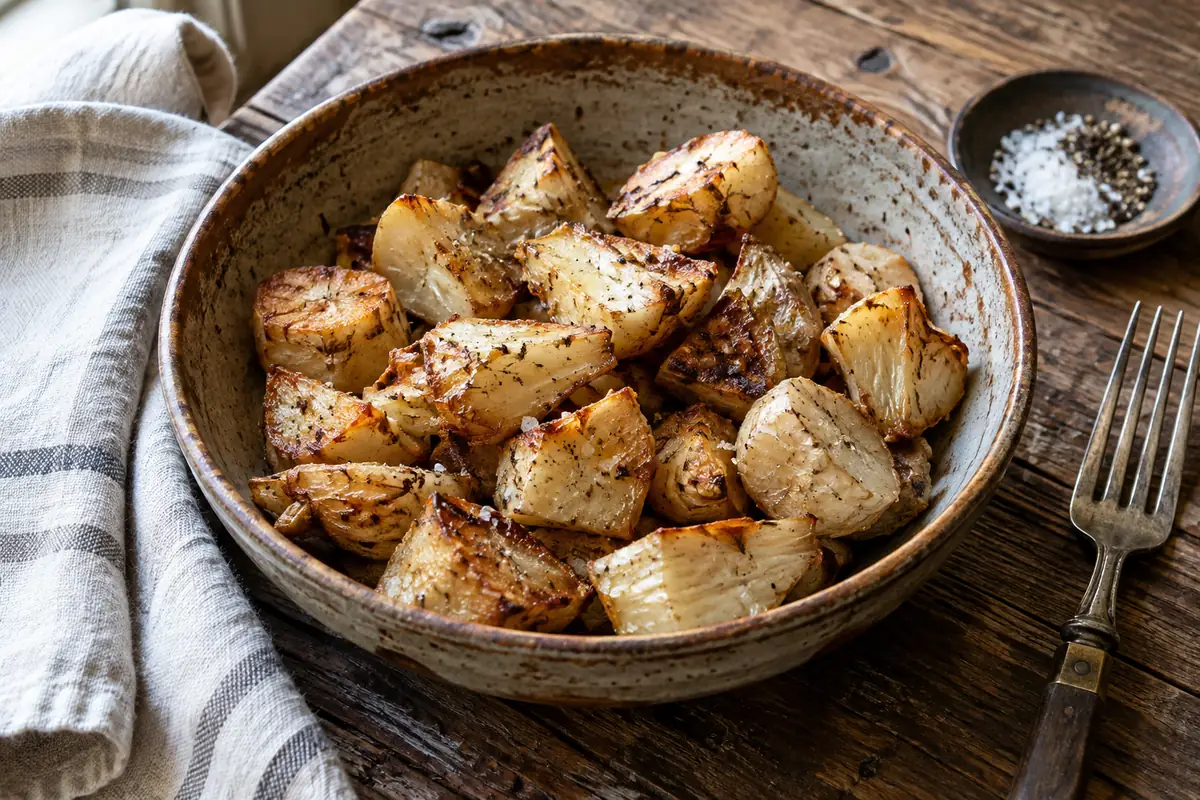
Roasting brings out a deeper, slightly sweeter flavor and gives the edges some color. The recipe below is a good starting point.
In Soups and Stews
Add peeled, sliced roots to a pot of soup or stew at the same stage you would add potatoes or parsnips. They soften as they simmer and take on the flavor of the broth.
A Note on Stalks and Flower Heads
The peeled stalks of the young flowering plant have also been eaten traditionally, and the flower heads have been preserved in some cooking traditions. These parts take more care, since the spines are everywhere and need to be trimmed off completely. If you are new to foraging, start with the first-year root and learn the plant well before trying anything else.
ADVERTISEMENT
Roasted Thistle Root Recipe
This recipe boils the roots briefly first, which softens them, and then roasts them at a high temperature to finish.
Ingredients
- 1 lb peeled thistle roots, sliced into pieces of similar size
- 2 tbsp olive oil
- 1/2 tsp salt
- 1/4 tsp black pepper
- 2 cloves garlic, minced
- Fresh or dried thyme (optional)
Instructions
- Heat the oven to 425°F (220°C).
- Bring a pot of salted water to a boil. Add the sliced roots and boil for 10 minutes, then drain well and let them steam dry for a minute or two.
- Toss the roots in a bowl with the olive oil, salt, pepper and garlic. Add a pinch of thyme if you are using it.
- Spread them in a single layer on a baking sheet or in a cast-iron skillet. Do not crowd the pan, or they will steam instead of browning.
- Roast for 20 to 25 minutes, turning once halfway through, until golden at the edges and tender in the middle.
- Taste, adjust the salt and serve warm.
What Does It Taste Like?
Cooked thistle root is generally described as mild and a little earthy, a bit like parsnip or salsify. Young, first-year roots that are peeled well tend to give the best result. Taste a small piece first.
Thistle in Folk Herbal Tradition
Thistles have a place in folk herbal traditions in different parts of the world, and they appear in old plant books. That is a matter of history and culture, and nothing in this article suggests that thistle root prevents, treats or cures any condition.
Important Safety Notes
This article is for general cooking and food information only. It is not medical advice. Talk to your doctor before eating thistle root if you are pregnant, nursing or taking any medication. Thistle belongs to the daisy (aster) family, so avoid it if you are allergic to related plants such as ragweed, chamomile or sunflowers. Stop eating it and get medical help if you notice itching, swelling, a rash or trouble breathing. Never eat a wild plant unless you have identified it with complete certainty.
ADVERTISEMENT
Frequently Asked Questions
Can you eat thistle root raw?
It is usually cooked. Raw roots can be tough and fibrous, and cooking softens them and improves the flavor. Boiling, roasting or simmering in soup are the most common methods.
When is the best time to dig thistle root?
Dig during the first year, while the plant is still a low rosette with no central stalk. Once the plant starts to bolt and flower, the root generally becomes tougher and less pleasant to eat.
How do I tell bull thistle from other spiny plants?
Look at the whole plant: a ground-hugging rosette of dark green, deeply lobed, spiny leaves growing from one thick taproot. Because several plants look similar, always confirm with a regional field guide or a local expert before eating anything.
Is it safe to forage thistle from the roadside?
It is better to avoid it. Roadside soil can hold pollutants, and verges are sometimes sprayed with herbicides. Pick an area you know is clean, such as your own land or a spot where the owner has given you permission and can tell you it is untreated.