ADVERTISEMENT
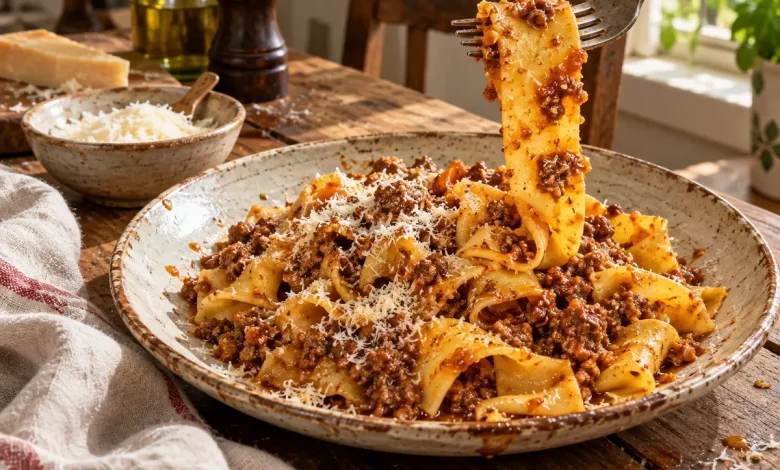
Pappardelle bolognese is what you make when you want a proper Sunday pot of ragù and a pasta that can hold its own against it. The sauce is built slowly: a finely chopped soffritto, two kinds of ground meat, a splash of wine, milk to soften everything, and a couple of hours of barely-there simmering. The result is rich, deeply savory and spoonable, and it clings to wide egg ribbons far better than it would to thin spaghetti.
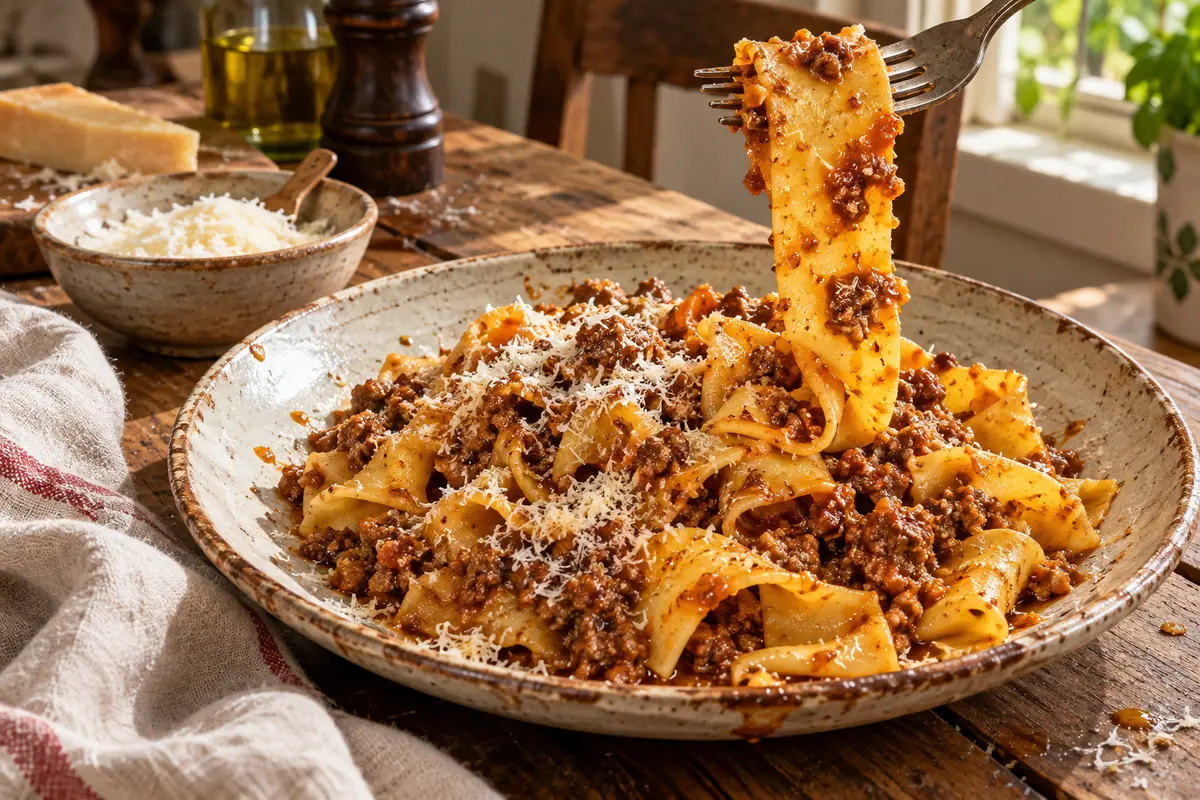
This version serves 6 and makes enough sauce that you’ll likely have some left over, which is a good thing. It tastes even better the next day.
Why Pappardelle Works So Well With Bolognese
A real meat ragù is thick and chunky, not a pourable tomato sauce. Skinny strands let it slide off, while wide, flat pappardelle give the sauce plenty of surface to grab. Each forkful carries a bit of meat, a bit of silky tomato and a little melted Parmigiano.
- Two meats, better flavor. Beef brings depth and pork brings richness and tenderness.
- Milk and wine do quiet work. The milk rounds off the acidity and the wine adds brightness, so the sauce tastes balanced rather than sharp.
- It keeps and freezes well, so one big batch covers more than one dinner.
Ingredients for Pappardelle Bolognese
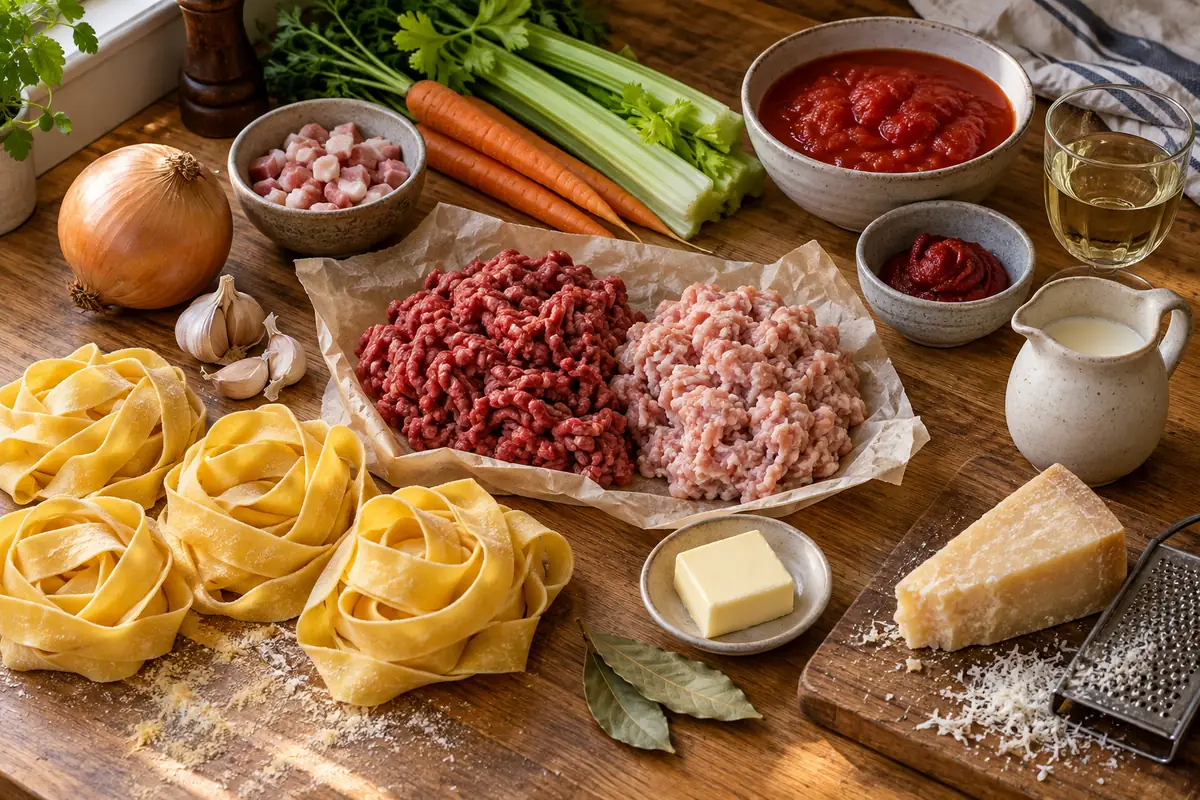
Nothing here is unusual. The only real investment is time.
For the Ragù
- 2 tablespoons olive oil (30 ml)
- 2 tablespoons unsalted butter (28 g)
- 4 ounces pancetta, finely diced (115 g), optional
- 1 large yellow onion, finely chopped (about 300 g)
- 2 medium carrots, finely chopped (about 150 g)
- 2 celery ribs, finely chopped (about 100 g)
- 2 garlic cloves, minced
- 1 pound ground beef (450 g), preferably 80/20
- 1 pound ground pork (450 g)
- 3 tablespoons tomato paste (50 g)
- 1 cup dry white or red wine (240 ml)
- 1 cup whole milk (240 ml)
- 1 can (28 ounces) crushed tomatoes (800 g)
- 2 bay leaves
- 1½ teaspoons kosher salt, plus more to taste
- ½ teaspoon freshly cracked black pepper
- Pinch of freshly grated nutmeg, optional
- ½ to 1 cup water or low-sodium beef broth, as needed (120 to 240 ml)
For the Pasta and Finishing
- 1¼ pounds fresh pappardelle (570 g), or 1 pound dried (450 g)
- 2 tablespoons unsalted butter (28 g)
- 1 cup freshly grated Parmigiano-Reggiano (about 90 g), plus extra for serving
- Kosher salt for the pasta water
How to Make Pappardelle Bolognese
Step 1: Build the Soffritto
- Heat the olive oil and butter in a large Dutch oven or heavy pot over medium heat. If you’re using pancetta, add it now and cook for 5 to 6 minutes, until the fat renders and the edges begin to color.
- Add the onion, carrots and celery with a pinch of the salt. Cook, stirring often, for 10 to 12 minutes, until the vegetables are soft, sweet and lightly golden. Don’t rush this part. Chopping the vegetables small makes them melt into the sauce.
- Stir in the garlic and cook for 30 seconds, just until fragrant.
Step 2: Brown the Meat
- Raise the heat to medium-high and add the beef and pork. Break the meat into small pieces with a wooden spoon and cook for 10 to 12 minutes. You want it to lose its pink color and pick up a little browning on the bottom of the pot. Spoon off excess fat if the pot looks greasy, but leave a little behind for flavor.
- Add the tomato paste, remaining salt and pepper, and stir for 2 minutes until the paste darkens slightly.
Step 3: Add the Wine and Milk
- Pour in the wine and scrape up the browned bits from the bottom. Simmer until the wine has mostly cooked off, about 5 minutes.
- Add the milk and the nutmeg, if using. Simmer gently for 5 to 8 minutes, until the milk has mostly been absorbed and the sauce looks thick.
Step 4: Simmer Low and Slow
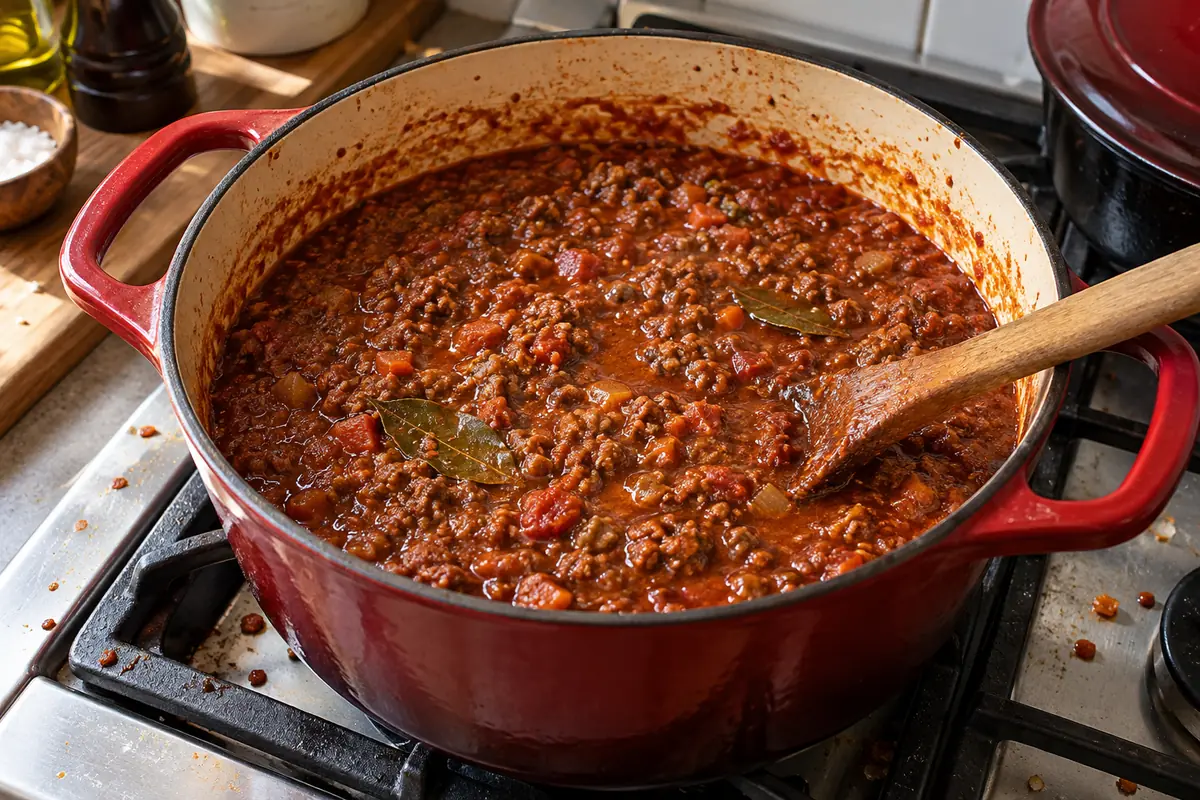
- Stir in the crushed tomatoes and bay leaves. Bring to a bare simmer, then turn the heat to low and partly cover the pot.
- Cook for 2 to 3 hours, stirring every 20 to 30 minutes. If the sauce gets too thick or begins to stick, add a splash of water or broth. You’re looking for just a few lazy bubbles breaking the surface.
- The ragù is ready when it’s dark, thick and glossy, with a layer of reddish oil around the edges and no raw tomato taste. Fish out the bay leaves and taste for salt.
Step 5: Cook and Finish the Pasta
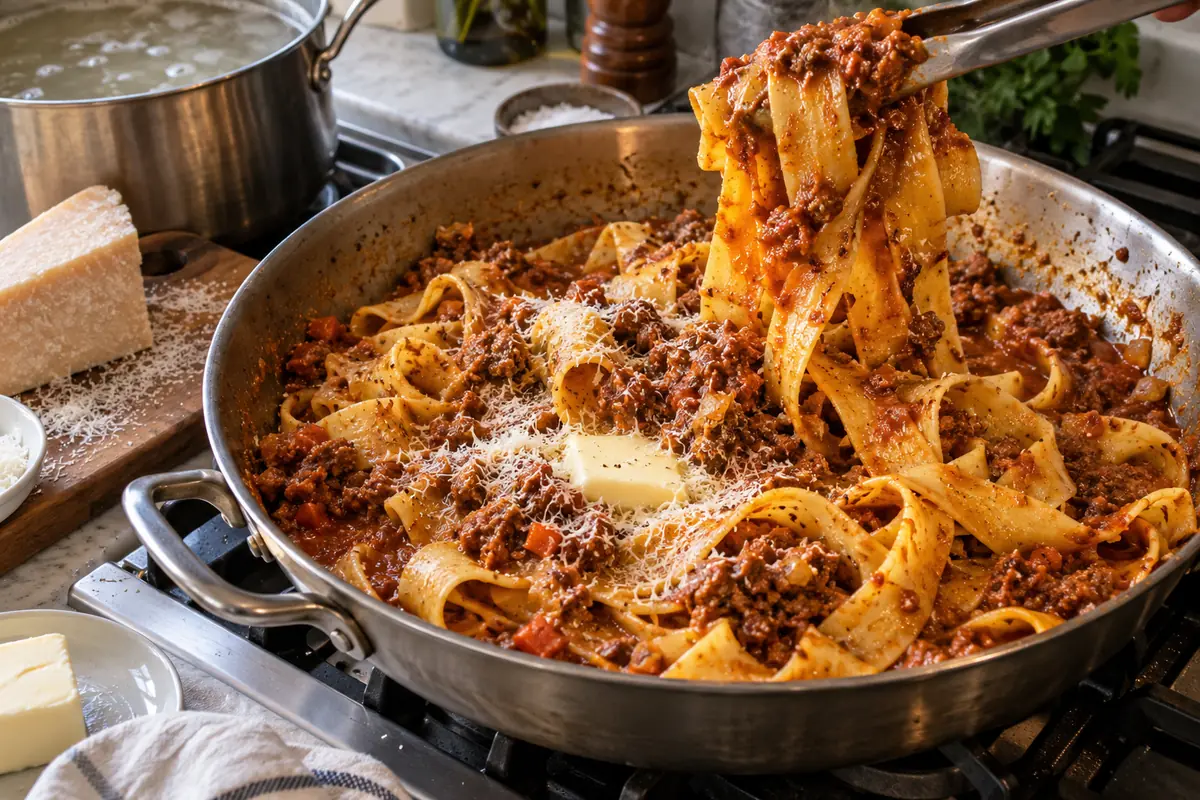
- Bring a large pot of generously salted water to a boil. Cook the pappardelle until just shy of al dente: 2 to 3 minutes for fresh, or 2 minutes less than the package says for dried. Scoop out about 1 cup of pasta water before draining.
- Add the drained pasta straight into the pot of ragù over medium heat. Toss in the butter, half the Parmigiano and ¼ cup of pasta water. Stir and toss for 1 to 2 minutes, adding more pasta water a splash at a time, until the sauce turns glossy and coats every ribbon.
- Serve right away, topped with more Parmigiano.
Tips for the Best Pappardelle Bolognese
- Finish the pasta in the sauce. This is the step that makes it taste like a restaurant dish. The starchy water and butter bind the ragù to the noodles so it doesn’t pool at the bottom of the bowl.
- Use a heavy pot. A Dutch oven holds steady heat and cuts down on scorching. If your stove runs hot, set the pot slightly off-center on the burner or use a heat diffuser.
- Don’t skimp on fat. Lean ground meat gives you a drier, grainier ragù. Beef around 80/20 and regular ground pork give the best texture.
- Salt in layers. A little at the soffritto stage, a little with the meat and a final adjustment at the end. The sauce reduces, so wait to season fully until it’s done.
- Be honest about the time. Two hours gives you a good sauce. Three gives you a deeper, silkier one. Anything shorter is just meat sauce.
Make-Ahead, Storage and Freezing
- Make ahead: The ragù can be made up to 3 days ahead. Cool it, cover it and refrigerate. The flavor gets better with a night’s rest.
- Freeze: Freeze the cooled ragù (without pasta) in portions for up to 3 months. Thaw overnight in the fridge.
- Reheat: Warm the sauce in a pot over low heat with a splash of water. Cook fresh pasta and finish it in the sauce as usual. Leftover dressed pasta reheats best in a skillet with a splash of water.
Variations
- Without pancetta: Skip it and add an extra tablespoon of butter or olive oil. The sauce will still taste great.
- Wine choice: Dry white gives a lighter, brighter ragù. Dry red gives a deeper, slightly darker one. Either one works.
- With mushrooms: Add 8 ounces of finely chopped cremini to the soffritto and cook until their liquid evaporates.
- Different pasta: Tagliatelle, fettuccine or rigatoni all work if you can’t find pappardelle.
Pappardelle Bolognese FAQ
Can I use fresh or dried pappardelle?
Both work. Fresh egg pappardelle is silkier and cooks in just a few minutes, while dried holds up well and is easier to find. Whichever you use, undercook it slightly and finish it in the sauce.
Why is there milk in bolognese?
Milk softens the acidity of the tomatoes and tenderizes the meat, which gives the ragù a rounder, more mellow flavor. Add it before the tomatoes and let it cook down before moving on.
ADVERTISEMENT
How long should bolognese simmer?
Plan for at least 2 hours and up to 3, on the lowest heat that keeps the sauce gently bubbling. It should be thick and glossy, not watery, when it’s done.
Can I make pappardelle bolognese without wine?
Yes. Replace the wine with an equal amount of beef broth and add a teaspoon of red wine vinegar or lemon juice at the end for a touch of brightness.
Final Thoughts
Pappardelle bolognese rewards patience more than skill. Cook the soffritto until it’s soft, give the ragù its full simmer, and finish the pasta in the pot with a splash of starchy water and a handful of Parmigiano. Make a double batch and freeze half.