ADVERTISEMENT
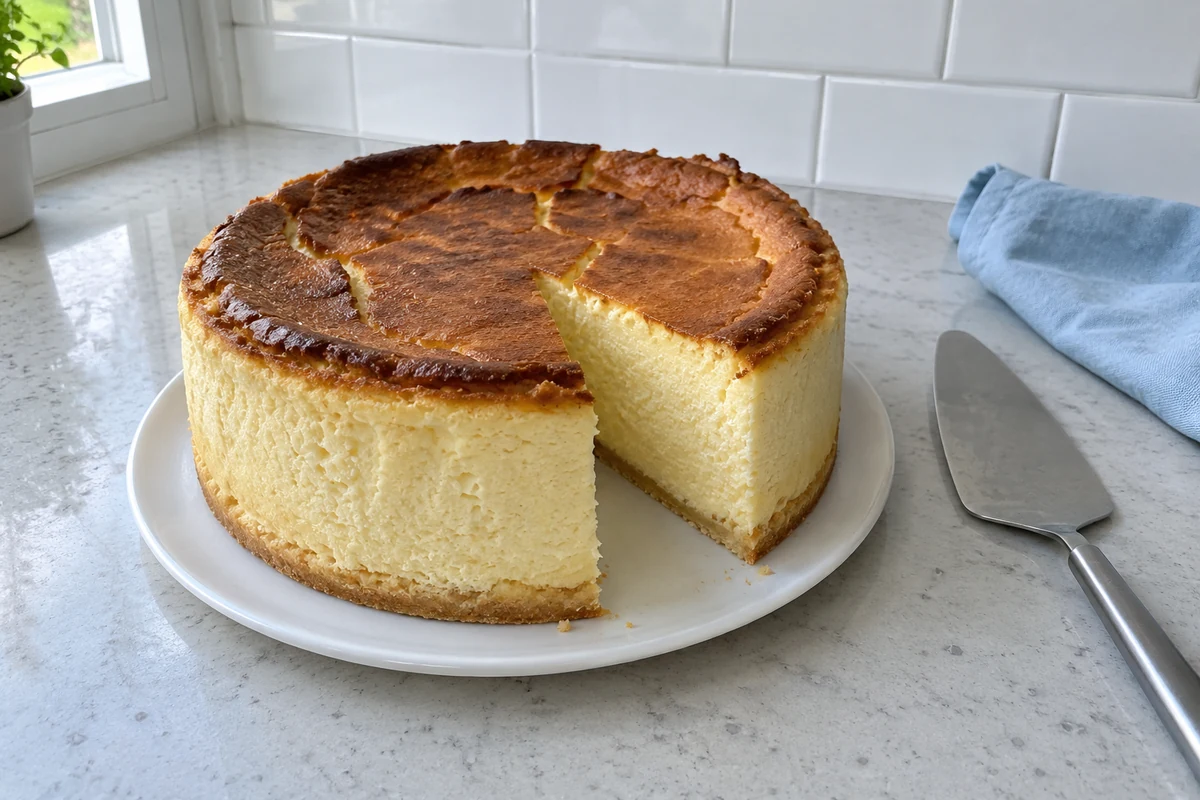
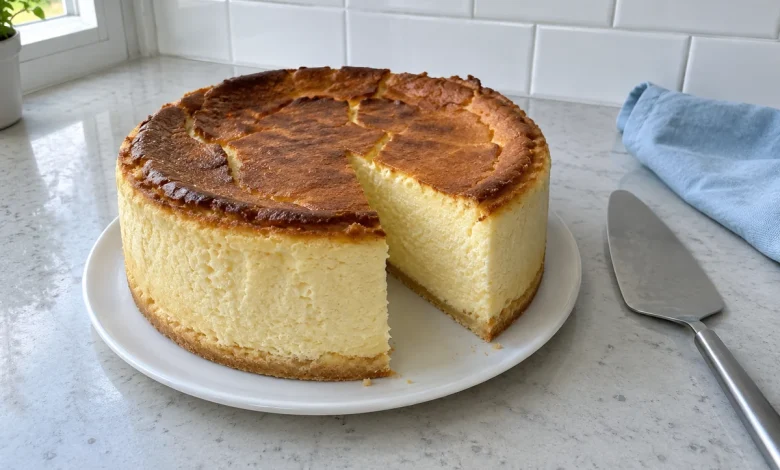
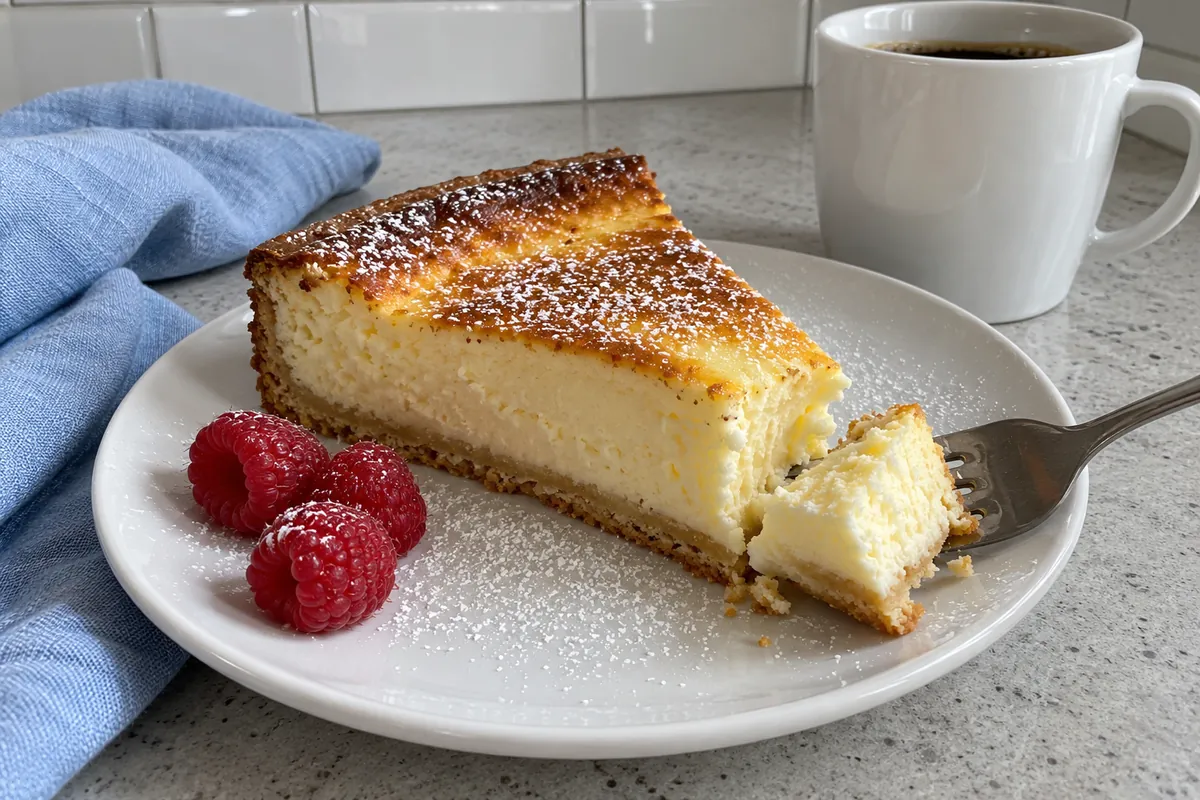
German cheesecake, known as Käsekuchen, is a tall, golden cheesecake made with quark instead of cream cheese. Quark gives it a lighter, softer texture and a gentle tang, while lemon zest and vanilla keep the flavor fresh and clean. It bakes on a buttery shortcrust base in a springform pan and comes out with a lightly browned top and a creamy, sliceable center.
Why You’ll Like This German Cheesecake
If you find American-style cheesecake too rich, this one will win you over. It is airy and moist rather than dense, with a mild, slightly tangy flavor that pairs well with fruit or a dusting of powdered sugar.
- Lighter texture: quark makes a creamy cake that is not heavy.
- Bright flavor: lemon zest and vanilla balance the gentle tang.
- No water bath: it bakes right on the oven rack.
- Flexible: make it with a shortcrust base or completely crustless.
Ingredients for German Cheesecake
For the Shortcrust Base
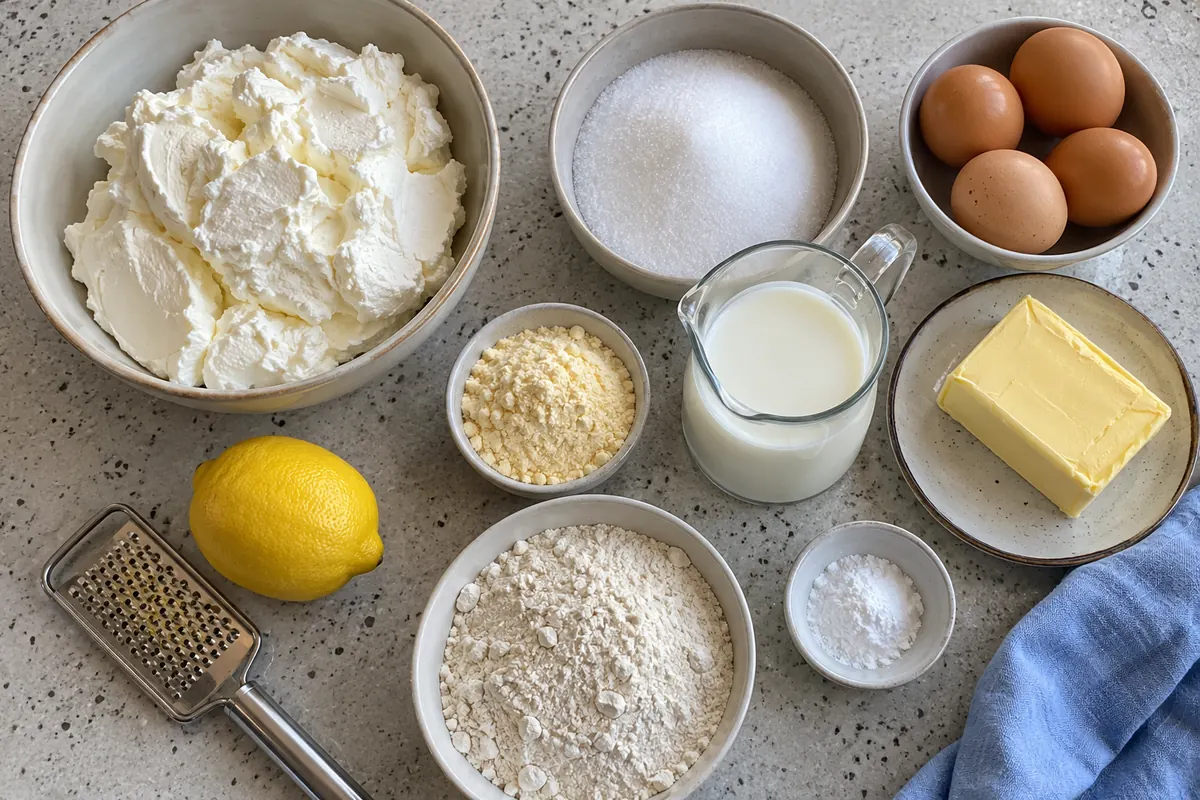
- 1 1/2 cups (190 g) all-purpose flour
- 1/3 cup (65 g) granulated sugar
- 1 tsp baking powder
- Pinch of salt
- 1/2 cup (115 g) cold unsalted butter, cubed
- 1 large egg
For the Quark Filling
- 2 lbs (900 g) quark, well drained
- 1 cup (200 g) granulated sugar
- 4 large eggs, at room temperature
- 1/2 cup (115 g) unsalted butter, melted and slightly cooled
- 1 cup (240 ml) whole milk or half milk and half heavy cream
- 2 packets (about 1/3 cup, 80 g) vanilla pudding powder, or 1/3 cup cornstarch plus 1 tsp vanilla extract
- Finely grated zest of 1 lemon
- 1 tbsp fresh lemon juice
- Pinch of salt
You will need a 9-inch springform pan, a large mixing bowl, a whisk or hand mixer and a wire rack. Makes 12 slices.
Ingredient Notes
The quark: Quark is a fresh, soft, tangy cheese common in German baking. Use low-fat or full-fat; full-fat gives the creamiest result. If it looks wet, drain it in a fine sieve lined with cheesecloth for an hour. If you cannot find quark, use the same weight of strained Greek yogurt, farmer’s cheese blended until smooth, or a mix of the two.
The pudding powder: Vanilla pudding powder thickens the filling and adds flavor. Cornstarch with vanilla extract works the same way.
The eggs: Room temperature eggs blend smoothly. For an even fluffier cake, separate them, beat the whites to soft peaks and fold them in at the end.
ADVERTISEMENT
The butter and milk: Melted butter adds richness, and milk or cream loosens the filling so it bakes up soft and smooth.
How to Make German Cheesecake
Step by Step
- Make the dough. In a bowl, mix the flour, sugar, baking powder and salt. Rub in the cold butter with your fingertips until it looks like coarse crumbs, then add the egg and knead briefly into a smooth dough. Wrap and chill for 30 minutes.
- Prepare the pan. Heat the oven to 350°F (175°C). Grease the springform pan and line the bottom with parchment.
- Shape the crust. Press about two thirds of the dough evenly over the bottom of the pan. Roll the rest into a rope and press it up the sides to a height of about 1 1/2 inches. Prick the base with a fork and refrigerate while you make the filling.
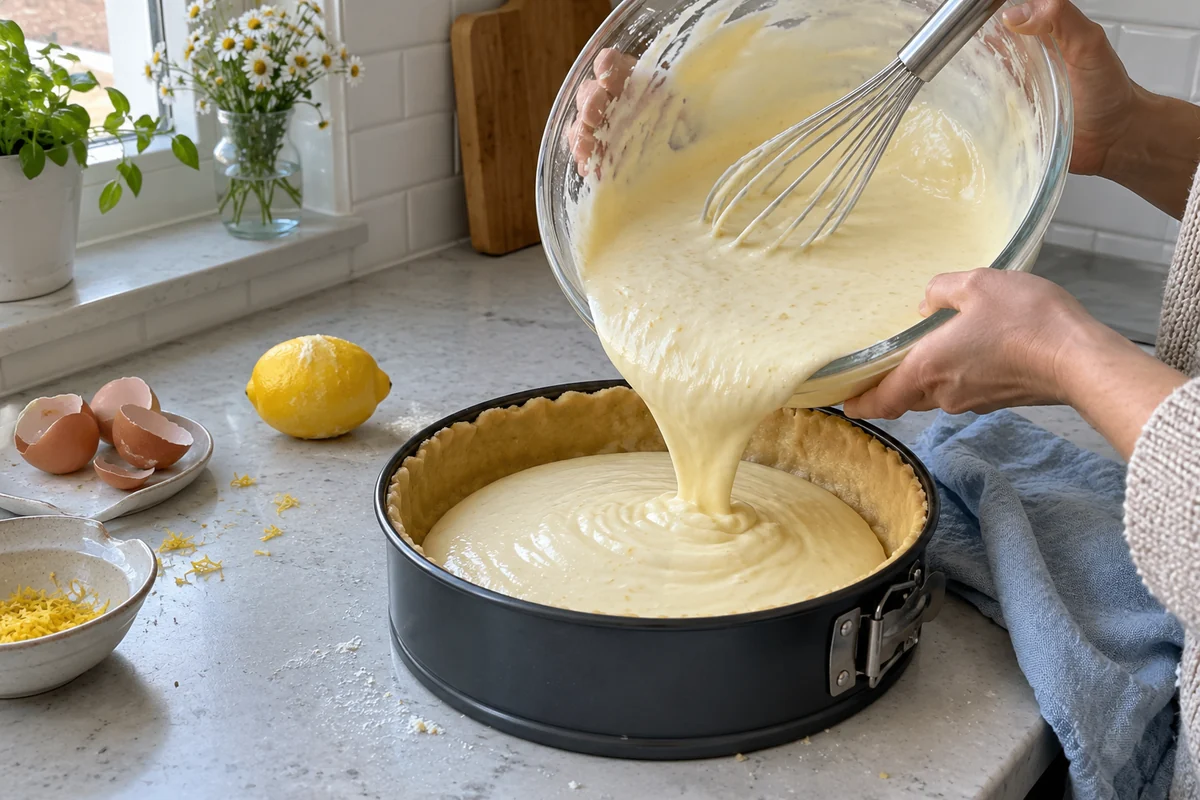
- Mix the filling. In a large bowl, whisk the quark and sugar until smooth. Whisk in the eggs one at a time, then the melted butter, milk, pudding powder, lemon zest, lemon juice and salt. Mix just until smooth and no lumps of powder remain. The filling will be quite liquid.
- Fill the pan. Pour the filling into the crust and smooth the top.
- Bake. Bake on the lower-middle rack for 60 to 70 minutes, until the top is deep golden and the center jiggles only slightly when you nudge the pan. If the top browns too fast, lay a sheet of foil loosely over it for the last 20 minutes.
- Cool slowly. Turn off the oven, prop the door open a few inches and leave the cake inside for 15 minutes. Then run a thin knife around the edge and cool completely on a wire rack.
- Chill and serve. Refrigerate for at least 4 hours or overnight before releasing the ring and slicing.
Tips for the Best German Cheesecake
Drain the Quark
Extra liquid makes a soggy, loose filling. Draining wetter quark gives a creamy, sliceable cake.
Do Not Overmix
Whisk only until smooth. Beating in lots of air makes the cake puff up high in the oven and then sink as it cools.
Cool It Gradually
A sudden temperature change causes cracks. Letting the cake rest in the turned-off oven helps it settle evenly.
Loosen the Edges
Running a knife around the rim right after baking lets the cake shrink without tearing at the sides.
ADVERTISEMENT
Variations
- Crustless: skip the shortcrust, grease the pan well and dust it with semolina or fine breadcrumbs. Bake for 50 to 60 minutes.
- Mandarin or apricot: scatter well-drained canned mandarin segments or apricot halves over the crust before adding the filling.
- Raisin: stir 1/2 cup raisins soaked in warm water into the filling.
- Streusel top: sprinkle a simple butter, sugar and flour crumble over the cake for the last 25 minutes of baking.
- Extra citrus: add orange zest along with the lemon for a brighter flavor.
Storage
Refrigerator: Cover the cooled cake or store slices in an airtight container for up to 4 days.
Freezer: Wrap individual slices or the whole cake tightly in plastic wrap and foil and freeze for up to 2 months. Thaw overnight in the refrigerator.
Make-ahead: This cake is ideal for baking a day ahead, since it needs a long chill anyway.
Frequently Asked Questions
What is the difference between German cheesecake and regular cheesecake?
German cheesecake uses quark instead of cream cheese, so it is lighter, less sweet and slightly tangy. It usually sits on a shortcrust base rather than a cookie crumb crust and bakes without a water bath.
Why did my cheesecake sink in the middle?
A little sinking is normal for Käsekuchen. Large dips usually come from overmixing, baking at too high a temperature or cooling too quickly. Mix gently and let it cool slowly in the oven.
ADVERTISEMENT
Can I use cream cheese instead of quark?
You can replace up to half of the quark with softened cream cheese for a richer cake. Replacing all of it changes the texture, so strained Greek yogurt or farmer’s cheese is a closer substitute.
How do I know when it is done?
The top should be golden and puffed, the edges set, and the center should wobble only slightly. It will firm up completely as it cools and chills.