ADVERTISEMENT
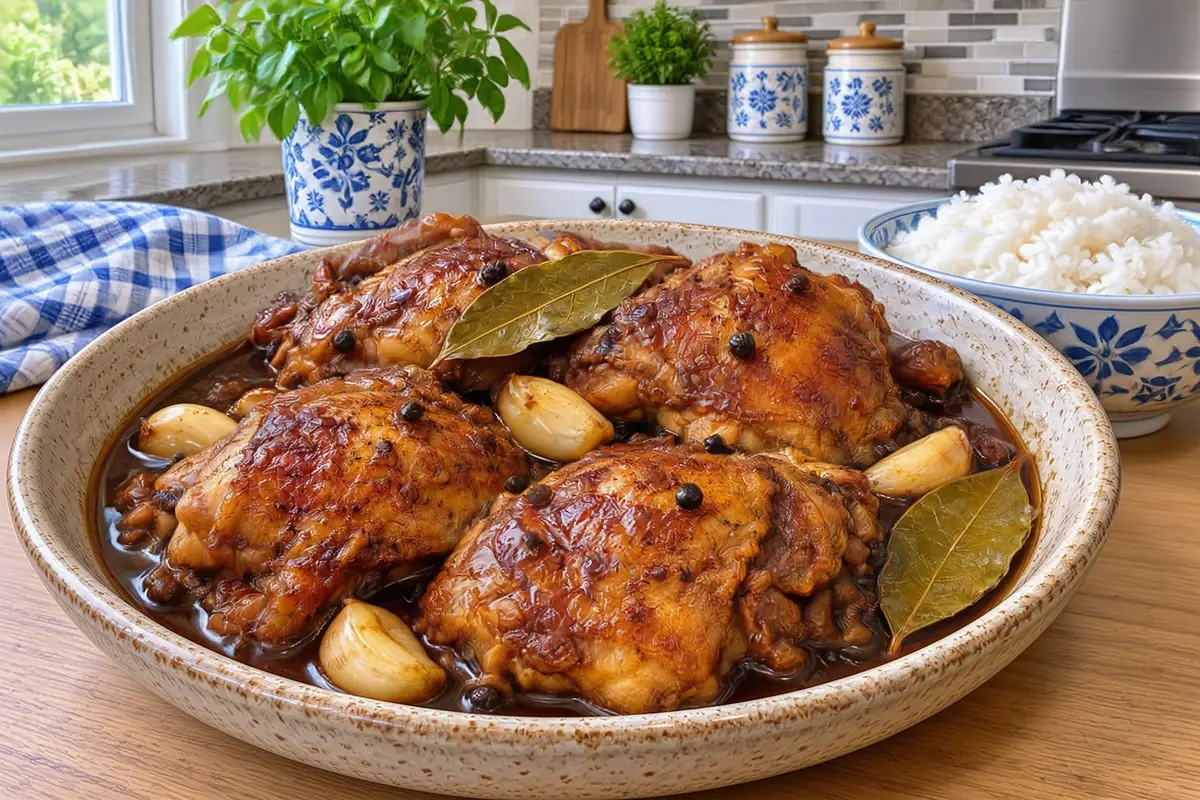
Filipino chicken adobo is a savory braise of bone-in chicken thighs simmered in soy sauce, white vinegar, water, garlic, bay leaves and whole peppercorns. The chicken browns first in a little oil, then cooks in the tangy sauce until the meat is tender and the sauce reduces to a glossy coat.
The method is straightforward: pat the thighs dry, brown them skin-side down, then turn them and brown briefly. Add the soy sauce, vinegar, water, crushed garlic, bay leaves and peppercorns. Cover and simmer, then uncover and keep simmering until the sauce thickens and the chicken reaches at least 165°F in the thickest part. Remove the bay leaves and spoon the extra sauce over steamed rice.
Why You’ll Love This Filipino Chicken Adobo
This is a one-pan dinner built from pantry staples. Soy sauce and vinegar do the heavy lifting, so you do not need a long ingredient list or a special marinade. The thighs stay juicy, the sauce turns glossy as it reduces, and a pot of rice is enough to make a full meal.
The leftovers keep well, and the flavor often tastes even better the next day once the sauce has settled. It is a practical weeknight braise, and it also works when you want a simple, savory plate with very little last-minute work. The sauce is generous enough to spoon over a second helping of rice.
What Is Filipino Chicken Adobo?
Filipino chicken adobo is a soy and vinegar braise, cooked until the chicken is tender and the sauce is dark, tangy and savory. This version uses bone-in chicken thighs, white vinegar, crushed garlic, bay leaves and whole peppercorns. There is no long list of extra spices, and the sauce is meant to be spooned over rice.
A finished bowl should show glossy browned thighs, visible garlic cloves, bay leaves and peppercorns in a dark sauce. The skin should look bronzed, not pale, and the sauce should cling to the chicken instead of sitting thin and watery in the bowl. Serve it in a stoneware bowl or from the pan, with steamed rice on the side.
ADVERTISEMENT
Ingredients for Filipino Chicken Adobo
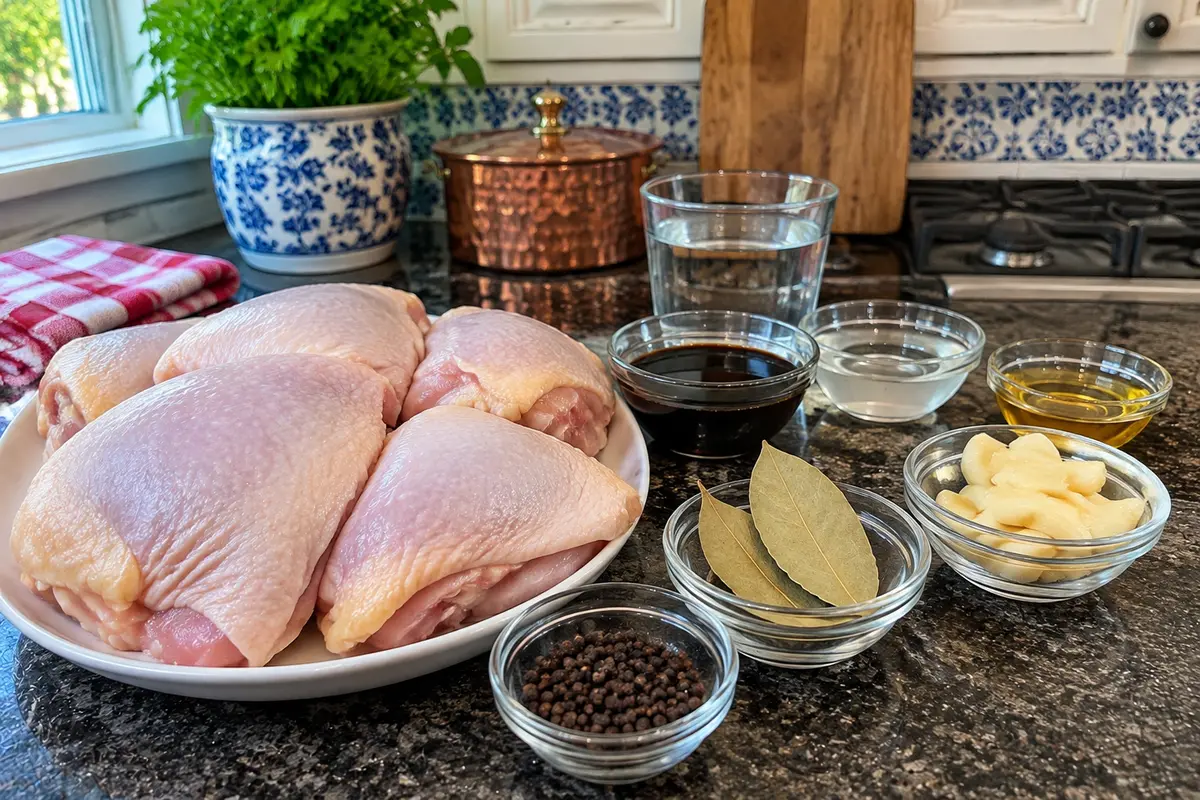
- 2 lb bone-in chicken thighs
- 1/3 cup soy sauce
- 1/3 cup white vinegar
- 1/2 cup water
- 5 garlic cloves
- 2 bay leaves
- 1 teaspoon whole peppercorns
- 1 tablespoon oil
- Steamed rice, for serving
Ingredient Notes
Bone-in chicken thighs with the skin on brown well and stay moist as they simmer. If you only have boneless thighs, they will cook a little faster, so start checking the temperature earlier. Pat the chicken dry before it hits the pan, because dry skin browns more evenly than wet skin.
A basic soy sauce and distilled white vinegar are the right match for this pot. Crush the garlic so it releases into the sauce, but leave the cloves in large pieces so they stay visible. Whole peppercorns and bay leaves perfume the braise as it cooks; the bay leaves should come out before you serve. The oil is only for browning, so a modest tablespoon is enough. Rice is not cooked in the sauce, but it is the usual partner on the plate, and a warm bowl of it should be ready when the chicken comes off the heat.
How to Make Filipino Chicken Adobo
Pat the chicken thighs dry with paper towels. Heat the oil in a wide pot or deep skillet over medium-high heat. Set the thighs in the pan skin-side down and let them brown without moving them too soon, then turn and brown the other side briefly. You want color on the skin, not a full cook-through at this stage.
Add the soy sauce, white vinegar, water, crushed garlic, bay leaves and whole peppercorns. The liquid should come partway up the chicken. Bring it to a simmer, then cover and cook for about 25 minutes, turning the thighs once so both sides spend time in the sauce.
Uncover the pan and keep simmering until the sauce reduces and looks glossy, and a thermometer in the thickest part of a thigh, away from the bone, reads at least 165°F. If the sauce is still thin, give it a few more minutes uncovered. Remove the bay leaves, rest the chicken for a couple of minutes, and spoon the extra sauce over steamed rice.
ADVERTISEMENT
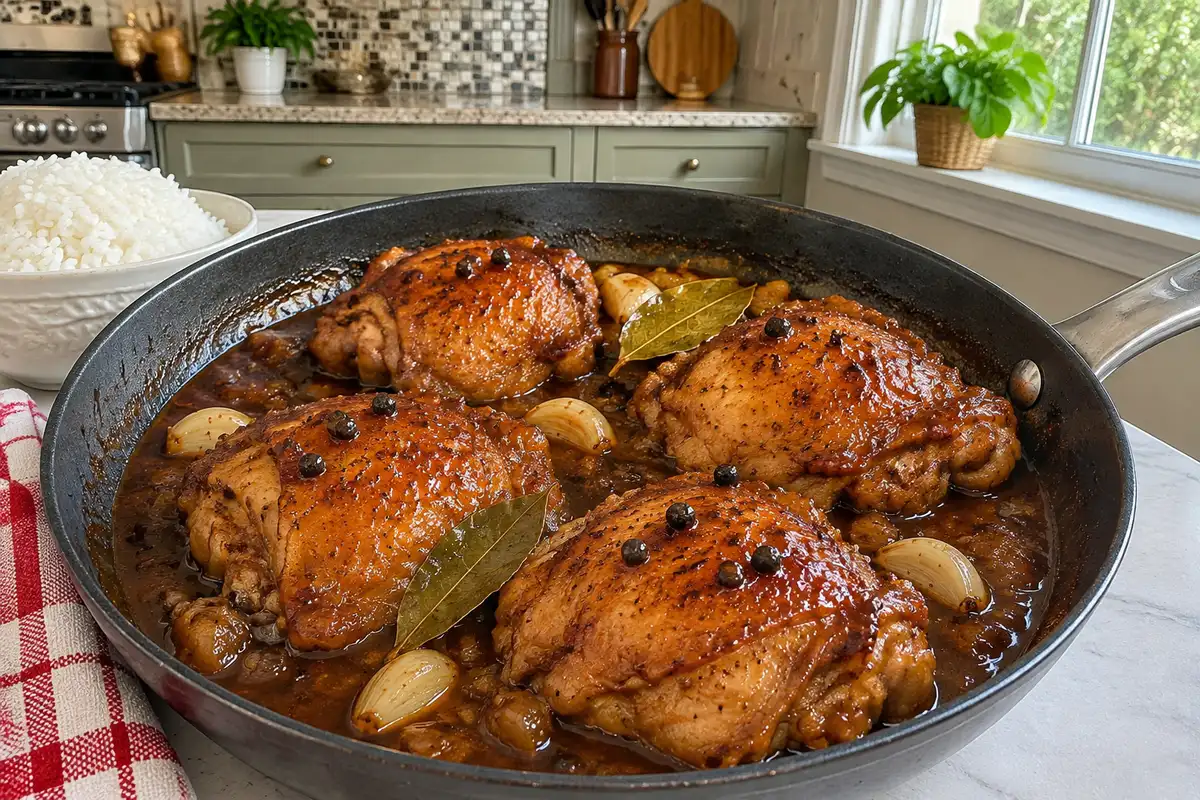
Tips for the Best Filipino Chicken Adobo
Do not crowd the pan when you brown the chicken. If the thighs overlap, they will steam instead of taking on color, so work in batches if you need to and return them all to the pot before the sauce goes in. A wide pan also helps the sauce reduce more evenly once the lid comes off.
Check the temperature in more than one thigh, because pieces cook at slightly different rates. Keep the thermometer off the bone, which can throw the reading. If the sauce tastes too sharp after it reduces, a small splash of water will soften it. If it tastes too salty, a little more water and a few extra minutes of simmering will help it settle.
The sauce should coat the chicken, not drown it. Let it reduce until it looks shiny and slightly thick, then take the pan off the heat so it does not cook down to a sticky glaze. Steamed rice on the side will catch whatever sauce is left in the bowl.
What to Serve With Filipino Chicken Adobo
Steamed white rice is the classic partner, because the tangy soy-vinegar sauce is meant to be spooned over it. A simple cooked green vegetable or a crisp cucumber salad is enough on the side if you want something fresh next to the rich sauce. Keep the plate simple so the soy-vinegar sauce stays the main flavor on the table.
For more chicken dinners from the same kitchen, try this easy chicken rice soup plus this Hawaiian chicken rice bowl too. This lemon herb chicken and rice and this lemon garlic chicken are easy weeknight options as well. These garlic Parmesan chicken breasts add another garlic-forward plate if you want a second chicken recipe.
ADVERTISEMENT
Variations
Drumsticks can replace some or all of the thighs; check them the same way and cook until they reach 165°F. Boneless thighs work too, but they need less time after the lid comes off, so stay nearby and watch the sauce. A short rest in the soy and vinegar before browning is optional if you have 20 to 30 extra minutes.
Some cooks add a pinch of sugar to round out the vinegar, or a little more vinegar if they want a sharper sauce. A splash of water will loosen a pot that has reduced too far. Keep the garlic, bay leaves and peppercorns in place, because those are the flavors that make this taste like chicken adobo.
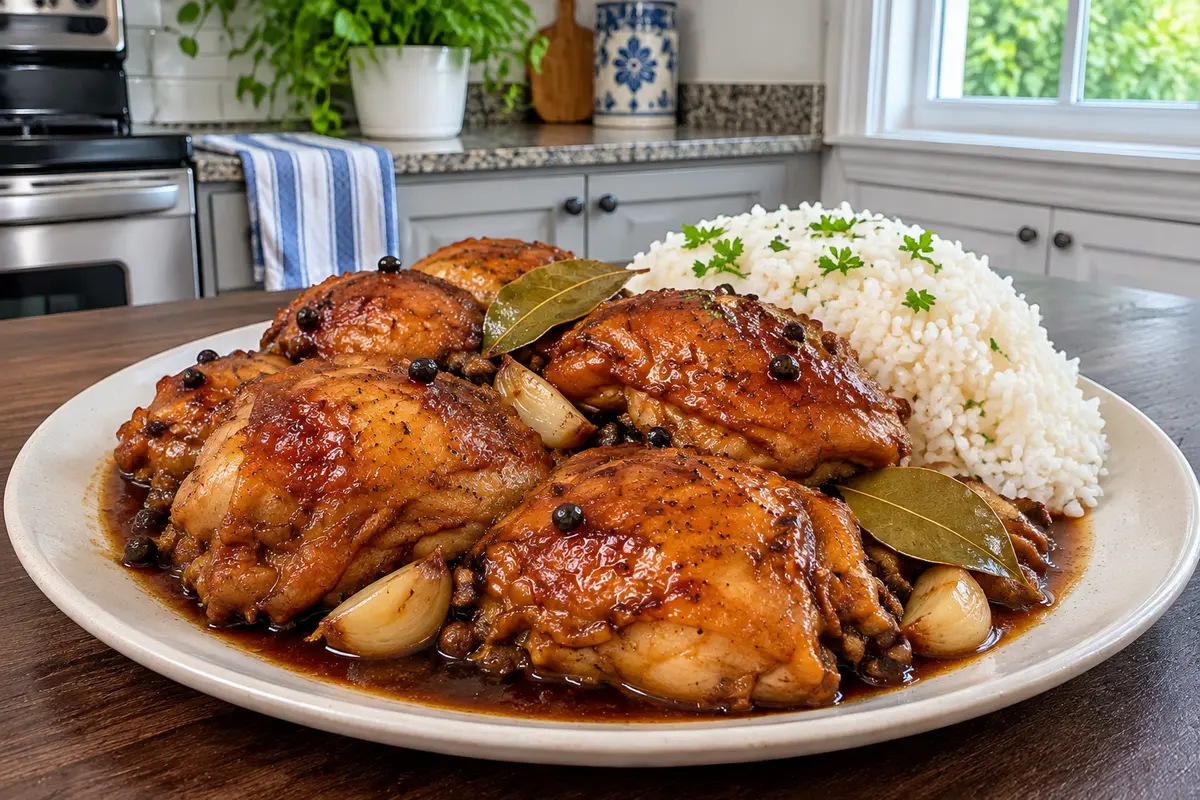
Storage
Let the Filipino chicken adobo cool, then refrigerate it in a covered container with the sauce. Use it within 3 to 4 days, or freeze portions in the sauce for a later meal. Reheat gently on the stove until the chicken is hot and the sauce is glossy again. Leftovers should be heated until they reach 165°F.
For safe cooking and storage, follow the USDA safe minimum internal temperature chart plus the USDA guide to leftovers and food safety too. Cook poultry to 165°F, cool it before you cover it, and do not leave the pot sitting out at room temperature after dinner.
FAQ
Can I use boneless chicken?
Yes. Boneless thighs will cook faster, so start checking the temperature earlier. The sauce may also reduce a little sooner, so keep the heat moderate once the lid is off.
ADVERTISEMENT
How do I know when Filipino chicken adobo is done?
The sauce should look glossy and slightly reduced, and a thermometer in the thickest part of a thigh, away from the bone, should read at least 165°F. The meat should be tender and the skin should look bronzed. Juices in the thickest part should run clear, but the thermometer is the more reliable check to use at the very end of cooking.
Can I use a different vinegar?
White vinegar is the match for this recipe. Another mild vinegar can work in a pinch, but stay with a clean, sharp vinegar and keep the same amount so the sauce does not turn heavy or sweet.
How should I store leftovers?
Cool the chicken, then refrigerate it in a covered container with the sauce for 3 to 4 days. Reheat it on the stove until hot, and check that it reaches 165°F. Frozen portions should be thawed in the refrigerator before you warm them, or reheated gently from frozen with a splash of water.
Why is my sauce too thin or too sharp?
A thin sauce needs more time uncovered so the liquid can reduce. If the sauce tastes too sharp, add a small splash of water and simmer briefly. If it has reduced too far, a little water will loosen it so you can spoon it over rice.