ADVERTISEMENT
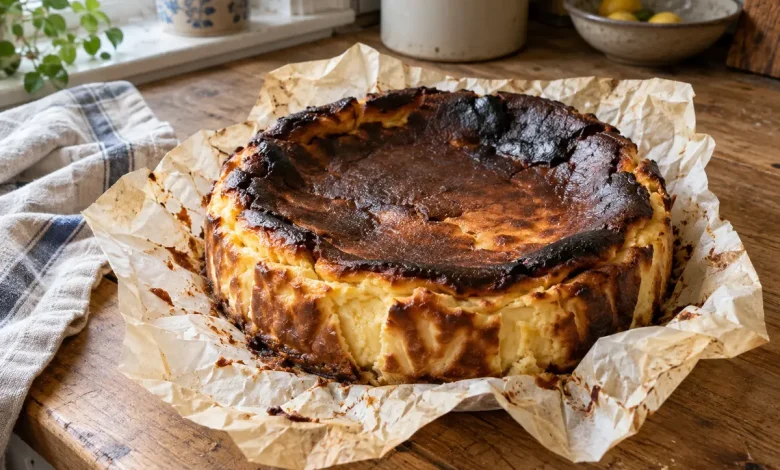
Basque burnt cheesecake is the one dessert I make when I want to look like I tried much harder than I did. There is no crust to press, no water bath to wrestle with, and no worry about cracks, because the cracks and the scorched, almost black top are the whole point. You stir everything in one bowl, pour it into a paper-lined tin, and let a very hot oven do the work. What comes out is creamy, barely set in the middle, and bittersweet on top in a way that plain baked cheesecake never manages.
The cake comes from La Viña, a bar in San Sebastián in the Basque Country of Spain, where it has been served for decades. This version follows that style closely, with a few notes from the mistakes I made along the way so you can skip them.
What Makes a Basque Burnt Cheesecake Different?
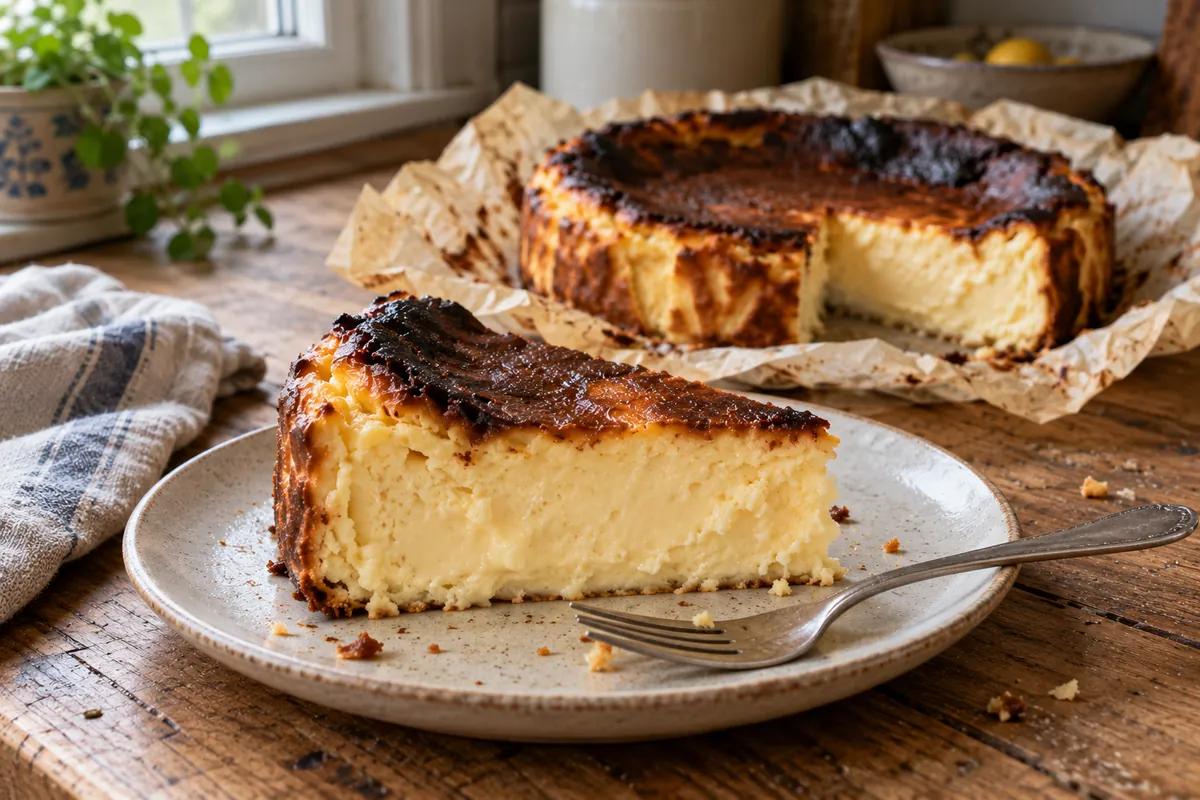
A classic New York cheesecake is baked low and slow, with a crumb base, and is meant to stay pale and smooth. The Basque version does the opposite. It has no crust, it bakes at 220°C (425°F), and the top is supposed to darken to deep mahogany, even patchy black in spots. That heat caramelizes the sugar on the surface and leaves the inside soft, almost like a custard that has not quite made up its mind.
The texture is the other giveaway. Because the centre is pulled out while it still wobbles, the cake sets as it cools into something between cheesecake and crème brûlée filling. It is rich, so small slices go a long way.
Ingredients for Basque Burnt Cheesecake
ADVERTISEMENT
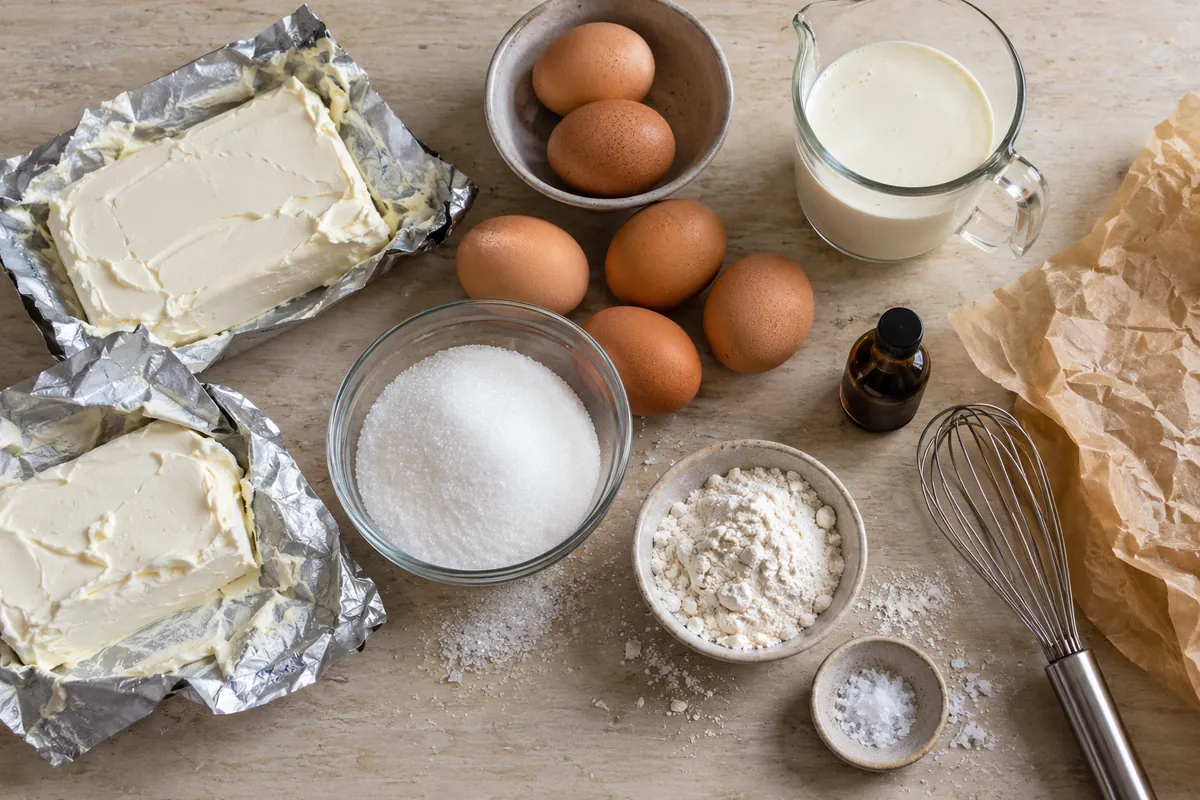
You need seven ingredients, and most of them are probably in your kitchen already. This makes one 23 cm (9-inch) cake that serves 8 to 10.
- 900 g (2 lb) full-fat cream cheese, at room temperature
- 250 g (1 1/4 cups) granulated sugar
- 6 large eggs, at room temperature
- 500 ml (2 cups) heavy cream, at room temperature
- 1 tbsp vanilla extract
- 25 g (about 3 tbsp) plain all-purpose flour
- A pinch of fine salt
Equipment
- 23 cm (9-inch) springform pan, at least 7 cm (3 inches) tall
- Two large sheets of parchment paper
- Large mixing bowl and a whisk or hand mixer
- Fine sieve
Use block cream cheese, the kind sold wrapped in foil, not the spreadable tub. The tub version contains more water and can leave the cake loose and a little weepy.
How to Make Basque Burnt Cheesecake, Step by Step
Before you start
Take the cream cheese, eggs and cream out of the fridge at least an hour ahead. Cold cream cheese stays lumpy no matter how long you beat it, and lumps are the most common reason the batter looks curdled.
- Heat the oven. Set it to 220°C (425°F), conventional if you have the choice, and put the rack in the middle. Give it a full 20 minutes to come up to temperature.
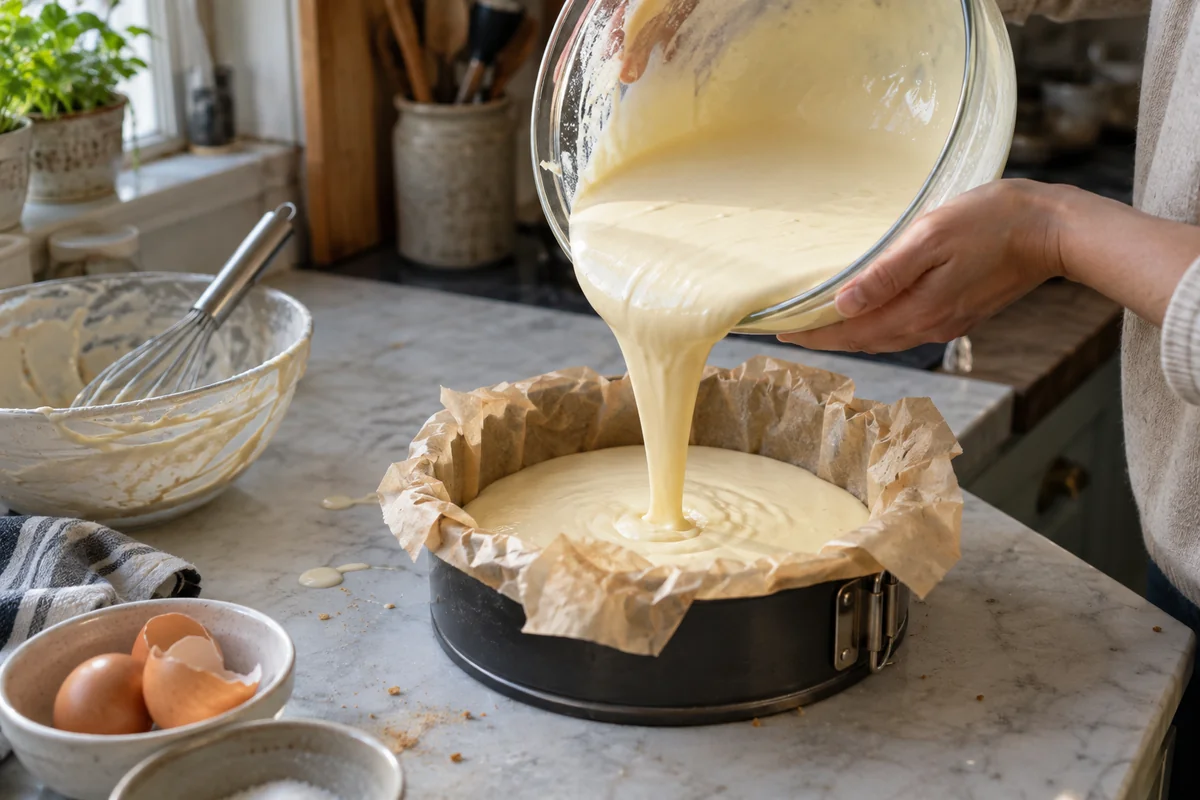
- Line the pan. Crumple one sheet of parchment into a ball, then open it out again. This makes it soft and easy to mould. Lay it in the springform, pressing it into the corners, then add the second sheet crosswise. Let the paper stand about 5 cm (2 inches) above the rim. It will look messy. That is fine and even helps the rustic look.
- Beat the cream cheese and sugar. Put the cream cheese and sugar in a large bowl and mix until completely smooth, about 2 minutes by hand mixer or a bit longer with a whisk. Scrape the sides once.
- Add the eggs one at a time. Mix each egg in fully before adding the next. Go gently once they are in, because you want a smooth batter, not a foamy one.
- Add the cream, vanilla and salt. Pour in the heavy cream and vanilla, add the pinch of salt, and stir until the batter is runny and even.
- Sift in the flour. Sift the 25 g of flour over the top and whisk it in until no streaks remain. Do not overwork it at this stage.
- Strain if needed. If you spot any small lumps, pour the batter through a sieve into a jug. It takes one minute and saves the texture.
- Fill the pan. Pour the batter into the lined tin. Tap it on the counter two or three times to bring up air bubbles, and pop any large ones with a toothpick.
- Bake for 40 to 45 minutes. The top should be deeply browned, with dark patches, and the cake will puff up like a soufflé. When you gently shake the pan, the centre should still jiggle like set jelly. If the top is browning too early at 30 minutes, check your oven’s real temperature, but do not cover it; the dark top is the goal.
- Cool in the pan. Leave the cake on a rack for about 1 hour. It will sink in the middle and wrinkle, and that is exactly how it should look. Once it is at room temperature, unclip the ring and peel the paper back.
- Chill before slicing. Refrigerate for at least 4 hours, preferably overnight, for clean slices and a creamier texture.
Tips for Success
- Trust the jiggle. This is the step people struggle with. If the whole centre looks liquid, give it 3 to 5 more minutes. If only a patch the size of a coin ripples, take it out. It will firm up as it cools, and baking it until completely firm will give you a dry, crumbly cake.
- Know your oven. Ovens run hot or cool by 10 to 20 degrees. An inexpensive oven thermometer is worth having for this recipe alone.
- Serve it at the right temperature. Straight from the fridge it is dense and firm. After 20 to 30 minutes at room temperature, it turns soft and silky, and the flavour is much better.
- Keep the cream cheese plain. Reduced-fat versions do not give the same set or richness. This is not the cake to lighten up.
- Add a little flavour if you like. A strip of lemon zest in the sugar is a nice touch. Keep it subtle, though, since the caramel flavour on top is the star.
Mistakes to Avoid
- Using cold ingredients. Cold cream cheese means lumps, and cold eggs make it worse.
- Whipping in too much air. A very high-speed mixer after the eggs go in makes the cake rise sharply, then collapse into a deep crater. A little sinking is normal. A big crater is not.
- Using a pan with a loose base. Cheap springforms can leak. If yours is questionable, set it on a baking sheet.
- Pulling it out too early because it looks too dark. A burnt top is the whole idea. Dark brown with a few black spots is correct. A pale golden top will taste like ordinary baked custard.
- Slicing while warm. It will look like a soft mess. Be patient and chill it.
Serving Ideas
Honestly, it needs nothing. If you want something on the side, fresh strawberries or a spoonful of macerated cherries cut through the richness well. In San Sebastián it is often served plain, sometimes with a small glass of sweet wine. A pinch of flaky sea salt over the top also works, particularly on a slice from the darkest part.
Storage
- Refrigerator: Cover loosely and keep for up to 4 days. The flavour tends to improve on day two.
- Freezer: Chill the whole cake first, then slice it, wrap each piece in plastic and foil, and freeze for up to 2 months. Thaw in the fridge overnight.
- Make ahead: This is a good dessert for entertaining. Bake it the day before and leave it in the fridge. Take it out 30 minutes before serving.
Basque Burnt Cheesecake FAQ
Why is my Basque burnt cheesecake runny in the middle?
Some wobble is expected, but it should not be liquid after it cools. The usual causes are underbaking, a tub-style cream cheese with extra moisture, or an oven that runs cooler than the dial says. Chill it overnight before judging; many “runny” cakes are simply still warm. If it is genuinely soupy after a full night, it was underbaked.
ADVERTISEMENT
Can I make it without flour?
Yes. The flour is only 25 g and acts as a safety net for the structure. Leaving it out gives a slightly softer, more custardy slice, and it works if you need it gluten-free. You can also swap the flour for the same weight of cornstarch.
Can I use a different size pan?
A 20 cm (8-inch) pan works with the same recipe, but the cake will be taller and needs about 10 more minutes in the oven. Cover the top loosely with foil only if it is already very dark. A 25 cm (10-inch) pan makes a thinner cake, so start checking at 30 minutes.
Is the burnt top bitter?
It has a mild caramel bitterness, similar to the top of a crème brûlée, and it balances the sweet, creamy filling. If it tastes acrid or smoky, the cake was left in too long or the oven was too hot. The surface should be dark brown with some black patches, not entirely charred.
basque-burnt-cheesecake-recipeBasque burnt cheesecake, San Sebastián cheesecake, burnt cheesecake recipe, crustless cheesecake, Spanish desserts, easy cheesecake, make-ahead dessert, cream cheese dessert
ADVERTISEMENT