ADVERTISEMENT
The White Owl in the Green Canopy: A Quiet Symbol of the Wild
Among the branches of a living forest, an owl can appear almost without warning. One moment, there is only the rustle of leaves and the soft movement of light across the trees. The next, a silent bird sits on an old branch, perfectly still, watching the world with remarkable calm.
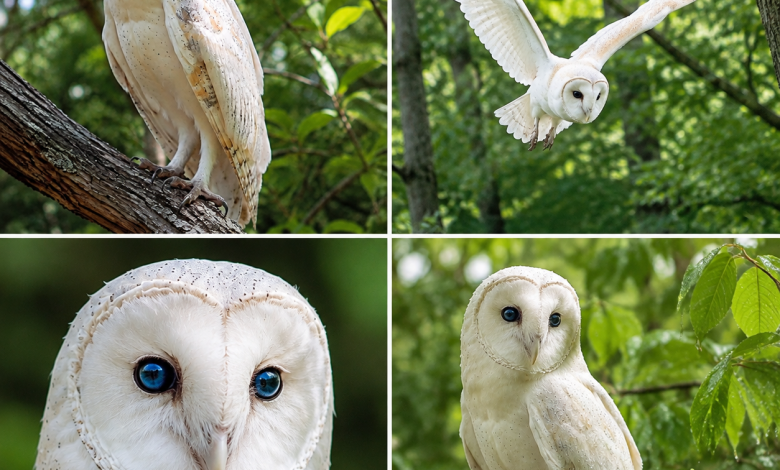
The white owl in this image captures that feeling beautifully. Its pale feathers stand out against the rich green woodland, while its striking blue eyes give the portrait an artistic and almost dreamlike character. It is a reminder that wildlife can be both powerful and peaceful at the same time.
Owls have long fascinated people because they move differently from most birds. They do not need bright daylight to command attention. Their quiet presence, focused gaze, and patient behavior make them one of nature’s most memorable hunters. A barn owl, in particular, is known for its pale underside, heart-shaped facial feathers, and graceful flight over open ground.
In the wild, barn owls often depend on their hearing as much as their sight. Their facial feathers help direct sound toward their ears, allowing them to locate small mammals moving through grass or under leaves. Their soft feathers also reduce the noise of their wings, helping them travel through the night with extraordinary stealth.
A Landscape That Supports Wildlife
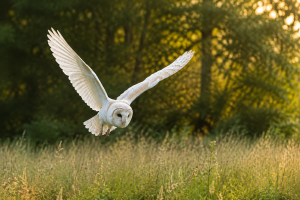
But the life of an owl is not only about hunting. It is closely tied to the health of the landscape around it. Open fields, hedgerows, old trees, quiet barns, and areas of rough grass can all provide important places for owls to find food, rest, and raise their young. When these habitats disappear, wildlife loses more than shelter—it loses the connections that allow entire ecosystems to thrive.
ADVERTISEMENT
That is why a woodland scene like this has meaning beyond its beauty. The weathered branch, the green leaves, and the soft daylight create a small portrait of nature at work. Each detail belongs to a larger environment where birds, insects, small mammals, trees, and plants depend on one another.
An Artistic Detail
The blue eyes in this artwork are a creative visual detail, adding a unique sense of mystery to the owl’s face. In reality, eye colour can vary among owl species and individuals, but this image is designed as an artistic celebration of the owl’s quiet elegance rather than a scientific identification guide.
There is something inspiring about an owl that does not need to make noise to be noticed. It teaches patience, awareness, and respect for the natural world. Perched high above the forest floor, the white owl becomes more than a bird in a photograph—it becomes a symbol of stillness in a busy world.
As forests and green spaces continue to face pressure from development and changing landscapes, protecting wildlife habitats remains essential. Every preserved tree line, safe nesting place, and natural field can help support the birds and animals that make our world more alive.
The next time you see an owl resting among the branches, pause for a moment. Look closely at the feathers, the eyes, and the quiet confidence of its pose. In that silent gaze, there is a powerful message: nature does not need to be loud to be extraordinary.
ADVERTISEMENT