ADVERTISEMENT
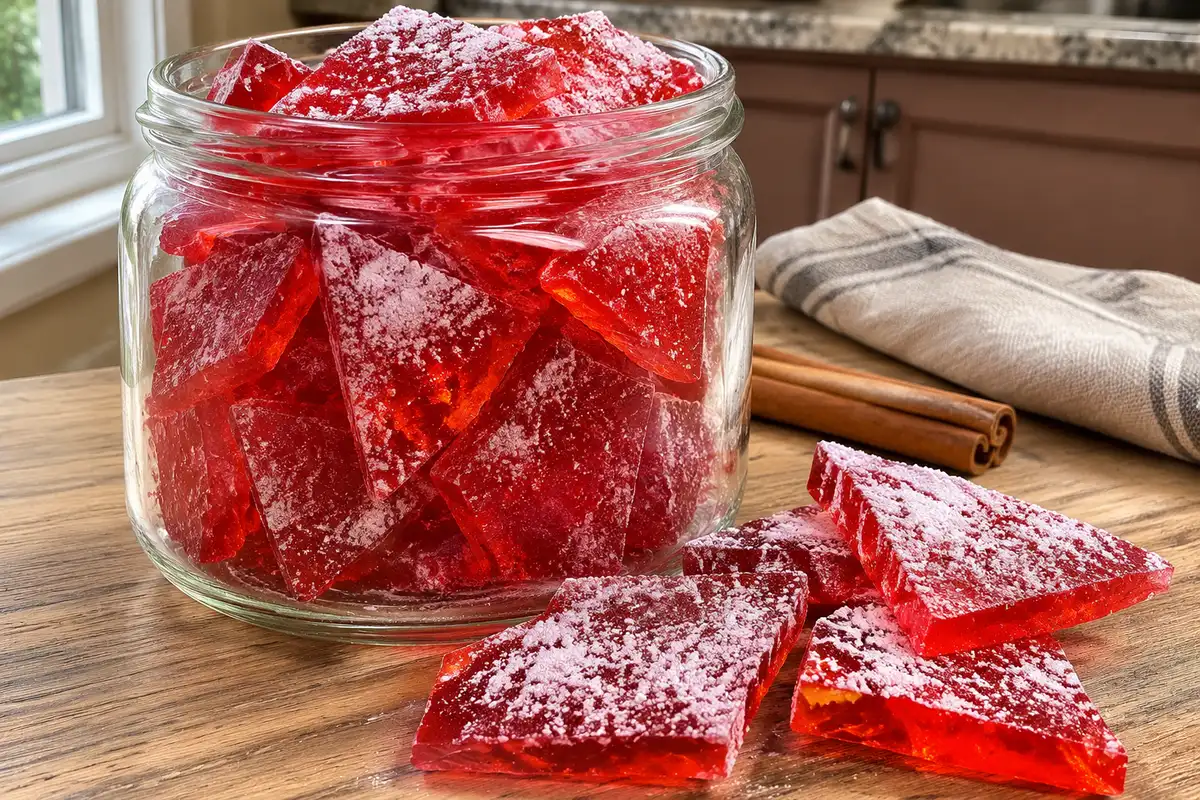
Cinnamon hard candy is a classic stovetop candy cooked to the hard-crack stage, then poured, cooled, and broken into glassy ruby-red pieces. The flavor comes from cinnamon oil, and a light dusting of powdered sugar keeps the shards from sticking. This red hot cinnamon hard candy is snappy and clear, with sharp edges and a strong cinnamon finish.
The method is straightforward, but it is a hot-sugar project. You grease and line a pan, boil the sugar, corn syrup and water until dissolved, then stop stirring and cook to 300-310°F. Off the heat, you stir in the cinnamon oil and red coloring with your face away from the steam, then pour, cool, crack, and dust.
Why You’ll Love This Cinnamon Hard Candy
One pot and a candy thermometer are enough, and there is no oven. After the sheet cools, you crack it into irregular pieces. A jar of the finished candy keeps well and is easy to pack for a tray.
If you want another simple homemade sweet from the same kitchen, try these 3-ingredient butter cookies too.
What Is Cinnamon Hard Candy?
Cinnamon hard candy is a clear sugar candy flavored with cinnamon oil and usually tinted red. The syrup is cooked until almost all the water has boiled away, so the cooled sheet snaps instead of bending. Thin pieces let the light show through.
Cinnamon oil is a concentrated flavoring oil, and it is not the same as cinnamon extract. Extract is milder and is made with alcohol, so it will not give this candy the same strong flavor. Use a food-grade cinnamon oil, and add it only after the pot is off the heat.
ADVERTISEMENT
Ingredients for Red Hot Cinnamon Hard Candy
- Butter, for greasing the pan and the parchment
- 4 cups sugar
- 1 cup light corn syrup
- 1 cup water
- 1 teaspoon cinnamon oil (flavoring oil, not extract)
- Red gel food coloring
- Powdered sugar, for dusting
Ingredient Notes
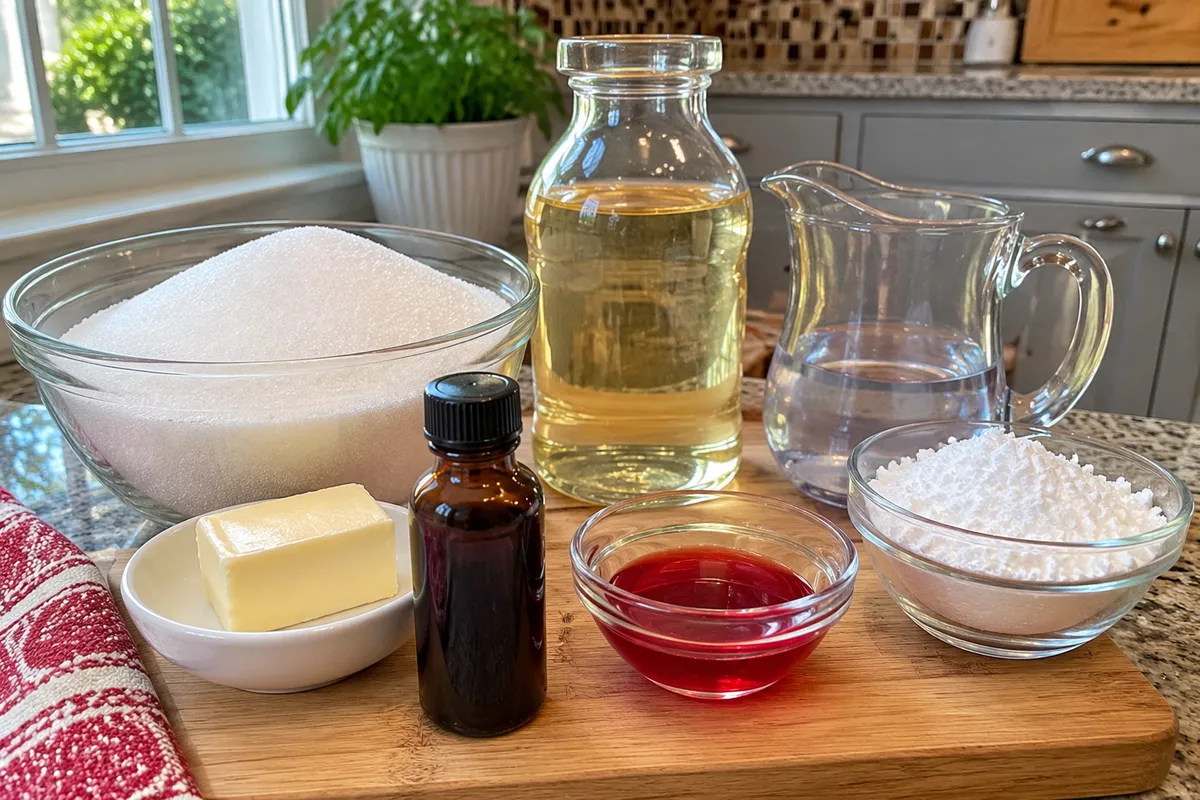
Sugar, light corn syrup and water make the candy base. The corn syrup helps the syrup cook smoothly and keeps the pieces clear. Butter is used only to grease the pan and the parchment so the sheet releases cleanly; it does not go into the pot.
Cinnamon oil is very strong, so a teaspoon is enough. Measure it before you start, because you will add it quickly once the pot is off the heat. Red gel coloring gives a deep ruby color without thinning the syrup. Powdered sugar is a light final dusting so the shards stay glassy.
How to Make Red Hot Cinnamon Hard Candy
- Prepare the pan: generously butter a rimmed sheet pan or a heatproof 9×13 pan. Line it with parchment, then butter the parchment as well. Set the pan close to the stove so you can pour as soon as the candy is ready.
- Start the syrup: in a heavy saucepan, combine the sugar, light corn syrup and water. Stir over medium heat until the sugar has fully dissolved and the liquid looks clear. Then stop stirring and clip on a candy thermometer.
- Cook to hard crack: let the syrup boil, without stirring, until the thermometer reads 300-310°F. This is the hard-crack stage. The bubbles will look thicker, and the syrup will be a pale, clear gold. Do not walk away from the stove during this stretch.
- Flavor and color, off the heat: take the pan off the heat. With your face away from the steam, stir in the cinnamon oil and the red coloring. The steam can be strong and irritating, so keep your face back and do not lean over the pot.
- Pour and cool: pour the hot candy onto the prepared parchment in an even layer. Tilt the pan gently if you need to. Let it cool, undisturbed, until the sheet is hard and no longer warm.
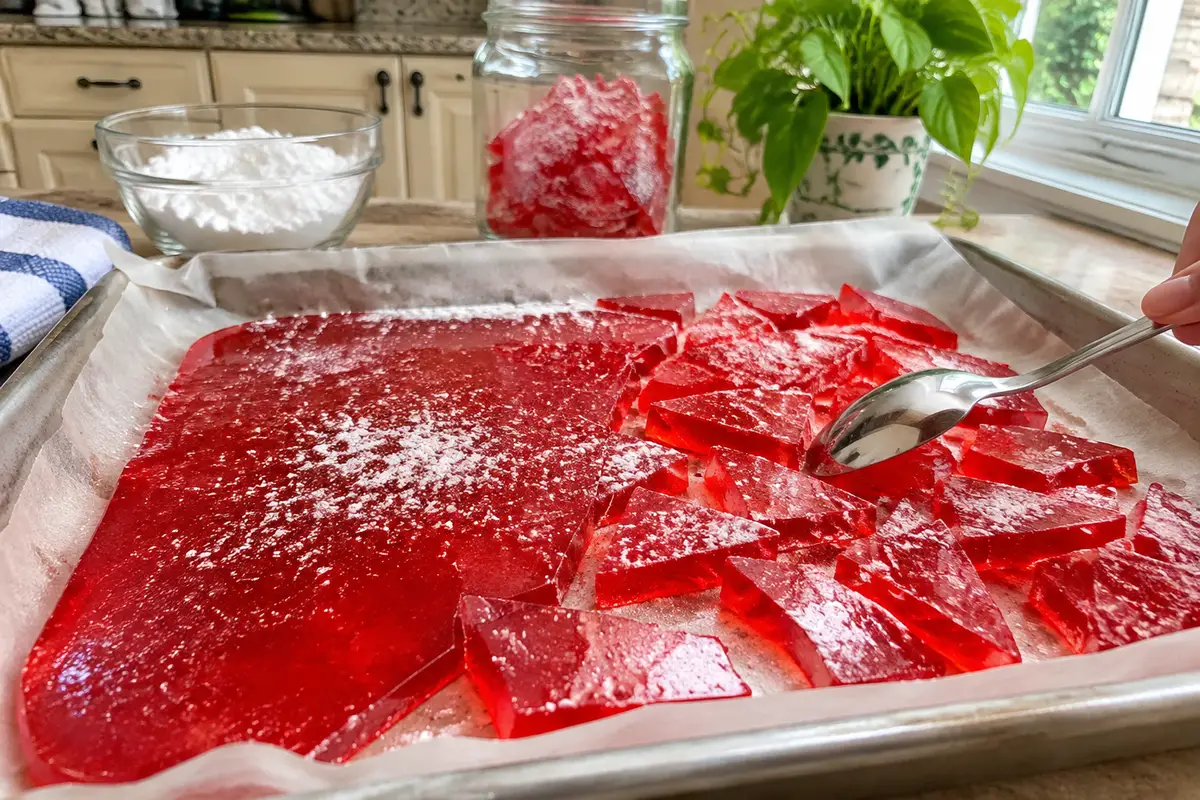
- Crack and dust: lift the sheet and crack it into irregular pieces with the back of a spoon or a small mallet. Toss the shards with a light dusting of powdered sugar, shake off the extra, and store the candy in an airtight jar.
Safety Notes for Hot Sugar
Hard-crack candy is extremely hot and can cause serious burns. Use a heavy saucepan large enough that the syrup does not boil over, and turn the handles inward. Do not touch or taste the syrup. Keep children and pets away from the stove until the sheet has cooled.
Have the buttered, parchment-lined pan ready before the thermometer reaches 300°F, because the candy sets quickly off the heat. When you add the cinnamon oil, keep your face away from the steam and use a vent or an open window. If syrup spills on your skin, flush it with cool water right away and get help if you need it. For everyday kitchen safety, follow the FDA guide to safe food handling too.
Tips for the Best Cinnamon Hard Candy
A candy thermometer is the most reliable way to hit the hard-crack stage. If the syrup comes off the heat too soon, the pieces can stay sticky or bend instead of snapping. If you go much past 310°F, the candy can darken and taste bitter. Check the thermometer in boiling water first so you know it is reading correctly.
ADVERTISEMENT
Once the sugar has dissolved, leave the syrup alone. Stirring during the boil can start crystals on the sides of the pan and cloud the candy. If crystals form on the wall of the pan, wash them down with a wet pastry brush, then stop. Pour as soon as the coloring and oil are mixed in, then let the sheet cool fully before you crack it.
What to Serve With Cinnamon Hard Candy
This candy is a complete little treat on its own. A small dish after dinner is enough, and a jar on a holiday tray needs no extra work. The pieces also pack well in a tin between layers of parchment.
For more sweets from the same kitchen, try these no-bake chocolate oat cookies plus these coconut chewies too. If you are decorating a cookie tray, this sugar cookie icing is handy for cut-outs. For a cinnamon-scented pot on the stove while the candy cools, see this Christmas simmer pot too.
Variations
You can make a milder batch with a little less cinnamon oil, or a deeper red with an extra drop of gel coloring. A thinner pour gives smaller pieces, and a thicker sheet gives chunkier shards. Keep the method the same: cook to hard crack, add the oil and color off the heat, then cool and crack.
This recipe is written for cinnamon oil, not extract. Extract is not a direct swap, because it is milder and is made with alcohol. If you only have extract, wait until you have cinnamon oil.
ADVERTISEMENT
Storage
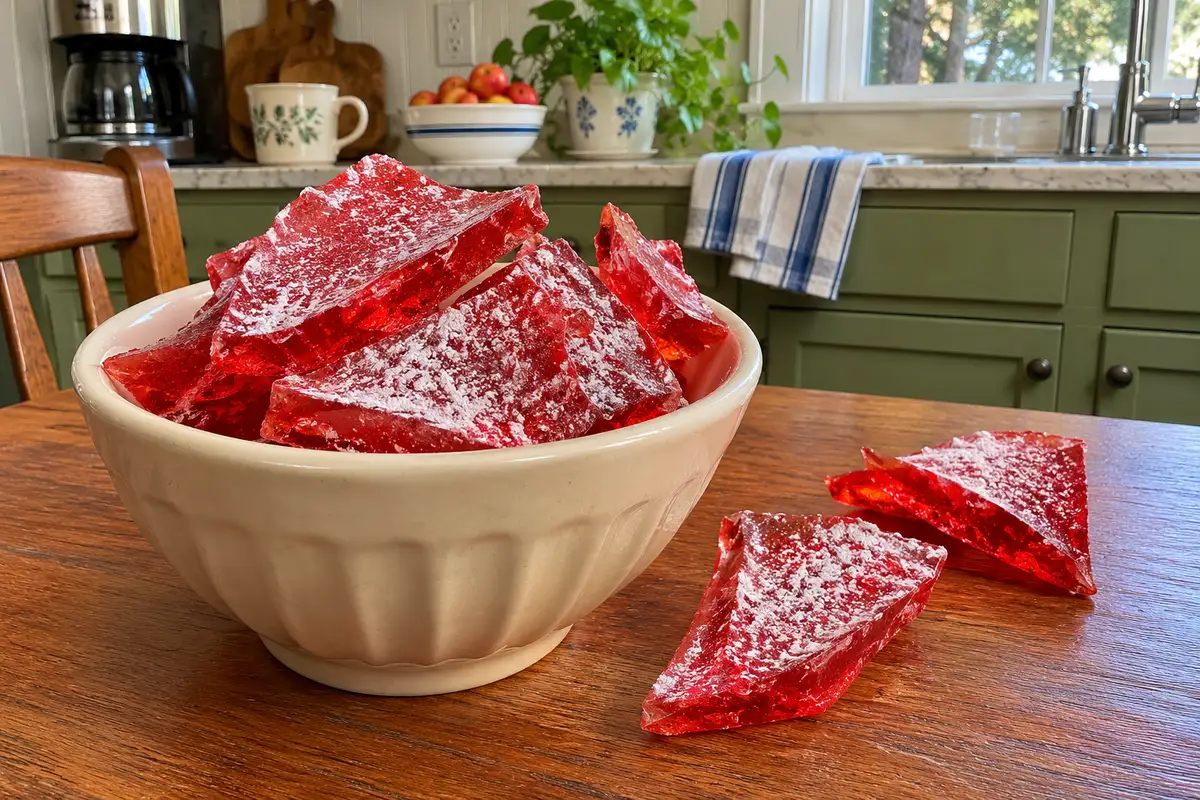
Keep cinnamon hard candy in an airtight jar or tin at cool room temperature. Add a little powdered sugar if the pieces start to feel sticky in humid weather. Do not leave the candy uncovered on a damp counter, because it can soften. If you pack a tin, use parchment between the layers.
For leftover storage, you can also follow the USDA guide to leftovers and food safety too. Cool the candy completely before you seal the jar, and keep it dry.
FAQ
What is the hard-crack stage?
The hard-crack stage is 300-310°F on a candy thermometer. At this point, almost all the water has cooked out, so the candy cools into a hard, glassy sheet that snaps when you break it. If the syrup does not reach this range, the pieces may stay soft or sticky.
Can I use cinnamon extract instead of cinnamon oil?
No, not if you want this classic candy. Cinnamon oil is a concentrated flavoring oil, and cinnamon extract is not the same. Extract is milder and is made with alcohol, so it will not give the same strong flavor and is not a direct swap. Use food-grade cinnamon oil, and add it off the heat with your face away from the steam.
Why do I stop stirring after the sugar dissolves?
Stirring at the beginning helps the sugar dissolve evenly. After that, stirring can start crystals and make the candy cloudy instead of clear. Once the syrup is clear, clip on the thermometer, stop stirring, and let it cook to the hard-crack stage.
ADVERTISEMENT
How should I store cinnamon hard candy?
Store it in an airtight jar or tin at cool room temperature. A light dusting of powdered sugar helps the pieces stay separate. Keep the container closed in humid weather so the candy does not soften. If a batch picks up moisture, dust it again and reseal the jar.
Why did the candy turn sticky or stay soft?
The syrup usually did not reach 300-310°F, or the pieces were left out in humid air. Cook to the hard-crack stage, cool the sheet fully before you crack it, and store the candy in a dry, sealed container. A candy thermometer takes the guesswork out of the boil.