ADVERTISEMENT
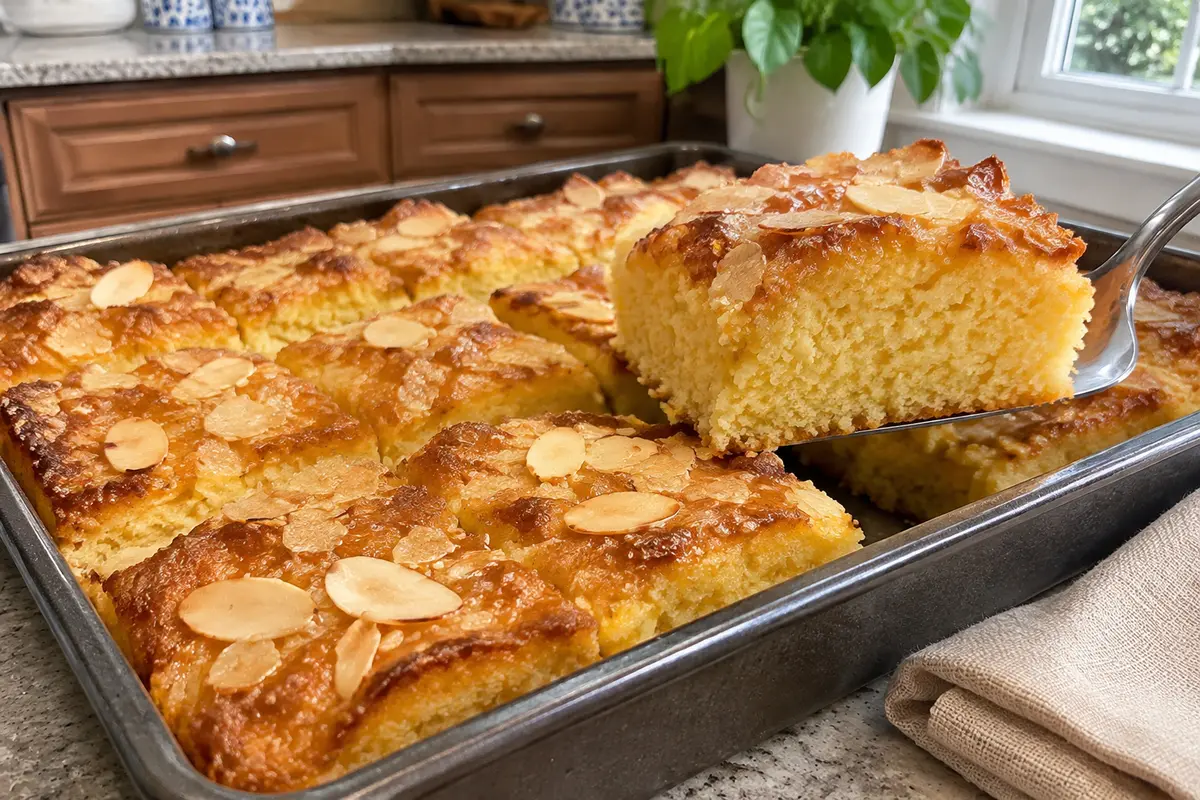
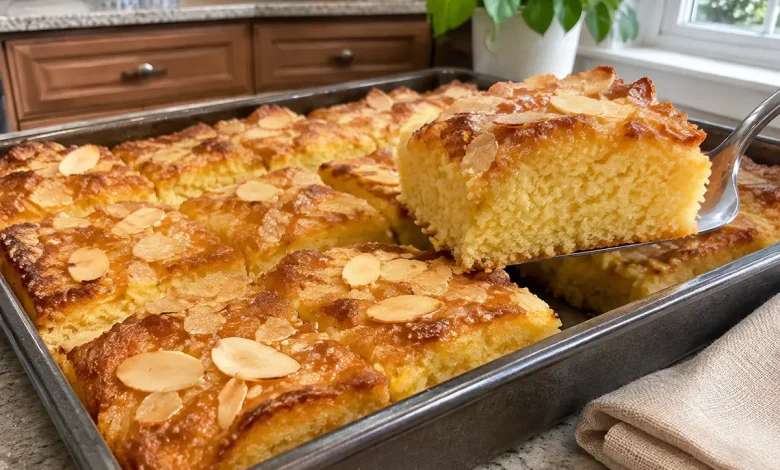
German butterkuchen is a soft yeast sheet cake with little pools of butter, sugar and sliced almonds baked into the top. The dough is made with milk, butter and an egg, pressed into a sheet pan, then dimpled so the butter can melt into the surface as the cake bakes. The result is a tender crumb and a golden, slightly crisp almond topping. It is best the day it is made.
This butter almond sheet cake is simple, but it needs two rises, so plan a little time. After the dough is soft and smooth, it goes into a greased pan, rests again, and then gets butter pieces, sugar and almonds pressed into the dimples. A hot oven turns the topping into shiny, toasted pools around the nuts.
Why You’ll Love This German Butterkuchen
The method is straightforward once the yeast dough comes together. You mix, knead, let the dough rise, press it into a pan, and add the topping. There is no layer cake to stack and no frosting. The butter, sugar and almonds bake right on the cake, so every square has a golden top and a soft interior.
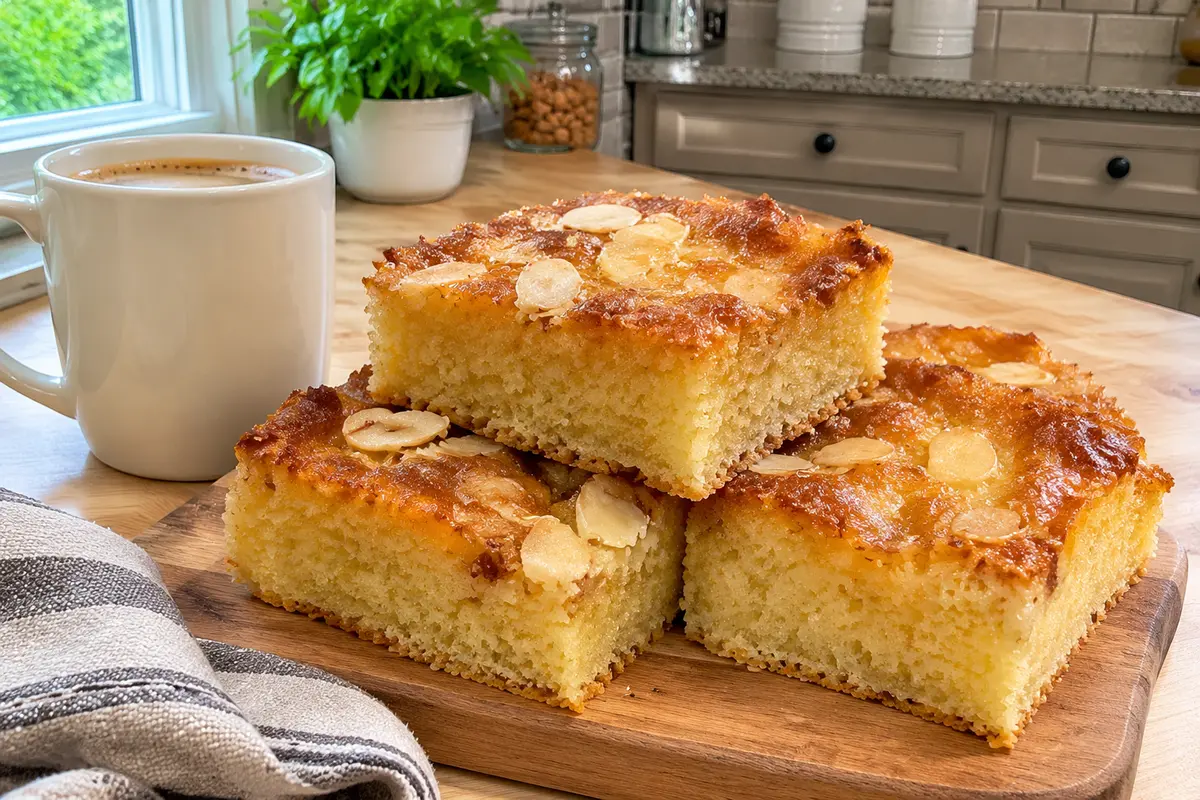
The squares are easy to cut and serve from the pan. A cup of coffee is the usual partner. If you want another butter-rich sweet from the same kitchen, try these 3-ingredient butter cookies too.
What Is German Butterkuchen?
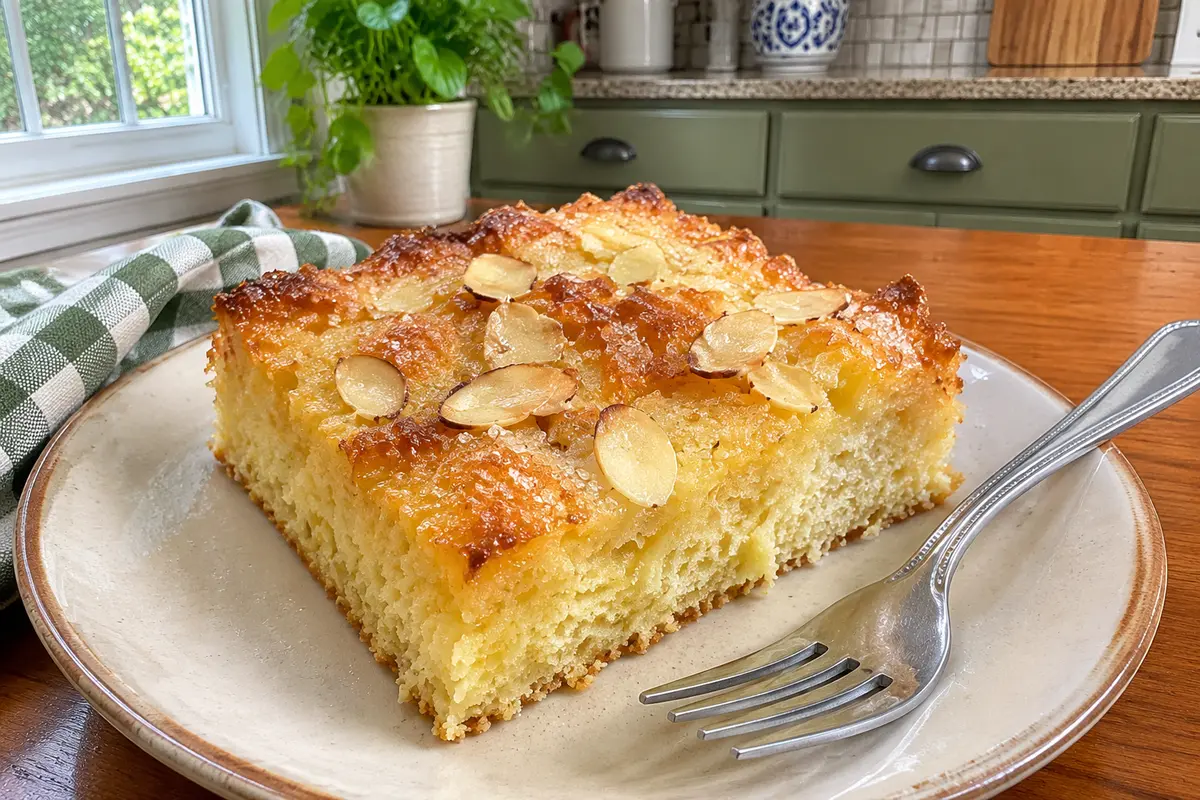
German butterkuchen is a classic yeast cake baked in a sheet pan. The name means butter cake. A soft dough is stretched in the pan, dimpled with fingers, and topped with pieces of butter, a layer of sugar and sliced almonds. In the oven, the butter melts into little pools and the sugar and almonds toast on the surface.
It is sometimes called a butter almond sheet cake in English. It is not a pound cake and it is not a dry coffee cake with crumbs. The interior stays like a light yeast bread, and the top stays shiny and golden. The cake is at its best on the day it is baked, while the crumb is still soft and the topping is still a little crisp.
ADVERTISEMENT
Ingredients for German Butterkuchen
For the dough:
- 4 cups all-purpose flour
- 2 1/4 teaspoons active dry yeast
- 1/4 cup sugar
- 1 teaspoon salt
- 1 cup warm milk
- 1/2 cup butter, softened
- 1 large egg
For the topping:
- 1/2 cup butter, cut into small pieces
- 1/2 cup sugar
- 1 cup sliced almonds
Ingredient Notes
The recipe uses 1 cup of butter in all: half is softened into the dough, and half is cut into small pieces for the topping. Warm milk should feel pleasantly warm, not hot, so the yeast can work. A little sugar in the dough feeds the yeast and sweetens the crumb; the 1/2 cup of sugar on top is what forms those caramelized pools.
Sliced almonds toast as the cake bakes and stay easy to see on the surface. Use regular sugar in both the dough and the topping. Softened butter blends into the dough more evenly than cold butter, while the topping butter should be cold enough to cut into pieces that hold their shape until they go in the oven. A large egg binds the dough and helps it stay tender.
How to Make German Butterkuchen
- Wake the yeast: in a small bowl, stir the yeast into the warm milk with a pinch of the dough sugar. Let it stand until it looks foamy.
- Make the dough: in a large bowl, combine the flour, the remaining dough sugar and the salt. Add the yeast mixture, the softened butter and the egg. Mix, then knead until the dough is smooth and elastic. If it feels sticky, add a spoonful of flour; if it feels dry, add a splash of milk.
- First rise: place the dough in a lightly greased bowl, cover, and let it rise in a warm spot until doubled.
- Press into the pan: grease a rimmed sheet pan, about 10×15 inches. Press the dough evenly into the pan, reaching the corners. Cover and let it rise again until slightly puffy.
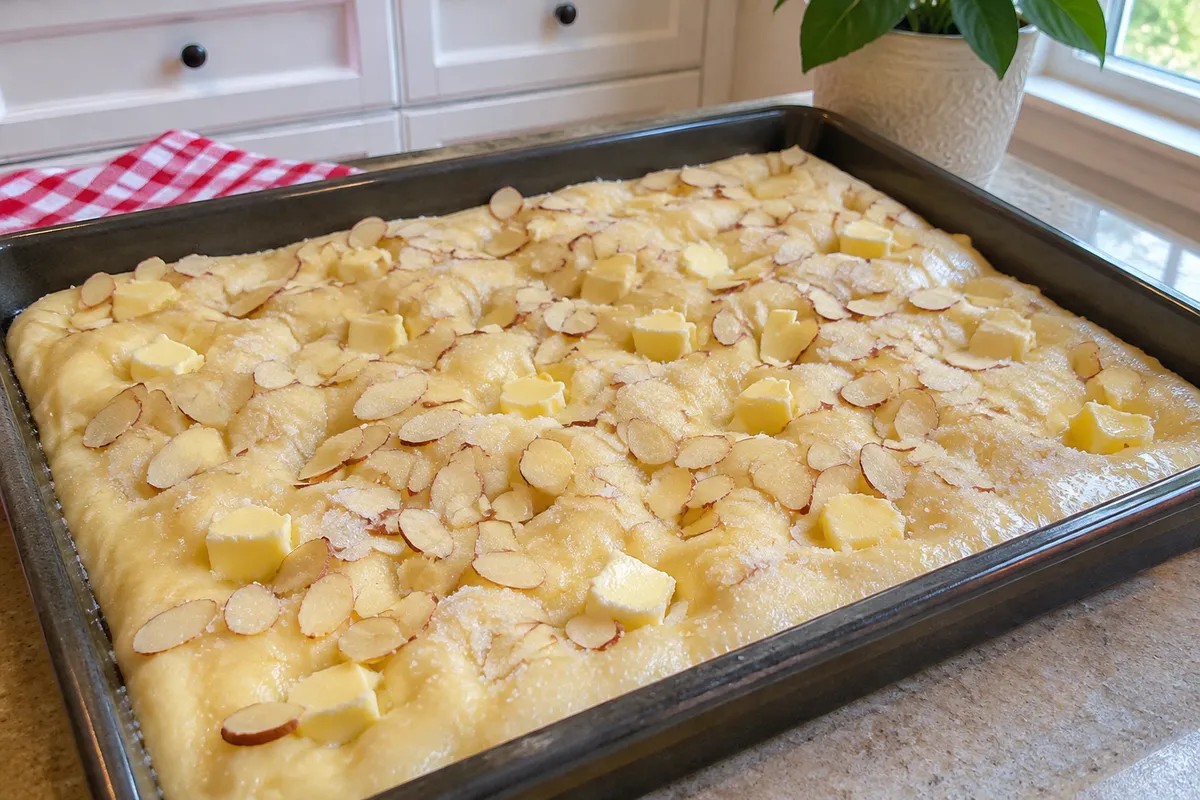
- Add the topping: heat the oven to 375°F. Dimple the dough all over with your fingertips. Tuck the pieces of topping butter into the dimples, then sprinkle the 1/2 cup of sugar and the sliced almonds evenly over the top, pressing the almonds on lightly so they stick.
- Bake and cool: bake for 20 to 25 minutes, until the cake is golden and the butter and sugar have formed little toasted pools. Cool in the pan until just warm, then cut into squares. Serve the same day if you can.
Tips for the Best German Butterkuchen
Give the dough enough time to rise. A soft, puffy dough bakes into a tender crumb; a rushed dough can bake up tight. Press the dough into an even layer so the pan bakes at the same pace from the center to the corners. Deep dimples help the butter stay on the cake instead of running to the edges.
ADVERTISEMENT
Watch the last few minutes of baking. The topping should be golden, not dark and bitter. Let the cake sit a short while before you cut it, so the butter-sugar pools can set a little, but do not wait until it is cold and dry. Warm squares have the best soft crumb and the most flavor.
What to Serve With German Butterkuchen
This cake is a complete little sweet on its own, with butter, sugar and almonds in every square. A cup of coffee or tea is the usual partner, and a glass of cold milk works just as well. The squares also sit nicely on a mixed dessert tray, because they are already cut and do not need frosting.
For more sweets from the same kitchen, try these coconut chewies plus these homemade oatmeal cream pies too. These oatmeal raisin cookies are another easy tray addition. If you want a savory German plate from the same kitchen, see this Jägerschnitzel recipe too.
Variations
You can leave the almonds off if you need a nut-free pan, and the butter and sugar topping will still form those little pools. A pinch of cinnamon on the topping is optional and not traditional, so keep it light if you use it. Some bakers finish a cooled cake with a thin drizzle of powdered sugar mixed with a little milk; it is optional and not required for a classic pan.
A 9×13 pan will also work. The dough will be a little thicker, so add a few minutes and watch the color. Keep the dimples, the butter pieces, the sugar and the almonds the same.
ADVERTISEMENT
Storage
German butterkuchen is at its best on the day it is baked. If you have leftovers, let the pan cool, then cover it and keep it at cool room temperature for a short stretch, or refrigerate the squares in a covered container. A brief warm-up in a low oven will soften the crumb again.
For safe handling and storage, follow the FDA guide to safe food handling plus the USDA guide to leftovers and food safety too. Cool the cake before covering it, and do not leave a pan of dairy-rich cake sitting out on a warm counter for a long stretch.
FAQ
What is German butterkuchen?
German butterkuchen is a yeast sheet cake topped with butter, sugar and often sliced almonds. The dough is dimpled so the butter can melt into little pools as it bakes. The crumb stays soft, and the top turns golden. It is also called a butter almond sheet cake.
Why do you dimple the dough?
The dimples hold the butter pieces in place so they melt into the surface instead of running off the sides. They also give the cake its classic uneven, baked-in topping. Press firmly enough to make real wells, but do not tear the dough.
Can I make German butterkuchen ahead of time?
The dough can take its first rise in the refrigerator if you want to start earlier, then come back to press it into the pan, add the topping and bake. The baked cake itself is best the day it is made. If you bake it ahead, warm the squares briefly before serving so the crumb softens.
ADVERTISEMENT
Do I have to use sliced almonds?
No. The almonds are traditional and add a toasted crunch, but the cake will still be butterkuchen with only the butter and sugar on top. If you use the almonds, sprinkle them evenly and press them on lightly so they do not slide off in the oven.
How should I store leftover German butterkuchen?
Cool the cake, then cover the pan or pack the squares in a covered container. Keep them at cool room temperature for a short time, or refrigerate them if your kitchen is warm. A few minutes in a low oven will bring back some of the softness. Plan to finish the pan soon, because this cake is at its best fresh.