
ADVERTISEMENT

Minestrone soup is a big pot of vegetables, beans and small pasta in a warm tomato broth. The classic version starts with onion, carrot and celery softened in olive oil, then simmered with garlic, zucchini, tomatoes, cannellini beans and broth. Small pasta and a handful of chopped kale or spinach go in near the end, and a little grated Parmesan finishes each bowl.
This is a flexible family pot, not a fixed restaurant plate. You can swap in what the season brings, as long as you keep the tomato broth, the beans and a small pasta shape. The soup should be hearty and spoonable, with visible pieces of vegetable.
Why You’ll Love This Minestrone Soup
One pot does the whole job, and the method is calm and steady. Once the vegetables are diced, the soup mostly simmers on its own while you keep an eye on the pot. The flavor is comforting: a tomato broth, tender vegetables, beans and small pasta in every spoonful.
It also welcomes leftovers and last-minute changes. Use spinach instead of kale, or stir in a few extra vegetables you already have. The pot holds well for a second meal if you loosen it with a splash of broth when you reheat.
What Is Minestrone Soup?
Minestrone soup is an Italian vegetable soup built on a tomato broth, mixed vegetables, beans and a small pasta. In this classic version, a soffritto of onion, carrot and celery is cooked in olive oil, then simmered with garlic, zucchini, diced tomatoes, cannellini beans and broth. Ditalini or another small pasta cooks in the pot, and kale or spinach is stirred in at the end until it wilts.
The soup changes with the season because the method stays the same while the vegetables can change. Summer pots may lean on zucchini and green beans. Cooler-weather pots may hold more greens or a little potato. The constants are the tomato broth, the beans and the small pasta.
ADVERTISEMENT
Ingredients for Minestrone Soup
- 2 tablespoons olive oil
- 1 medium onion, diced
- 2 carrots, diced
- 2 celery stalks, diced
- 3 garlic cloves, minced
- 1 medium zucchini, diced
- 1 1/2 cups diced tomatoes
- 1 1/2 cups cannellini beans, drained and rinsed
- 6 cups vegetable broth
- 3/4 cup ditalini or other small pasta
- 2 cups chopped kale or spinach
- 1 teaspoon dried Italian seasoning
- 1 bay leaf
- Salt and black pepper
- Grated Parmesan, for serving
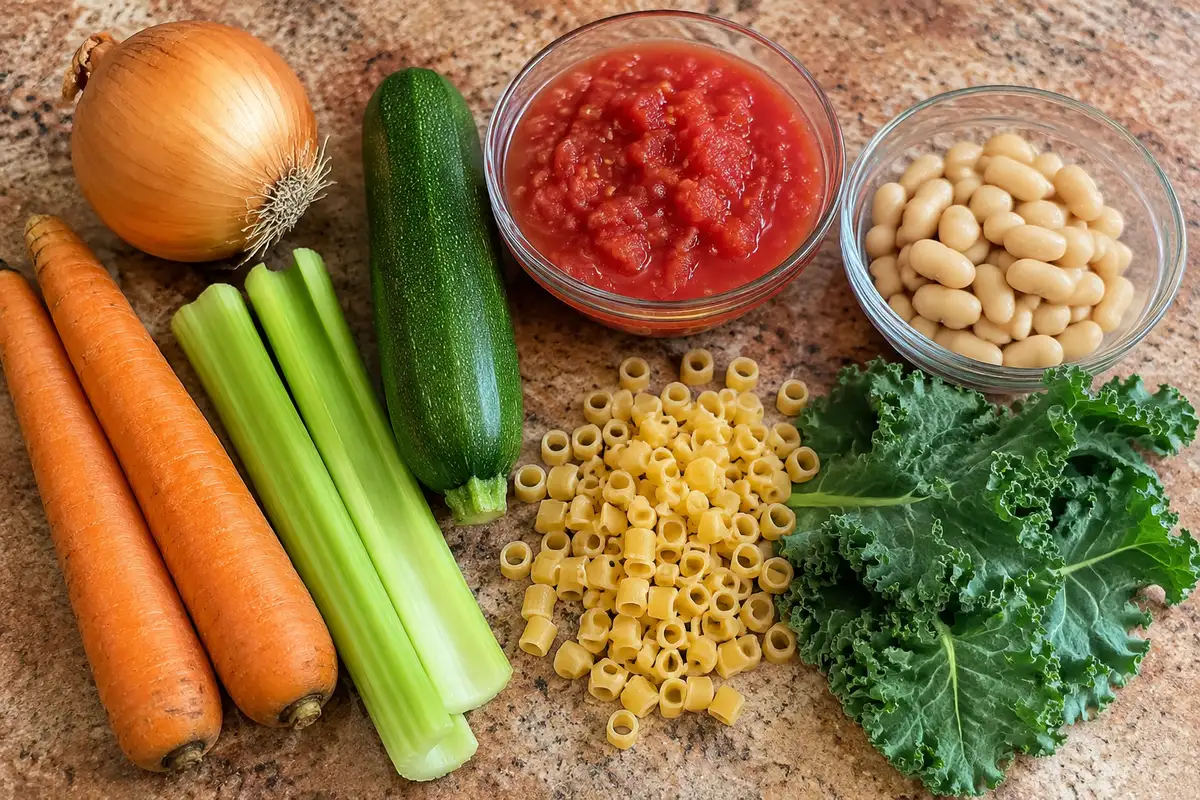
Ingredient Notes
Onion, carrot and celery form the base and should be diced to a similar small size so they soften evenly. Fresh garlic is minced and added after the base has softened, so it turns fragrant and does not brown. Zucchini also cooks quickly. Diced tomatoes give the broth its color and body. Cannellini beans are the usual white bean for this pot; drain and rinse them if they come from a can.
Vegetable broth keeps the soup meatless, though a light chicken broth also works. Ditalini is a classic small pasta shape, but another short shape of similar size will do. Kale or spinach should be chopped and added at the end so the leaves stay bright and tender, not dull and overcooked. Italian seasoning and a bay leaf add a simple herb note. Parmesan on top is optional but welcome. A Parmesan rind can simmer in the pot and be removed before serving.
How to Make Minestrone Soup
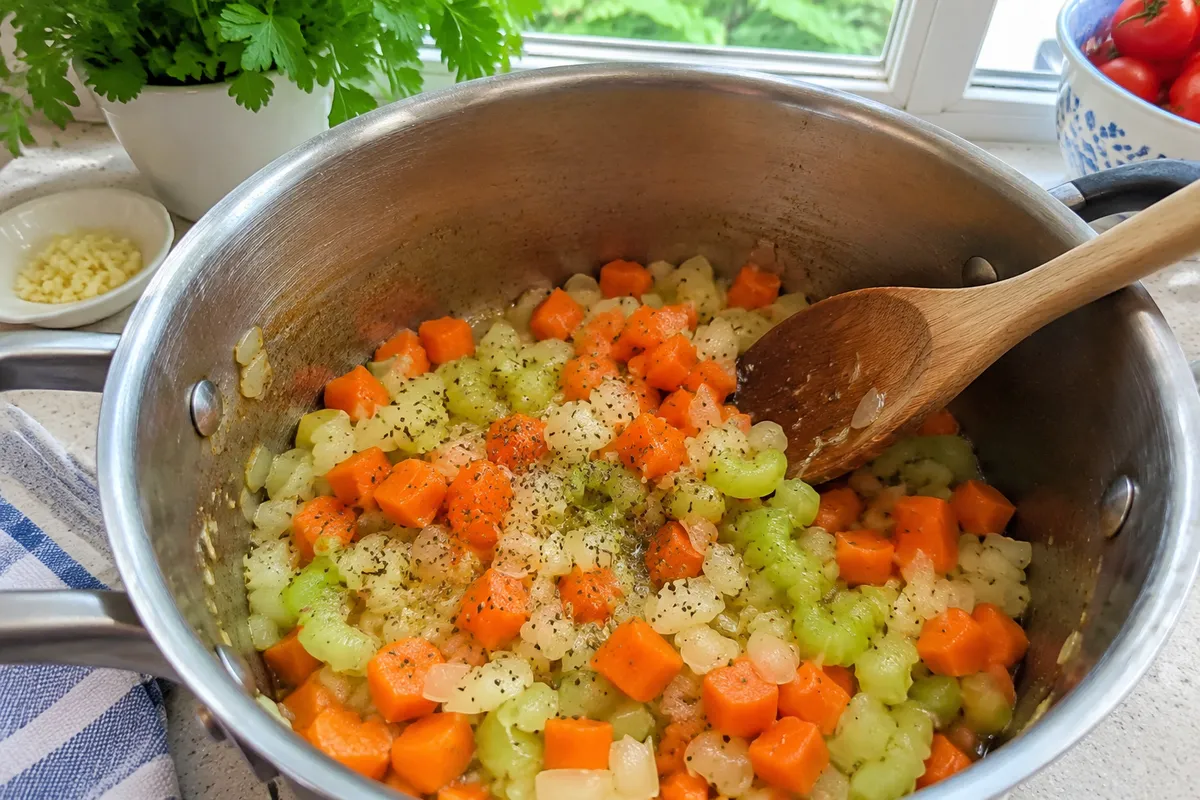
- Start the base: heat the olive oil in a large pot over medium heat. Add the onion, carrots and celery and cook, stirring now and then, until the vegetables have softened, about 8 to 10 minutes.
- Add the garlic and zucchini: stir in the minced garlic and cook until it is fragrant, about 1 minute. Add the zucchini and cook for 2 to 3 minutes, just until it begins to soften.
- Build the broth: add the diced tomatoes, cannellini beans, vegetable broth, Italian seasoning, bay leaf, salt and black pepper. If you are using a Parmesan rind, add it now. Bring the pot to a gentle simmer.
- Simmer the vegetables: let the soup simmer, uncovered, for about 15 to 20 minutes, until the carrots are tender.
- Cook the pasta: stir in the ditalini and cook until the pasta is just tender, about 8 to 10 minutes, stirring now and then so it does not stick. Add a splash of water or broth if the pot looks too tight.
- Finish and serve: stir in the chopped kale or spinach and cook until the leaves wilt, about 2 minutes. Taste and adjust the salt and pepper. Remove the bay leaf and the rind, if you used one. Ladle into bowls and finish with grated Parmesan if you like.
Tips for the Best Minestrone Soup
Dice the vegetables fairly small and even so they cook at the same pace and sit well on a spoon. Keep the simmer gentle once the broth is in the pot; a hard boil can break the beans. Add the pasta only when the vegetables are already tender, and stop while the pasta still has a little bite, because it will keep softening in the hot soup.
If you plan to make the soup ahead, cook the pasta in a separate pot and add it to each bowl, or stir it into only the portion you are serving. Pasta left in the broth will absorb liquid as it sits. Taste the salt at the end, after the tomatoes, beans and broth have simmered together. A little extra broth when reheating is the easiest way to loosen a pot that has tightened overnight.
What to Serve With Minestrone Soup
A simple green salad and a piece of bread are enough beside a bowl of minestrone soup. The pot is already full of vegetables, beans and pasta, so the sides can stay modest.
ADVERTISEMENT
If you want more easy bowls from the same kitchen, try this hearty three bean orzo soup or a cozy potato lentil soup. For a meatier spin on the same idea, see this beefy keto minestrone, and for a smoky bowl, try chickpea chorizo soup.
Variations
This is a seasonal pot, so change the vegetables to match what you have. Green beans, diced potato, cabbage, or an extra handful of greens all fit the same method. Add firmer vegetables earlier, with the carrots, and add quick-cooking ones later. If you want a deeper tomato flavor, let the tomatoes cook with the base for a minute before the broth goes in.
For a meatless pot, stay with vegetable broth and skip the rind and Parmesan if you need the soup to be dairy-free. Keep added extras modest so the soup still tastes like minestrone, not like a catch-all stew.

Storage
Let leftover minestrone soup cool, then refrigerate it in a covered container. The pasta will continue to absorb broth, so the leftovers may look thicker than the fresh pot. Reheat gently on the stove, adding a splash of water or broth until the soup is loose again and steaming hot. A microwave works in short bursts if you stir between heats.
For broader leftover guidance, follow the FDA guide to storing food safely plus the USDA guide to leftovers and food safety too. Refrigerate leftovers promptly, and do not leave the pot sitting out on the counter. If you want to freeze a batch, freeze the soup before adding the pasta and cook fresh pasta when you reheat.
ADVERTISEMENT
FAQ
What is minestrone soup?
Minestrone soup is an Italian vegetable soup made with a tomato broth, mixed vegetables, beans and a small pasta. This classic version uses onion, carrot, celery, zucchini, cannellini beans, ditalini and kale or spinach. It is a hearty spoonable soup, not a smooth puree.
Can I change the vegetables in minestrone soup?
Yes. The method stays the same while the vegetables can change with the season or with what you have on hand. Keep the tomato broth, the beans and a small pasta, then swap in green beans, potato, cabbage or extra greens as you like. Add firmer vegetables earlier and quick-cooking ones later.
Should I cook the pasta in the soup or separately?
You can cook the pasta right in the pot, which is the classic weeknight method. If you are making the soup ahead, or you want leftovers to stay more brothy, cook the pasta separately and add it to each bowl.
Can I make minestrone soup ahead of time?
Yes. The flavor often settles by the next day. For the best texture, wait to add the pasta and the greens until you reheat the pot, or cook the pasta separately. Cool the soup, refrigerate it, and reheat it until it is steaming hot, loosening with broth if it has thickened.
How should I store leftover minestrone soup?
Cool the leftovers, then refrigerate them in a covered container. Reheat on the stove or in short microwave bursts, stirring and adding a splash of broth if the pasta has absorbed too much liquid. Plan on finishing the batch within a short leftover window, and do not leave the soup out on the counter.
ADVERTISEMENT