ADVERTISEMENT
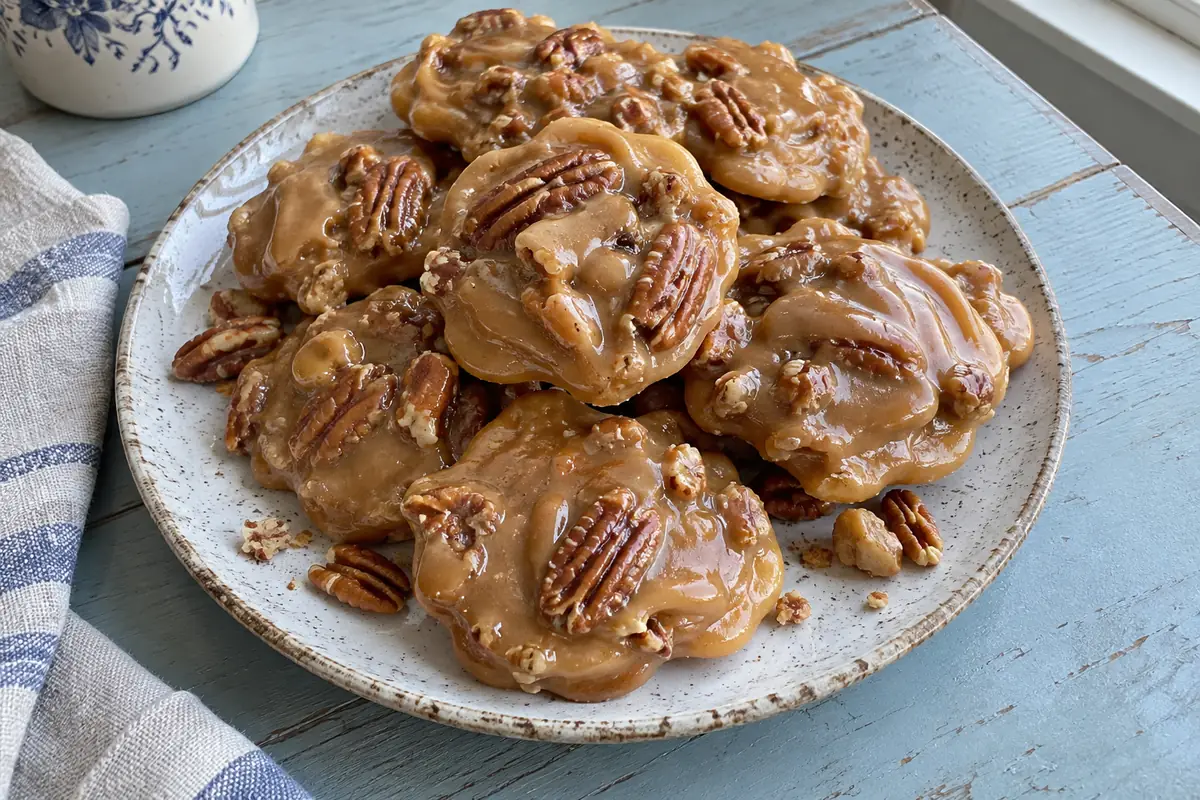
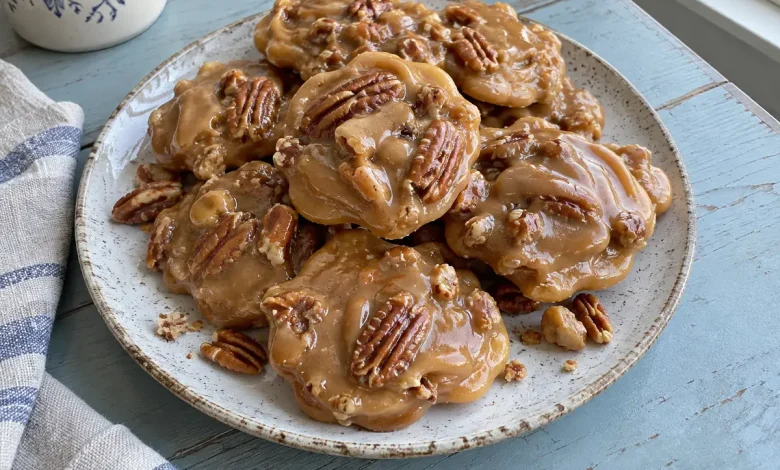
These creole creamy pralines are old-fashioned Southern candies made with buttermilk, sugar, vanilla and plenty of toasted pecans. The syrup is boiled to the soft ball stage, then beaten until it turns thick and creamy, so each praline sets with a soft, fudge-like center that melts in your mouth and a gentle crunch from the nuts. With just a handful of pantry ingredients and one heavy pot, you can make a big batch for holidays, gifts or an after-supper treat.
Why You’ll Like These Creole Creamy Pralines
Buttermilk gives these pralines a rich, slightly tangy flavor and a lovely caramel color. When the baking soda hits the hot buttermilk syrup, it foams up and deepens in color, which creates a toasty, butterscotch-like taste without any brown sugar. Beating the candy before scooping makes it creamy instead of chewy.
- Classic texture: creamy, melt-in-your-mouth candy with crunchy pecans in every bite.
- Simple ingredients: sugar, buttermilk, corn syrup, baking soda, vanilla, salt and pecans.
- Big batch: makes about 3 dozen pralines, perfect for sharing.
- Great for gifting: they keep well and pack neatly into tins.
Ingredients for Creole Creamy Pralines
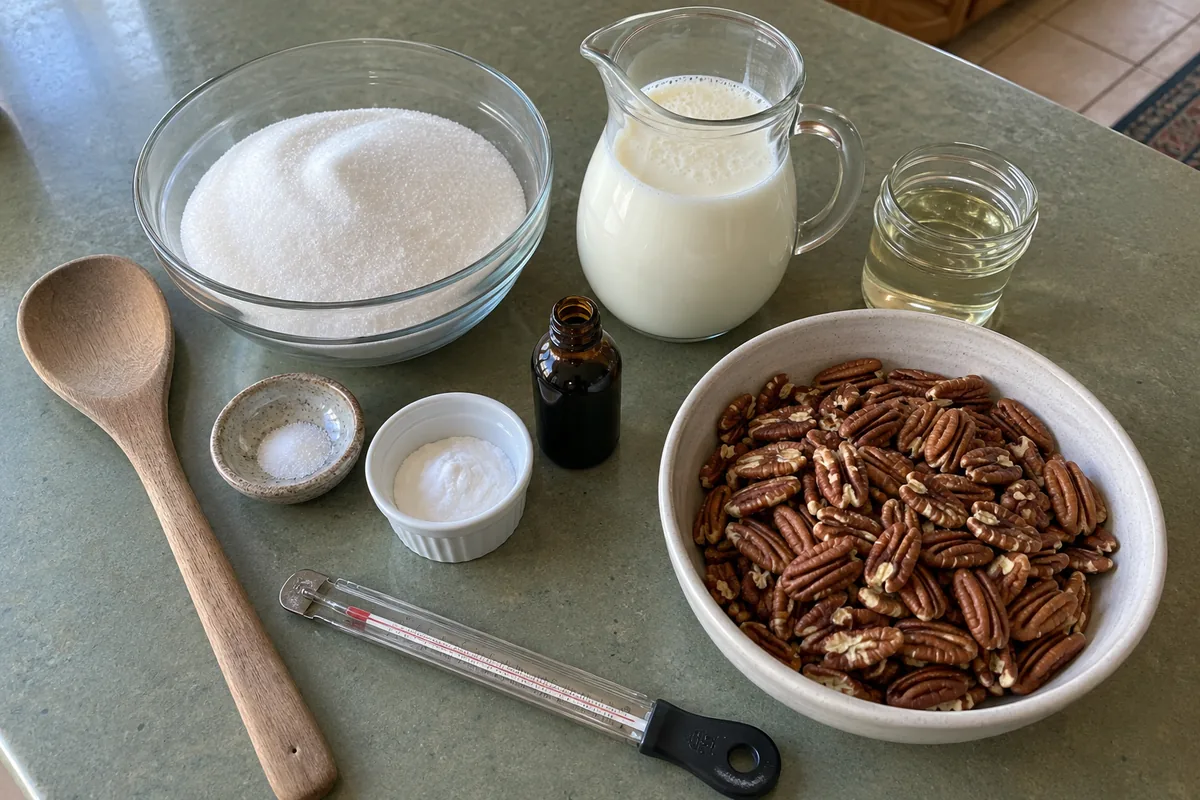
- 3 cups granulated sugar
- 1 cup whole fat buttermilk
- 1/4 cup light corn syrup
- 1 pinch salt
- 1 teaspoon baking soda
- 1 teaspoon vanilla extract
- 4 cups pecans (halves or large pieces)
You will need a large, heavy-bottomed pot (at least 4 to 5 quarts, because the mixture foams), a candy thermometer, a wooden spoon, two spoons for dropping and sheets of wax paper or parchment. Makes about 36 pralines.
Ingredient Notes
The buttermilk: Use whole fat buttermilk for the richest, creamiest candy. Low-fat buttermilk works but gives a slightly less creamy texture.
The baking soda: It reacts with the buttermilk, making the syrup foam and turn a golden caramel color. This step is what gives buttermilk pralines their signature flavor.
The corn syrup: A small amount helps prevent large sugar crystals, so the pralines stay smooth instead of grainy.
ADVERTISEMENT
The pecans: Toasting them lightly in a 350°F oven for 6 to 8 minutes brings out their nutty flavor. Let them cool before stirring in.
How to Make Creole Creamy Pralines
Step by Step
- Prepare your setup. Lay sheets of wax paper or parchment on the counter. Measure the vanilla and pecans and keep them close, because the candy moves quickly at the end.
- Start the syrup. In a large, heavy pot, combine the sugar, buttermilk, corn syrup and salt. Stir over medium heat until the sugar dissolves, then bring the mixture to a full rolling boil.
- Add the baking soda. Stir in the baking soda. The mixture will foam up and rise, so keep stirring gently. Clip on a candy thermometer.
- Cook to soft ball. Continue cooking, stirring often so it does not scorch, until the syrup reaches 235°F, the soft ball stage. The color will turn a light caramel tan. This usually takes 10 to 15 minutes.
- Add the vanilla. Remove the pot from the heat and stir in the vanilla extract.
- Beat until creamy. Beat the mixture vigorously with a wooden spoon for 3 to 5 minutes, until it thickens, loses some of its gloss and starts to look creamy.
- Stir in the pecans. Quickly fold in the pecans until they are evenly coated.
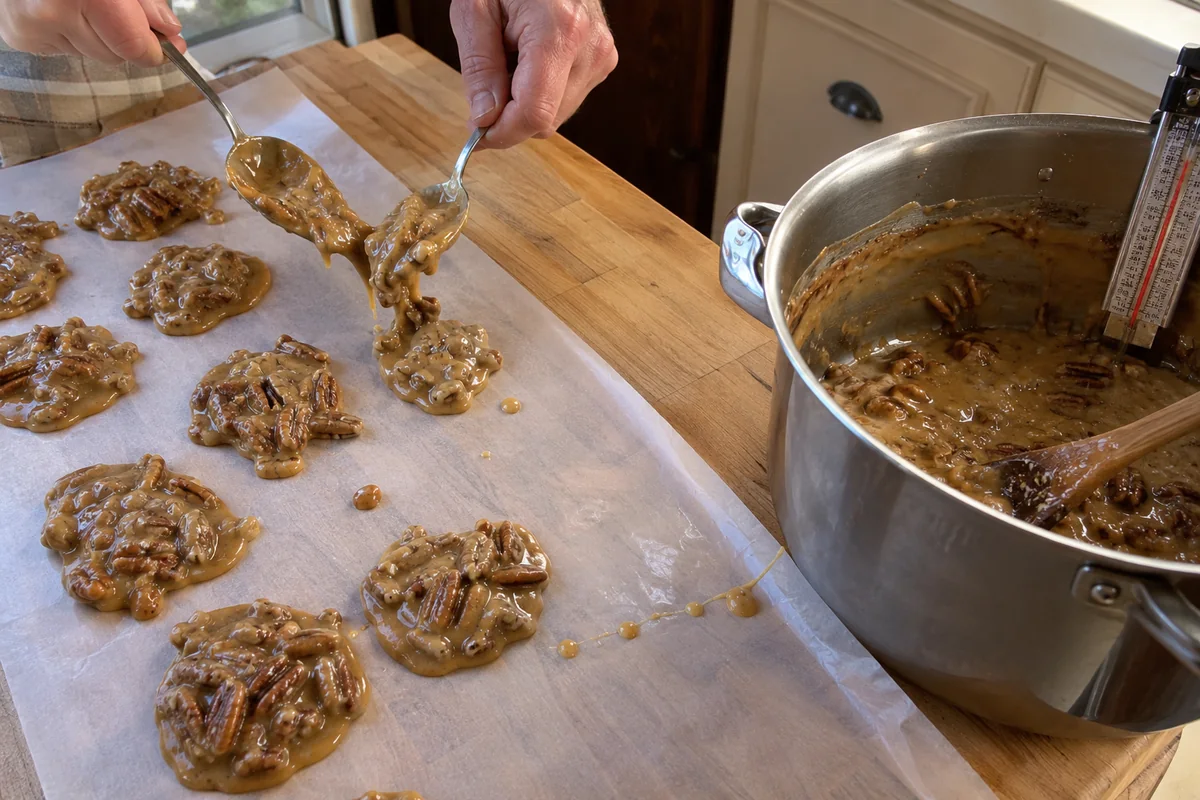
- Drop and set. Working fast, drop heaping spoonfuls onto the wax paper, using a second spoon to push the candy off. Let the pralines cool at room temperature for about 30 minutes, until firm and set.
Tips for the Best Creole Creamy Pralines
Use a Big Pot
The baking soda makes the syrup foam to two or three times its volume. A large pot prevents messy boil-overs.
Trust the Thermometer
Pull the candy off the heat right at 235°F. Undercooked pralines stay soft and sticky, while overcooked ones turn dry and crumbly.
Watch the Beating Stage
Stop beating as soon as the mixture thickens and turns slightly matte. If you beat too long, it will set in the pot before you can scoop it.
Rescue a Stiff Batch
If the candy starts to harden in the pot, stir in a tablespoon of hot water or buttermilk and warm it briefly over low heat until it loosens.
ADVERTISEMENT
Pick a Dry Day
Humidity can keep candy from setting properly. Make pralines on a dry day for the best results.
Variations
- Butter-rich: stir in 2 tablespoons of butter with the vanilla for an even richer flavor.
- Cinnamon spice: add 1/2 teaspoon of ground cinnamon to the syrup for a cozy spiced version.
- Maple twist: replace the vanilla with 1 teaspoon of maple extract.
- Salted pralines: sprinkle flaky sea salt over the tops right after dropping.
- Chocolate drizzle: drizzle cooled pralines with melted dark chocolate.
- Mixed nuts: swap part of the pecans for toasted walnuts or almonds.
Storage
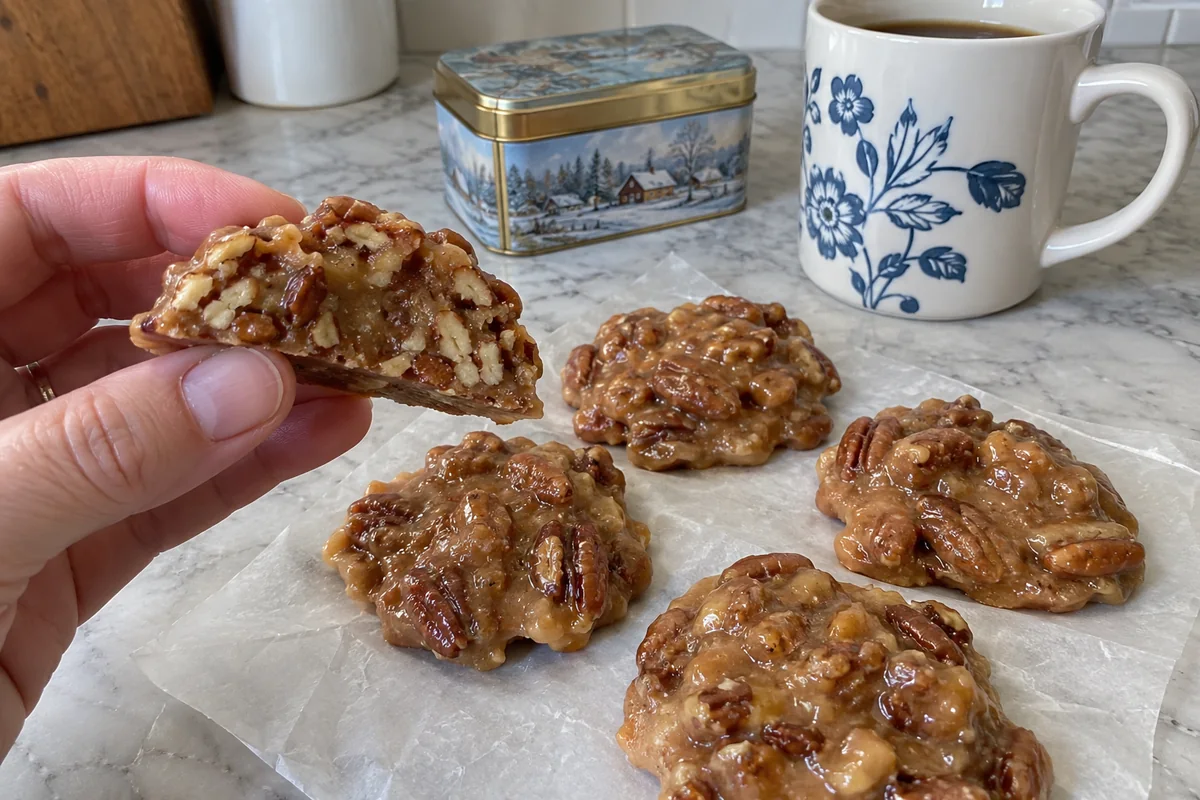
Room temperature: Store the pralines in an airtight container, with wax paper between layers, for up to 1 week. Keep them in a cool, dry spot.
Refrigerator: Not necessary, but they will keep for up to 2 weeks in the fridge. Bring them to room temperature before serving for the creamiest texture.
Freezer: Wrap pralines individually in plastic wrap and freeze in a sealed container for up to 3 months. Thaw at room temperature while still wrapped to prevent condensation.
Gifting: Wrap each praline in wax paper or place them in paper candy cups inside a tin.
ADVERTISEMENT
Frequently Asked Questions
Why are my pralines grainy?
Graininess comes from sugar crystals forming too early. Make sure the sugar is fully dissolved before boiling, avoid scraping crystals from the sides of the pot, and do not over-beat the candy.
Why didn’t my pralines set?
The syrup most likely did not reach 235°F, or it was not beaten long enough. Check your thermometer in boiling water first; it should read 212°F at sea level.
How are these different from other praline recipes?
This is a buttermilk boiled-candy style. Instead of brown sugar and cream, it uses white sugar, buttermilk and baking soda, which foam and caramelize together for a creamy, light caramel praline with a subtle tang.
Can I make creole creamy pralines without a candy thermometer?
Yes. Drop a little syrup into a glass of cold water. When it forms a soft ball that flattens when you pick it up, the candy has reached the soft ball stage.
ADVERTISEMENT