ADVERTISEMENT
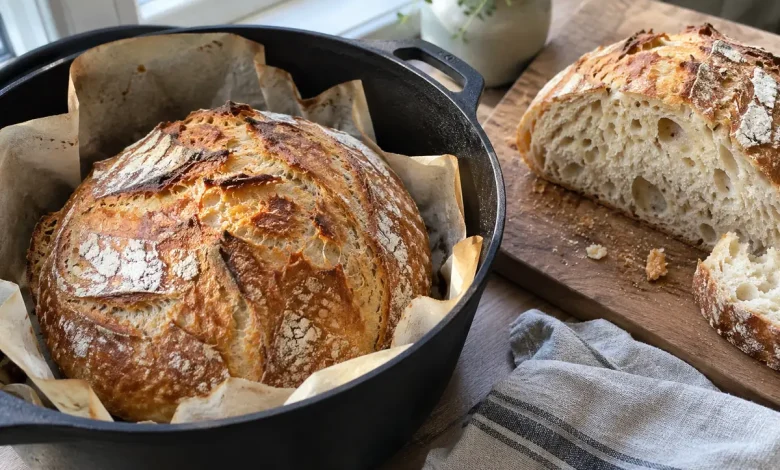
This Dutch oven no knead bread is a simple recipe built from a handful of pantry ingredients: flour, a little sugar, salt, yeast and warm water. You stir everything together in about 5 minutes, cover the bowl and leave it alone. Time does the work, not your hands. The next day you fold the dough, shape it, and bake it inside a preheated, covered Dutch oven. The trapped steam gives you a crackly, deep golden crust and an open, chewy crumb, the kind of loaf you would expect from a bakery.
Why You’ll Like This No Knead Bread
There is no mixer, no kneading and no special flour. The active work is a few minutes of stirring and a couple of minutes of folding and shaping. The long, slow rest gives the dough its flavor and its texture, and the hot covered pot gives the crust its crunch.
- Five minutes of prep: stir, cover and walk away.
- Pantry ingredients: all-purpose flour, sugar, salt, yeast and water.
- Bakery-style result: a crisp crust with a soft, airy inside.
- Easy to plan: mix it in the evening and bake it the next day.
Ingredients for Dutch Oven No Knead Bread
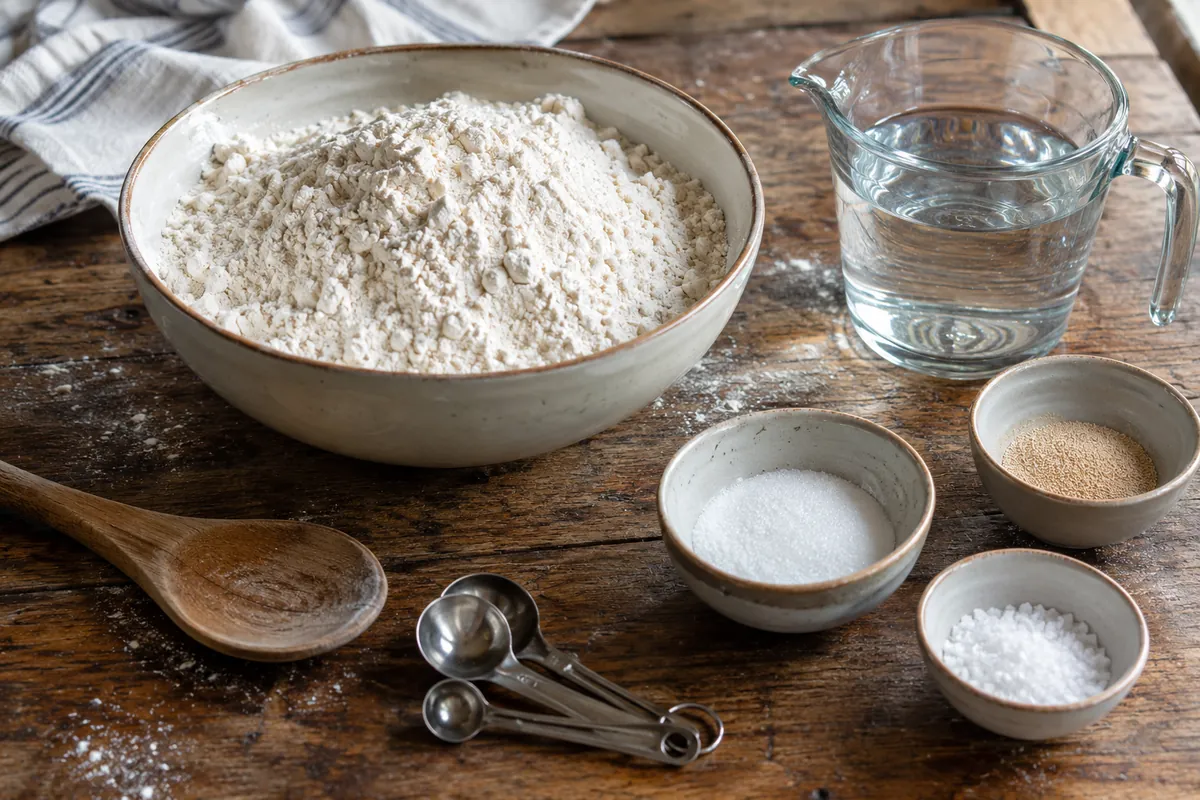
- 4½ cups all-purpose flour, plus extra for dusting
- 1 tablespoon granulated sugar
- 2½ teaspoons salt
- ¾ teaspoon active dry yeast
- 2¼ cups warm water
You will also need a large bowl, a spoon or spatula, parchment paper, and a heavy Dutch oven with a lid.
Ingredient Notes
Flour: All-purpose flour works well here. Measure it by spooning it into the cup and leveling it off rather than scooping straight from the bag, since packed flour makes the dough too stiff.
Sugar: Just one tablespoon. It gives the yeast a little something to feed on and helps the crust brown nicely. The loaf does not taste sweet.
ADVERTISEMENT
Yeast: This recipe uses active dry yeast. The amount is small because the dough rises slowly over many hours.
Water: Warm means comfortable to the touch, like a pleasant bath. Water that is too hot can harm the yeast, so when in doubt, go a little cooler.
How to Make Dutch Oven No Knead Bread
Step by Step
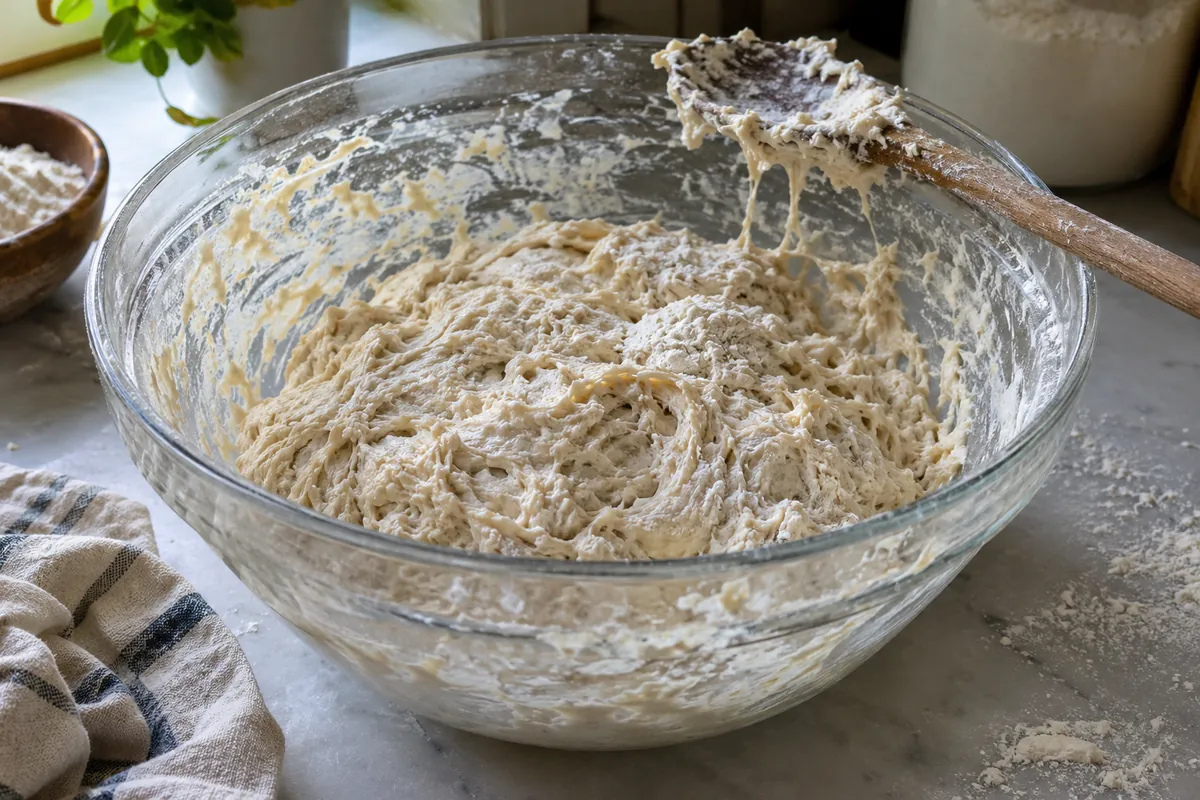
- Mix the dough. In a large bowl, combine the flour, sugar, salt and yeast. Pour in the warm water and stir until no dry flour remains. The dough will look shaggy and sticky, and that is exactly right.
- Let it rest. Cover the bowl and leave it at room temperature for 12 to 18 hours. The dough is ready when the surface is bubbly and the dough has roughly doubled.
- Fold the dough. Dust a work surface generously with flour and scrape the dough out onto it. Sprinkle a little flour on top. Gently fold the edges in toward the center a few times.
- Shape a ball. Flip the dough over so the seam is underneath. Cup your hands around it and turn it a few times to make a loose, round ball.
- Rest on parchment. Set the ball on a sheet of parchment paper and let it rest for 30 to 60 minutes. Cover it loosely with a clean towel if you like.
- Preheat the pot. While the dough rests, put the Dutch oven with its lid on in the oven and heat it to 450°F for 30 minutes.
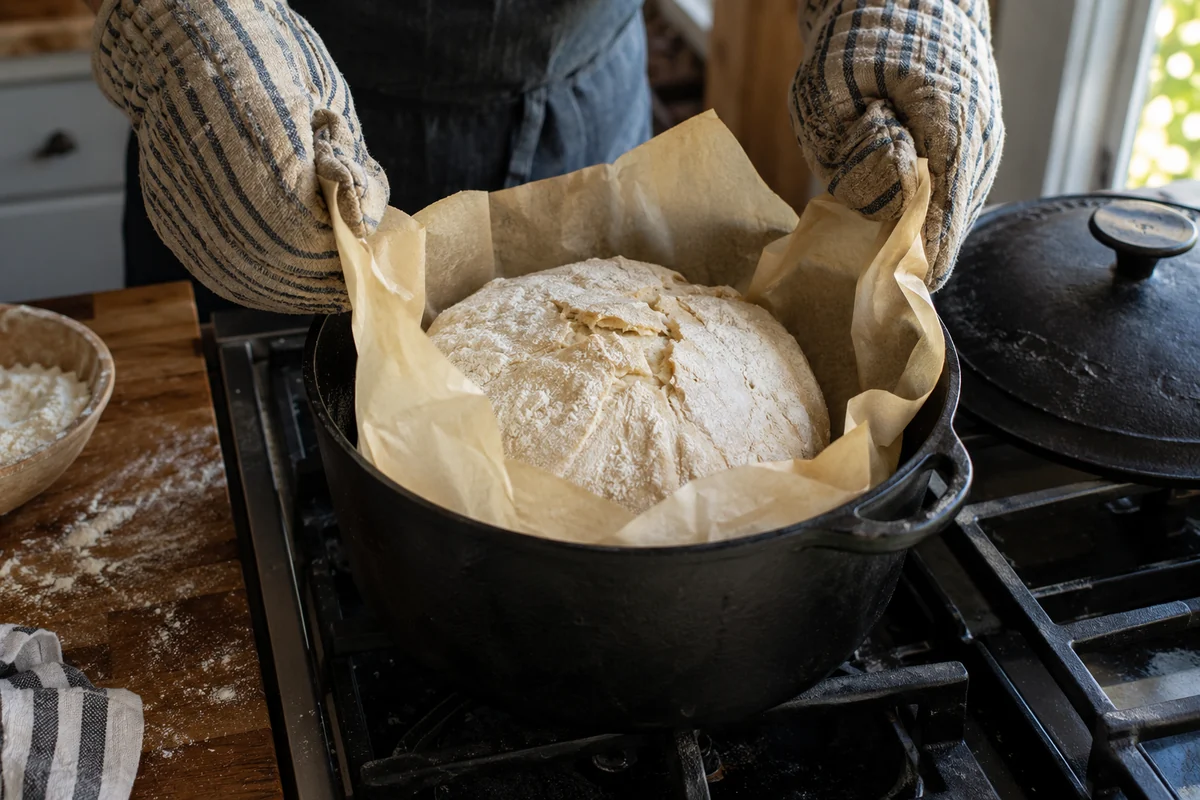
- Load the dough. Wearing thick, dry oven mitts, carefully take the hot pot out and remove the lid. Pick up the dough by the edges of the parchment and lower it into the pot. Put the lid back on.
- Bake covered. Bake with the lid on for 30 minutes.
- Bake uncovered. Remove the lid and bake for 10 to 15 minutes more, until the crust is a deep golden brown.
- Cool completely. Lift the loaf out using the parchment and set it on a wire rack. Let it cool for at least 1 hour before slicing.
Handle the Hot Pot With Care
The Dutch oven, the lid and the handles will be extremely hot. Use dry, heavy oven mitts, and open the lid away from your face because steam will escape. Make sure your pot and its lid knob are rated for 450°F, and use parchment that is rated for oven use at that temperature. If a piece of parchment hangs over the edge of the pot, trim it so it does not touch the oven walls.
ADVERTISEMENT
Tips for the Best Bakery-Style Loaf
Wait for the Bubbles
The clock is a guide, but the dough tells you more. Look for a bubbly, domed surface with strands stretching when you pull at the edge. A cooler kitchen will need closer to 18 hours, and a warm kitchen may be ready closer to 12.
Use Plenty of Flour on the Counter
This is a wet dough, so it sticks. Flour your hands, your work surface and the top of the dough. Work gently and quickly rather than adding lots of flour into the dough itself.
Do Not Skip the Preheat
The pot needs the full 30 minutes to get properly hot. A hot pot is what gives you a good rise and a crisp bottom crust, so resist the urge to shorten it.
Judge Doneness by Color
You want a deep golden brown, not a pale tan. If the loaf is still light after 10 minutes uncovered, give it a few more. If your oven runs hot, check at the early end of the range.
Let It Cool Before Cutting
The inside is still setting while the loaf cools. Cutting too soon can make the crumb feel gummy. Waiting at least an hour gives you cleaner slices and a better texture.
ADVERTISEMENT
What to Serve With It
Slice it thick and spread with butter, or toast it and add jam. It is also good next to soups and stews, for sandwiches, or torn into pieces alongside a board of cheese and olive oil for dipping.
Variations
- Herb loaf: Stir in 1 to 2 teaspoons of dried rosemary or Italian herbs with the dry ingredients.
- Cheesy loaf: Fold in about 1 cup of shredded cheese when you shape the dough.
- Garlic loaf: Add 1 to 2 teaspoons of garlic powder to the flour.
- Seeded top: Brush the shaped ball lightly with water and sprinkle sesame or poppy seeds on before it goes into the pot.
Storage and Reheating
Room temperature: Once fully cooled, keep the loaf cut side down on a cutting board, or wrap it in a clean kitchen towel or store it in a bread bag. It is best within 2 to 3 days.
Freezing: Slice the cooled loaf, wrap it well or place it in a freezer-safe bag, and freeze for up to 3 months. Toast slices straight from the freezer, or thaw at room temperature.
Reheating: To freshen a day-old loaf, warm it in a 350°F oven for about 10 minutes. The crust will crisp up again.
Frequently Asked Questions
Can I make this bread without a Dutch oven?
A Dutch oven works best because the lid traps steam around the loaf. You can use another heavy, oven-safe pot with a tight-fitting lid, as long as it is safe at 450°F.
ADVERTISEMENT
Why is my dough so sticky?
No knead dough is meant to be wet and sticky. Use well-floured hands and a well-floured surface when you fold and shape it, and handle it gently.
Can I let the dough rise longer than 18 hours?
The recipe is written for 12 to 18 hours at room temperature. Past that, the dough may become very loose and sour and be harder to shape, so aim to bake within that window.
Why is the inside of my bread gummy?
Most often it was sliced too soon, or it needed a few more minutes in the oven. Let the loaf cool on a rack for at least 1 hour, and bake until the crust is a deep golden brown.